
Costa Rica's tropical climate creates unique electrical challenges that many homeowners overlook. High humidity, moisture, and aging electrical systems put your family at risk of shocks, fires, and equipment damage.
At Osa Property Management, we've seen firsthand how preventable electrical hazards damage homes across the country. This guide walks you through the hazards to watch for, maintenance tasks you can handle yourself, and when to call a licensed electrician.
What Makes Costa Rican Homes Vulnerable to Electrical Damage
Moisture Infiltration and Corrosion Threats
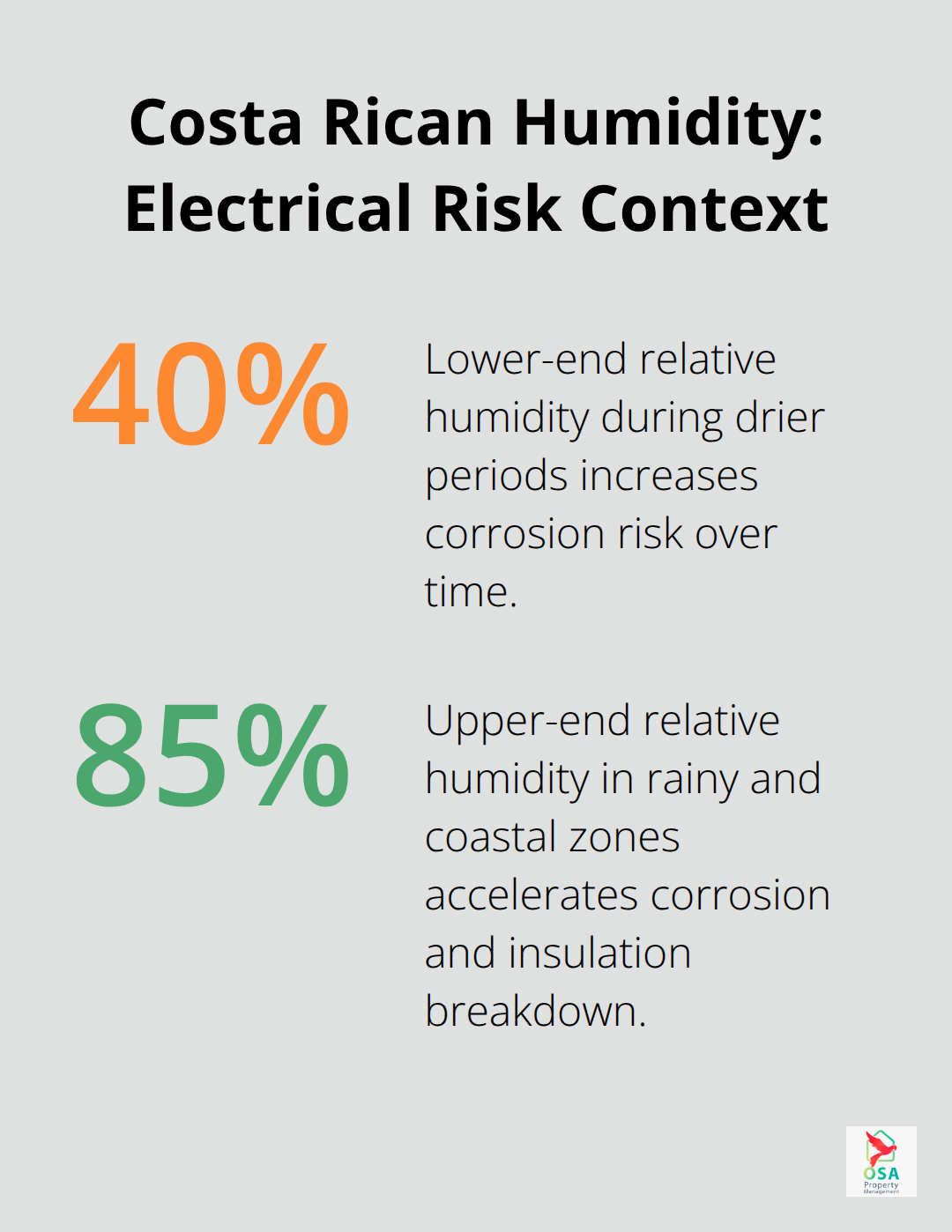
Moisture infiltration stands as the primary threat to electrical systems in Costa Rica, and it's far more serious than most homeowners realize. Humidity levels consistently range from 40 to 85 percent, which creates perfect conditions for mold proliferation and structural deterioration. When moisture seeps into outlets, switches, and wiring, it corrodes copper conductors and degrades insulation, creating short circuits and fire hazards. Coastal properties face even greater risk due to salt air, which accelerates corrosion at an alarming rate.
Homes without proper moisture barriers in junction boxes and sealed conduit connections develop electrical faults within two to three years. The solution isn't complicated: use moisture-resistant wiring connectors, apply red oxide primer coating to metal boxes before embedding them in concrete walls, and schedule annual inspections to catch corrosion before it becomes dangerous. Many homeowners wait until they notice flickering lights or burning smells, but these are late-stage warning signs that indicate your system is already compromised.
Overloaded Circuits and Aging Infrastructure
Overloaded circuits and aging infrastructure create a second major hazard that compounds the moisture problem. Costa Rican electrical codes follow the U.S. National Electrical Code, but enforcement is virtually nonexistent, meaning many older homes were wired without proper circuit protection or adequate grounding. When homeowners add high-demand appliances like electric stoves or air conditioning units, monthly consumption can jump from 200 kWh to 800 kWh, overwhelming circuits designed for half that load.
This overload causes breakers to trip repeatedly, generates heat in wiring, and increases fire risk exponentially. Improper grounding makes the situation worse because metal parts and boxes aren't connected to a dedicated grounding conductor, leaving your family vulnerable to electrical shock.
Identifying and Addressing Faulty Grounding
A licensed electrician can verify your grounding by checking that all metal components bond to a ground rod, typically installed at the service entrance. If your home was built before 2005 or you're unsure about its electrical history, a professional inspection becomes non-negotiable. Faulty outlets with missing ground pins or loose connections require immediate replacement, not temporary fixes with tape or other makeshift solutions.
These vulnerabilities demand attention before they escalate into serious safety issues. The next section covers the maintenance tasks you can perform yourself to monitor your electrical system's health.
What You Should Check Monthly to Prevent Electrical Failure
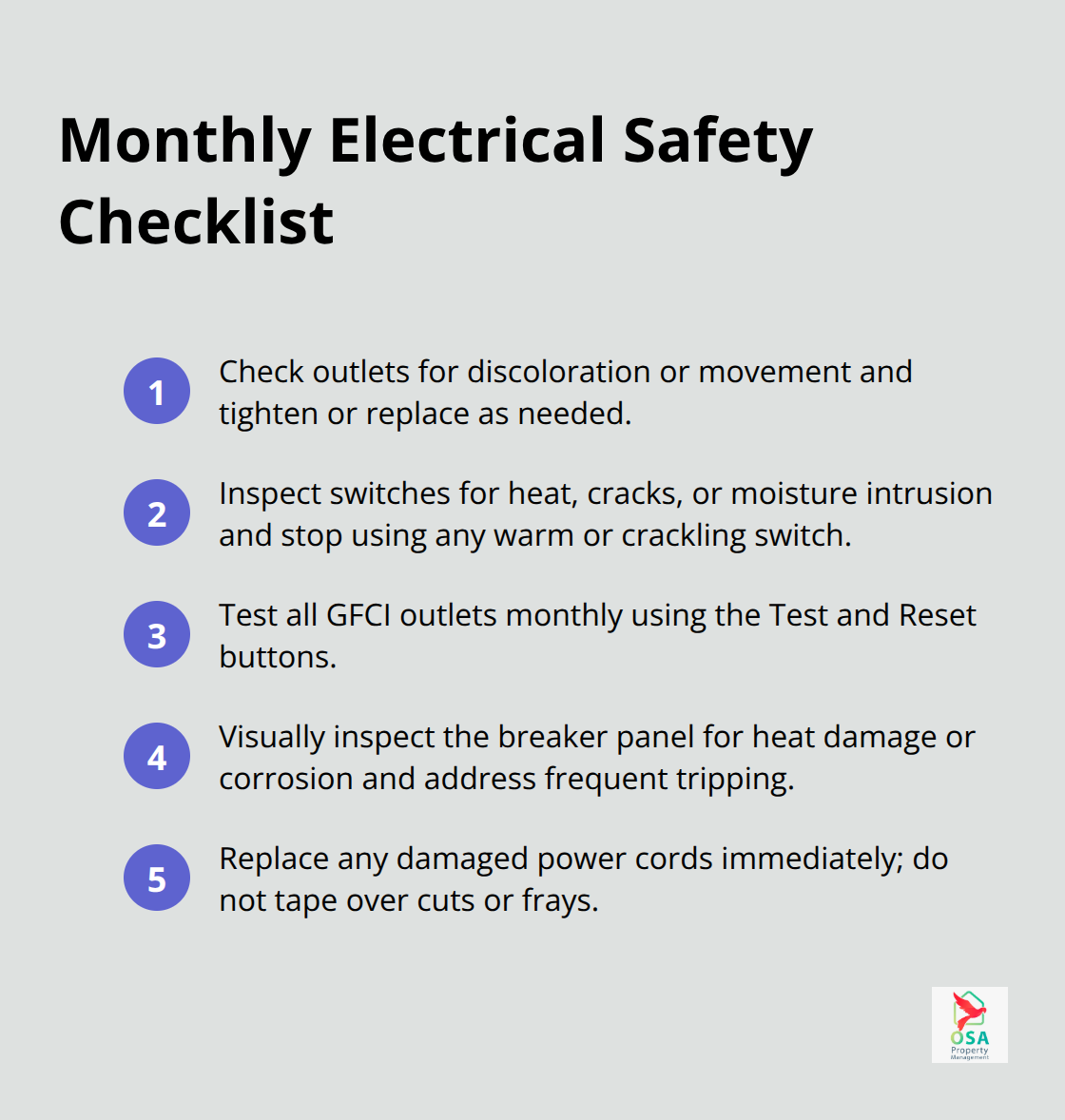
Waiting for a professional electrician to catch electrical problems is expensive and dangerous. Homeowners who perform monthly visual inspections of outlets, switches, and visible wiring identify warning signs before they escalate into serious hazards. Start by looking for discoloration around outlets and switches, which indicates heat buildup or moisture damage inside the box. Dark spots, burn marks, or a burning smell near any electrical fixture demand immediate attention and a call to a licensed electrician.
Outlets and Switches: What to Look For
Check that all outlets have three holes (the round hole is your ground pin), and replace any two-hole outlets immediately because they lack proper grounding protection. Loose outlets that wiggle when you plug in a cord create arcing inside the box, generating heat that can ignite surrounding materials. Tighten outlet screws with a flathead screwdriver, but if the outlet continues to move, the internal mounting mechanism has failed and replacement is the only safe option.
Examine light switches for cracks, loose covers, or any signs of moisture seeping into the mechanism. In Costa Rica's humid environment, moisture inside a switch box causes internal corrosion that creates resistance and generates dangerous heat. If a switch feels warm to the touch or makes crackling sounds when you flip it, stop using it and have an electrician replace it within 48 hours.
Testing Ground Fault Circuit Interrupter Devices
Ground Fault Circuit Interrupter devices protect you from electrocution in wet areas like bathrooms, kitchens, and outdoor spaces where moisture exposure is constant. Every GFCI outlet has a Test button and a Reset button on its face. Press the Test button monthly to verify the device works; the outlet should lose power immediately and trip the breaker. If nothing happens, the GFCI has failed internally and requires replacement. After testing, press Reset to restore power. Many homeowners skip this step, which means a failed GFCI provides zero protection until someone accidentally touches a live wire.
Circuit Breakers: Inspection and Response
Circuit breakers require a different approach than GFCIs. Never flip them on and off repeatedly to test them because excessive switching wears out the internal mechanism. Instead, visually inspect your breaker panel twice yearly for signs of heat damage, corrosion, or loose connections. If a breaker trips frequently, it tells you that circuit is overloaded or has a fault. Unplug non-essential devices from that circuit and test again. If the breaker still trips with minimal load, a short circuit exists somewhere in the wiring and you need a professional to locate it.
Power Cords: Spotting and Replacing Damage
Damaged power cords are one of the easiest hazards to spot and fix yourself. Inspect cords on all appliances, extension cords, and chargers for cuts, fraying, exposed copper, or crushed sections. A cord with even minor damage conducts electricity unpredictably and poses electrocution and fire risk. Discard damaged cords immediately rather than wrapping them with tape, which is a temporary fix that fails without warning. These monthly checks catch problems early, but some electrical issues require professional expertise that goes beyond visual inspection. The next section covers when and how to hire a licensed electrician who understands Costa Rica's unique electrical environment.
Finding the Right Electrician in Costa Rica
Verifying Credentials and Insurance
Finding a licensed electrician in Costa Rica requires careful verification because the country lacks a centralized certification database and enforcement mechanism. Many electricians operate without proper credentials, and homeowners who hire unlicensed workers face serious liability if something goes wrong. Start your search with referrals from trusted locals or expat networks who have used electricians for similar work. Ask for the electrician's cédula number, which is their national ID and required for any licensed professional. Verify this number with ICE or request documentation showing they completed formal electrical training. Legitimate electricians carry liability insurance and can provide a certificate proving their coverage. Insurance matters because if faulty work causes a fire or injury, your homeowner's policy won't cover damages if an uninsured professional performed the work. Never accept verbal assurances about licensing; request written proof before scheduling any work.
Understanding Local Standards vs. NEC Guidelines
Costa Rica technically follows the U.S. National Electrical Code standards, but this creates confusion because local enforcement is virtually nonexistent and many electricians have never read the NEC guidelines. This gap between standards and practice means you must educate yourself about what proper work looks like so you can recognize substandard installations. Ask your electrician to explain how they will ground the system, what conduit type they will use for interior wiring, and how they will protect against moisture infiltration. If they cannot articulate these details clearly, they probably have not thought them through. An electrician who understands proper grounding, EMT conduit requirements, and moisture-resistant connections demonstrates competence that separates professionals from inexperienced workers.
Comparing Quotes and Evaluating Quality
Get detailed written quotes from at least three electricians that specify materials, labor costs, timeline, and warranty terms. The cheapest quote often reflects shortcuts with materials or incomplete work, so compare quality alongside price. Ask each electrician for references from homeowners they worked for in the past two years and contact at least two of them to ask about workmanship, reliability, and whether the job stayed on budget. A reference who can describe specific details about their project provides more valuable information than generic praise.
Staging Inspections Throughout the Project
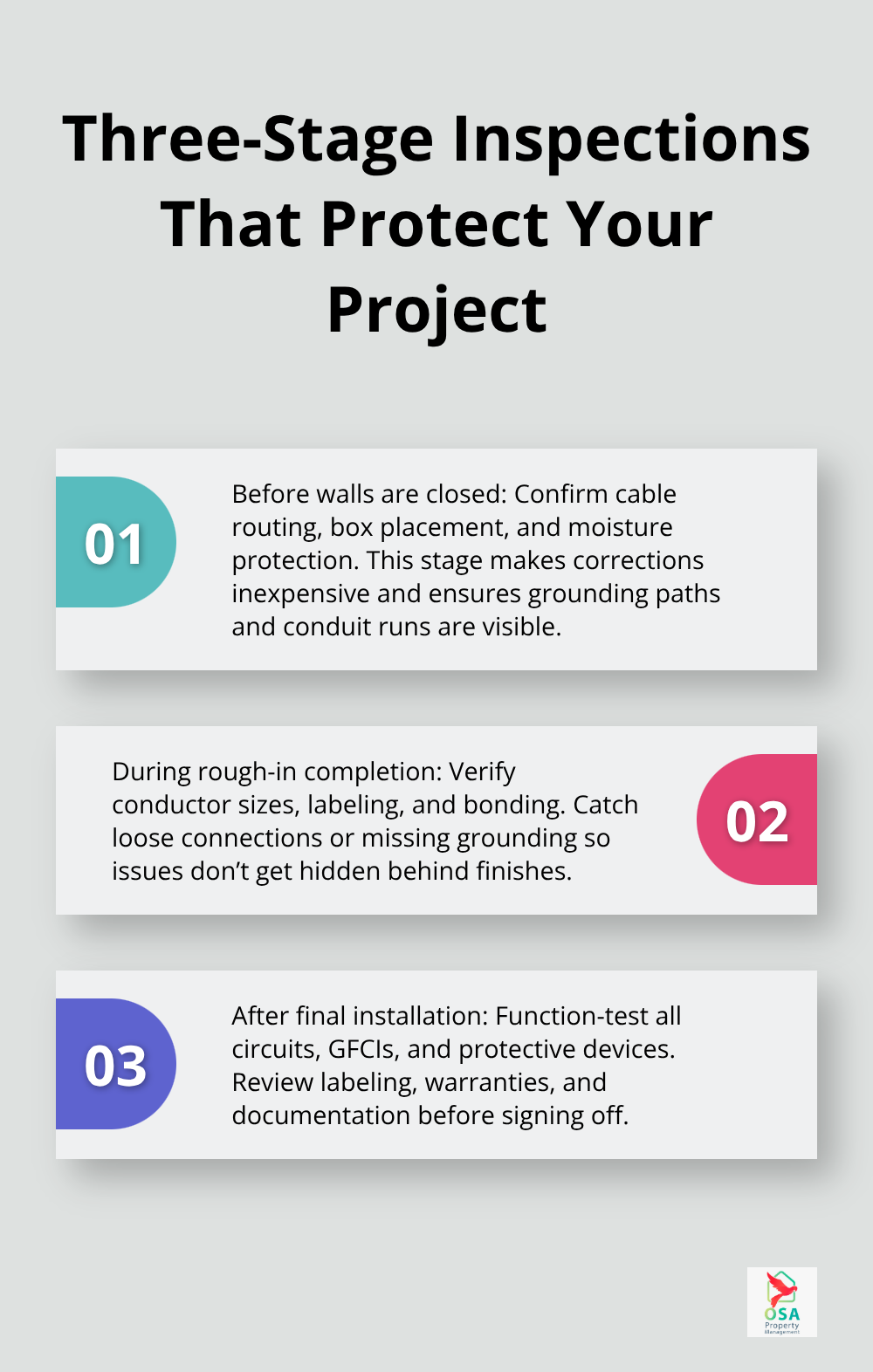
Request that all work includes three-stage inspections during construction: before walls are closed, during rough-in completion, and after final installation. This staged approach catches problems early when they cost little to fix rather than expensive to correct later. An electrician who welcomes staged inspections demonstrates confidence in their work and understands that verification protects both parties. The inspection process also gives you opportunities to ask questions and observe how the electrician handles corrections or unexpected conditions that arise during installation.
Protecting Your Investment Through Documentation
Insist on written documentation for all work completed, including materials used, circuit diagrams, grounding specifications, and any deviations from the original plan. This documentation becomes essential if you ever need to troubleshoot problems, add circuits, or file an insurance claim. A professional electrician maintains detailed records and provides copies to the homeowner without hesitation. Documentation also protects you if future issues arise and you need to prove that work met proper standards at the time of installation.
Final Thoughts
Electrical safety maintenance in Costa Rica isn't optional-it's the foundation of protecting your family and your investment. Moisture damage accelerates in the tropical climate, overloaded circuits generate heat continuously, and faulty grounding puts your family at electrocution risk every single day. These problems worsen until something fails catastrophically, so monthly inspections of outlets, switches, and power cords catch problems early before they escalate.
Schedule a professional inspection within the next month if you've never had one or if your home exceeds ten years old. Get written quotes from at least three licensed electricians and verify their credentials before hiring anyone. Document everything they complete and request staged inspections during any major work to protect your investment.
We at Osa Property Management oversee electrical safety maintenance in Costa Rica and handle these details systematically for properties across the southern Pacific zone. Start today by walking through your home and checking outlets for loose connections, switches for heat damage, and cords for cuts or fraying-these fifteen minutes of inspection could reveal problems that need immediate professional attention.