

Buying property in Costa Rica is exciting, but it comes with real risks if you skip a professional inspection. Hidden structural damage, plumbing failures, and electrical hazards can cost you tens of thousands of dollars after closing.
Home inspections in Costa Rica aren't optional-they're your first line of defense against costly surprises. We at Osa Property Management have seen too many buyers regret skipping this step.
Why Home Inspections Protect Your Costa Rican Investment
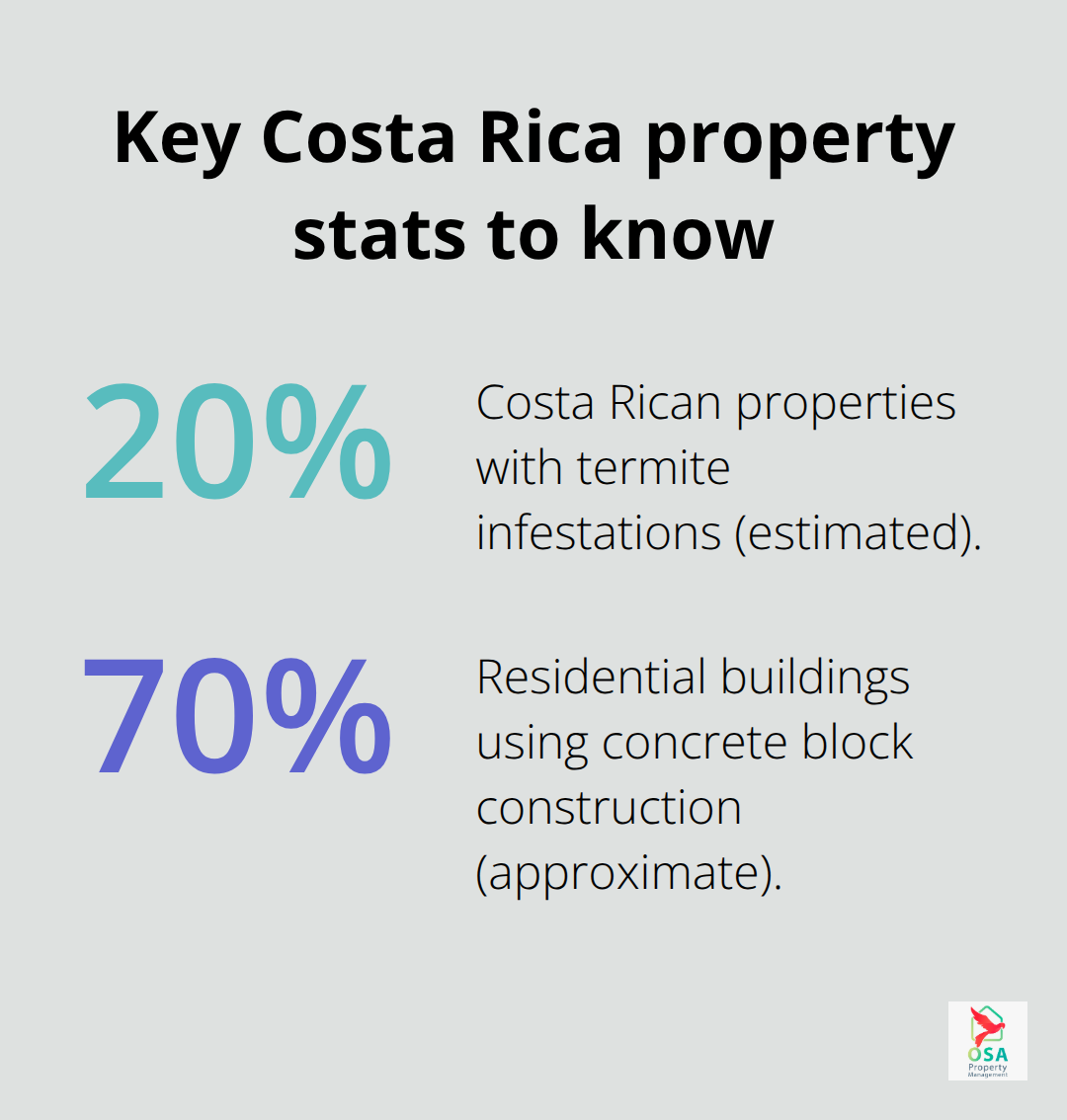
Costa Rica's tropical climate accelerates building deterioration in ways that temperate climates don't. Heavy rainfall during the wet season from May to November creates perfect conditions for structural damage, mold growth, and system failures. Salt air corrosion near coastal properties attacks metal components and electrical systems relentlessly. An estimated 20% of Costa Rican properties face termite infestations, which hollow out wooden structural elements before visible damage appears. These aren't theoretical risks-they're documented patterns that affect your actual property value and long-term costs. A professional inspection identifies these climate-specific threats before you close, giving you concrete data to negotiate repairs or price adjustments.
The Real Cost of Hidden Defects
Electrical systems in older Costa Rican homes frequently lack proper grounding and show corrosion from humidity and salt exposure. Many inspectors skip removing panel covers, missing dangerous wiring issues and overheating risks entirely. Plumbing systems deteriorate from humidity and salt, leading to leaks and pressure problems that cost thousands to remediate. Roofing failures top the list of expensive surprises because tropical weather degrades materials faster than anywhere else. Sewer and septic lines fail due to local installation practices and inadequate pipe diameter; camera inspections pinpoint blocks or breaks that visual checks miss. A comprehensive inspection paired with advanced tools like thermal imaging and drone roof surveys reveals defects that basic visual checks overlook completely. This diagnostic value translates directly into smarter negotiations and realistic budgeting before you sign closing documents.
Qualified Inspectors Make the Difference
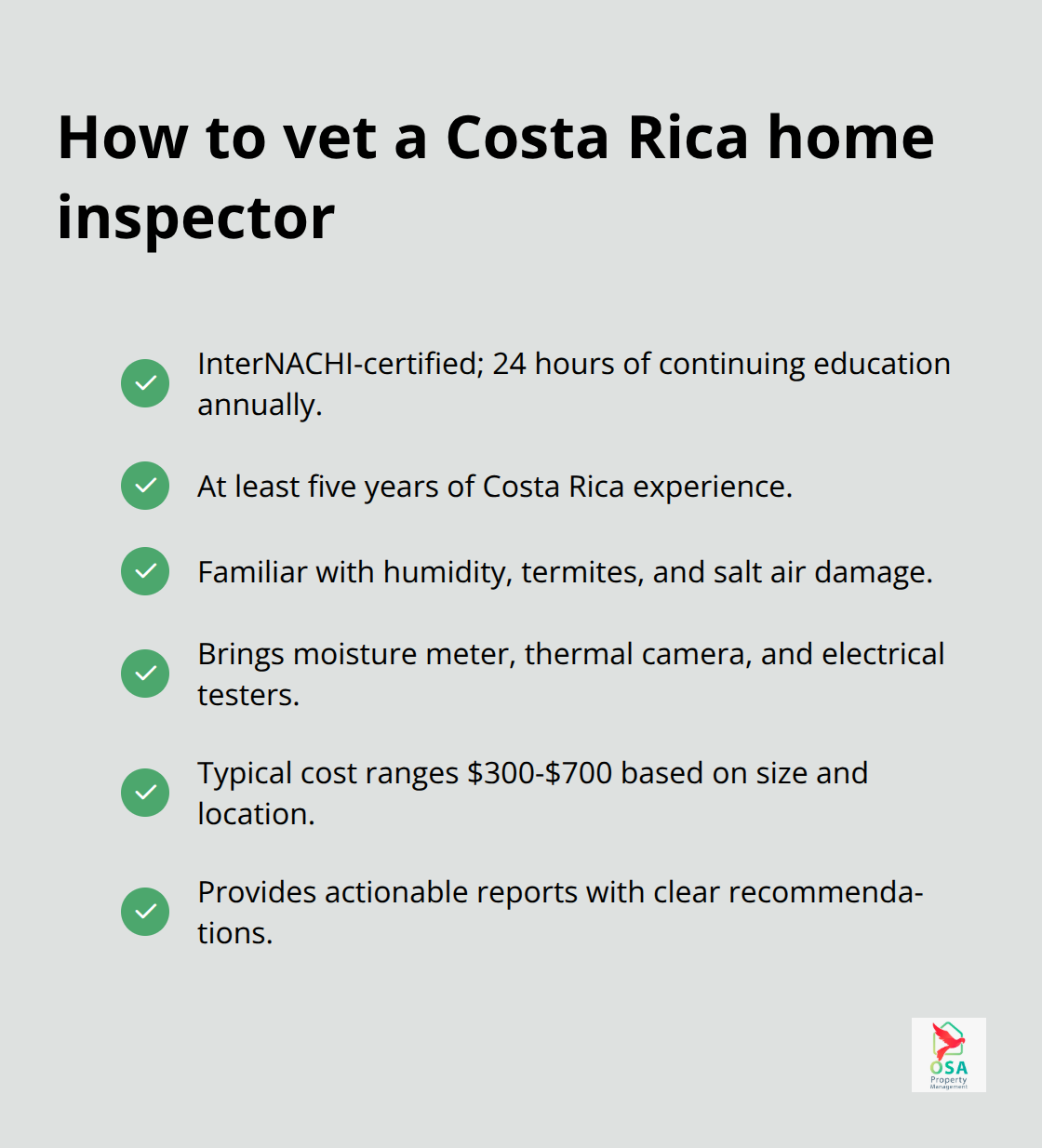
Costa Rica has no standardized home inspector profession, so credentials vary wildly. Engineers with tropical climate experience and InterNACHI certification provide the highest standard-these inspectors complete 24 hours of continuing education annually and follow comprehensive protocols. Seek professionals with at least five years of Costa Rica experience and ask directly about their familiarity with humidity, termites, and salt air damage. Request sample reports and verify their equipment inventory includes moisture meters, thermal cameras, and electrical testers. Typical inspection costs range from $300 to $700 depending on property size and location, with larger homes or specialized services costing more. The inspector's written report should include actionable recommendations, not just a list of problems, and guide you toward qualified specialists for repairs.
What Separates Quality Inspections from Inadequate Ones
Many buyers still encounter low-cost inspections (WhatsApp-style reports, for example) that miss major defects, leading to costly post-purchase repairs. A thorough assessment requires a general home inspector plus licensed specialists (electrical, structural) for deeper analysis when significant issues surface. US-trained inspectors generally adhere to higher, more comprehensive standards than many local providers, though they typically cost more. The difference between a $200 inspection and a $600 inspection often shows up in the details-whether the inspector removes electrical panel covers, uses sewer cameras, or applies thermal imaging to detect moisture behind walls. Advanced inspection tools help reveal defects that basic inspections miss and add diagnostic value that protects your capital. Your next step involves assembling a professional team: an independent attorney, an independent inspector, and a reputable realtor coordinating the process to ensure nothing falls through the cracks.
What Property Problems Appear Most in Costa Rican Homes
Humidity and salt air attack Costa Rican properties relentlessly, creating damage patterns that differ sharply from temperate climates. The mean annual temperature of 24.9°C combined with rainfall from May to November creates conditions where concrete deteriorates faster, metal corrodes, and wood rots from the inside out. Approximately 70% of residential buildings in Costa Rica use concrete block construction, which absorbs moisture and develops cracks that water exploits during heavy downpours. Termite infestations affect an estimated 20% of Costa Rican properties, and inspectors often find mud tubes on exterior walls or hollow-sounding wood that indicates structural damage already underway. Coastal properties face particularly aggressive salt air corrosion that degrades electrical systems, outlets, and metal framing before visual inspection catches it. The older Seismic Code standards in homes built before 2010 also create structural vulnerabilities that current earthquake resistance requirements would address. These aren't minor cosmetic issues-they're systemic failures that compound over time and directly impact property value and insurability.
Electrical Wiring Failures Hide Behind Panels
Electrical systems present the most dangerous hidden defect in older Costa Rican homes because many lack proper grounding and show corrosion from humidity and salt exposure throughout their circuits. Standard visual inspections miss the real problems because inspectors often skip removing electrical panel covers, which is where overheating risks, improper connections, and deteriorated wiring become visible. Outlets and switches corroded by salt air can fail suddenly or create fire hazards that insurance companies refuse to cover. Costa Rica's electrical code aligns with the US NEC standard, but municipal verification is limited, meaning non-compliant installations persist in homes built decades ago without remediation. If you find corroded components during inspection, budget for complete panel replacement and rewiring in affected sections-this runs $2,000 to $8,000 depending on the home's size and the extent of deterioration. Your inspector should use electrical testers to verify proper grounding and functioning circuit breakers, and you should request photos of the panel interior before proceeding.
Plumbing and Water Damage Accumulate Silently
Plumbing systems deteriorate from humidity and salt exposure, leading to leaks inside walls and beneath floors that you won't discover until water damage spreads to structural elements. Sewer and septic lines fail due to local installation practices and inadequate pipe diameter-many older properties lack sufficient diameter to handle toilet paper disposal, creating blockages that require complete line replacement at $3,000 to $6,000. Camera inspections with sewer scopes pinpoint blocks or breaks that visual checks miss entirely, and this diagnostic tool should be non-negotiable for any property with a septic system. During the wet season from May to November, active leaks appear as water stains or soft spots on ceilings and walls, but during the dry season you must look for signs of past leaks that indicate recurring problems. High humidity increases mold risk significantly, so use a humidity meter to assess moisture levels in walls, ceilings, and corners-readings above 60% signal moisture intrusion that requires immediate remediation. Water pressure issues often stem from corroded copper pipes or mineral buildup in older systems, and low pressure in upper floors suggests the main line has deteriorated internally.
Termite Damage and Structural Rot
Termite infestations affect an estimated 20% of Costa Rican properties, and inspectors must look for mud tubes on exterior walls and hollow-sounding wood that indicates structural damage already underway. Wood-boring insects work silently inside framing members, and visual inspection alone misses the extent of damage until structural integrity fails. Professional pest inspectors use specialized equipment to detect hollow spaces and assess the severity of infestation before it spreads to load-bearing elements. Concrete block construction (used in 70% of Costa Rican homes) resists termites better than wood framing, but wooden roof trusses, door frames, and window sills remain vulnerable. Tropical humidity accelerates wood rot in addition to termite damage, creating a compounding problem where moisture and insects work together to weaken structures. Treatment costs range from $500 to $2,000 for localized infestations, but structural repairs for advanced damage can exceed $10,000.
Moisture and Mold Risk Assessment
High humidity levels throughout Costa Rica create persistent mold and moisture problems that affect both health and property value. Use a humidity meter to assess moisture levels in walls, ceilings, and corners-readings above 60% signal moisture intrusion that requires immediate remediation. Mold grows rapidly in the Central Valley where humidity remains high year-round, while coastal areas like Guanacaste experience lower mold risk due to better air circulation. During the wet season from May to November, active leaks appear as water stains or soft spots on ceilings and walls, but during the dry season you must look for signs of past leaks that indicate recurring problems. Moisture trapped behind walls leads to structural deterioration, electrical hazards, and respiratory issues for occupants. Professional inspectors should assess ventilation systems, check for standing water in crawl spaces, and identify areas where water intrusion occurs regularly. These moisture assessments directly inform your maintenance budget and help you prioritize repairs that protect both the structure and your investment.
Understanding these property-specific problems positions you to ask the right questions during your inspection and negotiate effectively based on actual conditions. The next section covers what to expect when a qualified inspector evaluates your potential property and how to interpret the findings that guide your investment decision.
What Happens During Your Property Inspection
A professional home inspection in Costa Rica unfolds across several hours, not minutes. The inspector systematically evaluates your property's structural integrity, mechanical systems, and climate-specific vulnerabilities while documenting findings with photos and measurements. Expect the inspection to take three to four hours for a single-family home and two to three hours for a condo, depending on size and complexity. Your inspector arrives with specialized equipment: a moisture meter to measure humidity levels in walls and ceilings, a thermal camera to detect moisture behind surfaces, an electrical tester to verify grounding and circuit breaker function, and ideally a sewer scope camera if the property has a septic system.
How Inspectors Examine Your Property
The inspector removes electrical panel covers to examine wiring and connections directly, not just performing a visual sweep from outside the panel. This hands-on approach reveals corrosion, improper connections, and overheating risks that surface inspections miss entirely. For properties with plumbing systems, the inspector tests water pressure at multiple fixtures and uses the sewer camera to identify blockages, breaks, or inadequate pipe diameter inside the line. Roof inspection involves climbing onto the structure to assess material condition, check for active or past leaks, and evaluate drainage patterns. The inspector looks for termite mud tubes on exterior walls, tests wood for hollow sounds, and assesses structural elements for rot or insect damage. Throughout this process, a qualified inspector documents everything with written notes and photographs that form the backbone of your inspection report.
Reading Your Inspection Report
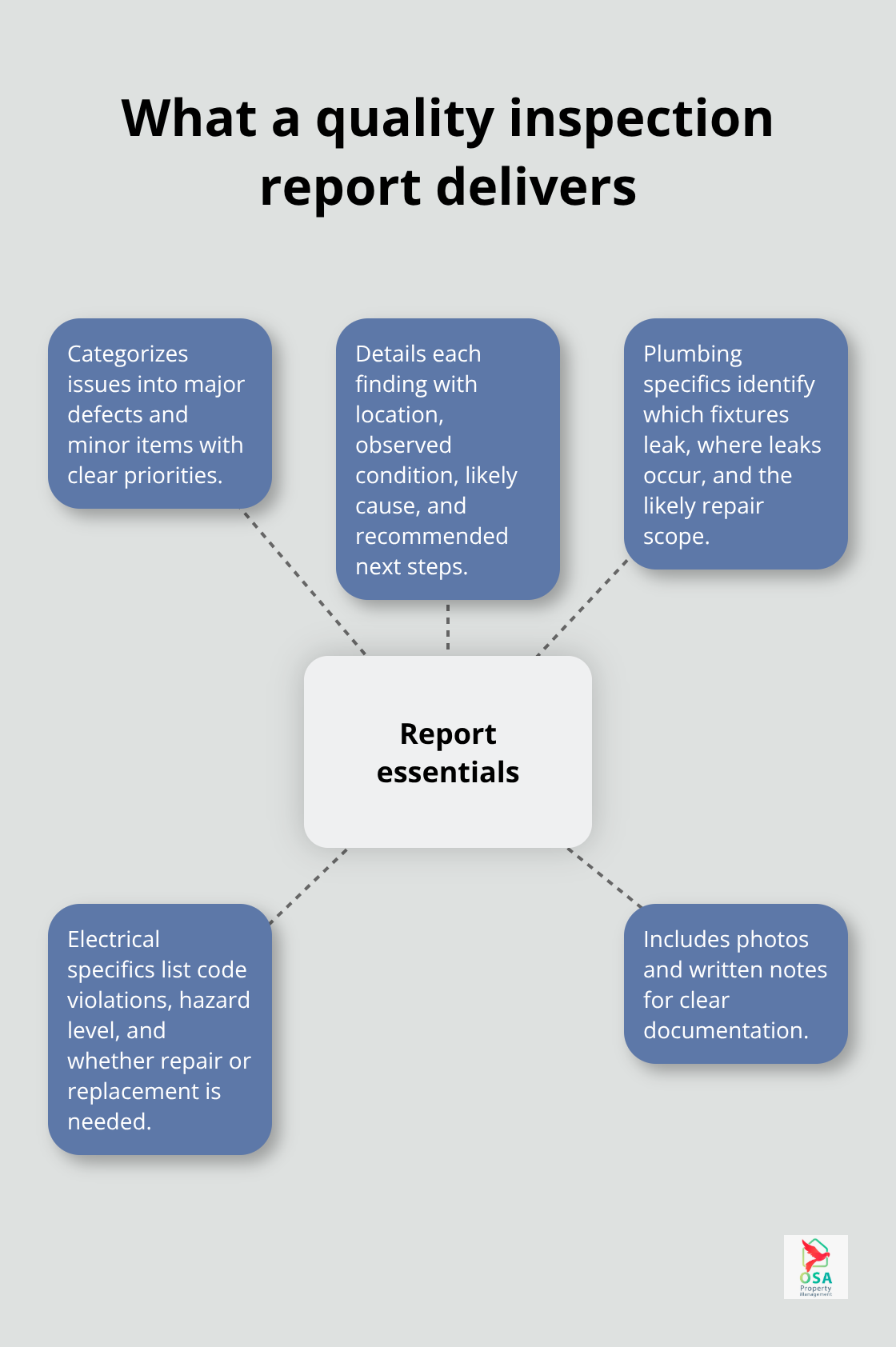
The inspection report you receive should read as a practical decision document, not a generic checklist. The quality difference between a $300 report and a $700 report shows up immediately in specificity and actionability. A thorough report categorizes findings into major defects requiring immediate attention and minor issues affecting move-in readiness. For each finding, the report includes the location, the observed condition, the likely cause, and recommended next steps. Rather than stating plumbing leaks exist, a quality report specifies which fixtures leak, whether leaks appear in visible connections or inside walls, and whether the issue suggests isolated problems or systemic deterioration requiring full replumbing. When electrical deficiencies appear, the report identifies specific code violations, describes the hazard level, and recommends whether you need a licensed electrician for repairs or a complete panel replacement.
Getting Answers After the Inspection
The inspector's recommendations section guides you toward qualified specialists for repairs rather than leaving you to figure out what type of contractor you need. Ask your inspector directly whether they will be available after inspection to answer clarifying questions about findings. InterNACHI-certified inspectors provide this follow-up support because they understand that a report sitting on your desk means nothing without context. Your inspector should also clearly identify which issues affect financing decisions, insurance coverage, or property insurability. Banks require certain electrical and structural standards before approving mortgages, and insurance companies increasingly deny coverage for properties with active moisture, termite damage, or non-compliant electrical systems. Knowing which findings trigger these institutional barriers helps you prioritize negotiations with the seller before closing.
Final Thoughts
A professional home inspection protects your Costa Rican investment by giving you concrete data to negotiate repairs, adjust your offer, or walk away from deals that don't make financial sense. The $300 to $700 cost of a thorough inspection is negligible compared to the tens of thousands you'll spend fixing hidden electrical failures, plumbing deterioration, termite damage, or structural problems caused by humidity and salt air. Without this assessment, you accept unknown risks in a market where properties sell as-is and post-closing repairs become your financial burden alone.
After your inspection, request repair quotes from licensed specialists and present these numbers to the seller during your due diligence period. Banks and insurance companies will scrutinize the same defects your inspector identified, so addressing major issues before closing protects your financing and coverage options. If the seller refuses repairs or price adjustments, your inspection report gives you legitimate grounds to renegotiate or cancel the contract without losing your deposit.
Confidence in your Costa Rican real estate investment comes from knowing what you're actually buying. A qualified inspector with tropical climate experience and proper credentials removes the guesswork and positions you to make decisions based on facts, not hope. We at Osa Property Management work with property owners across the southern Pacific zone to develop maintenance strategies informed by thorough inspections, and our clients consistently report fewer surprises and lower long-term maintenance costs.