
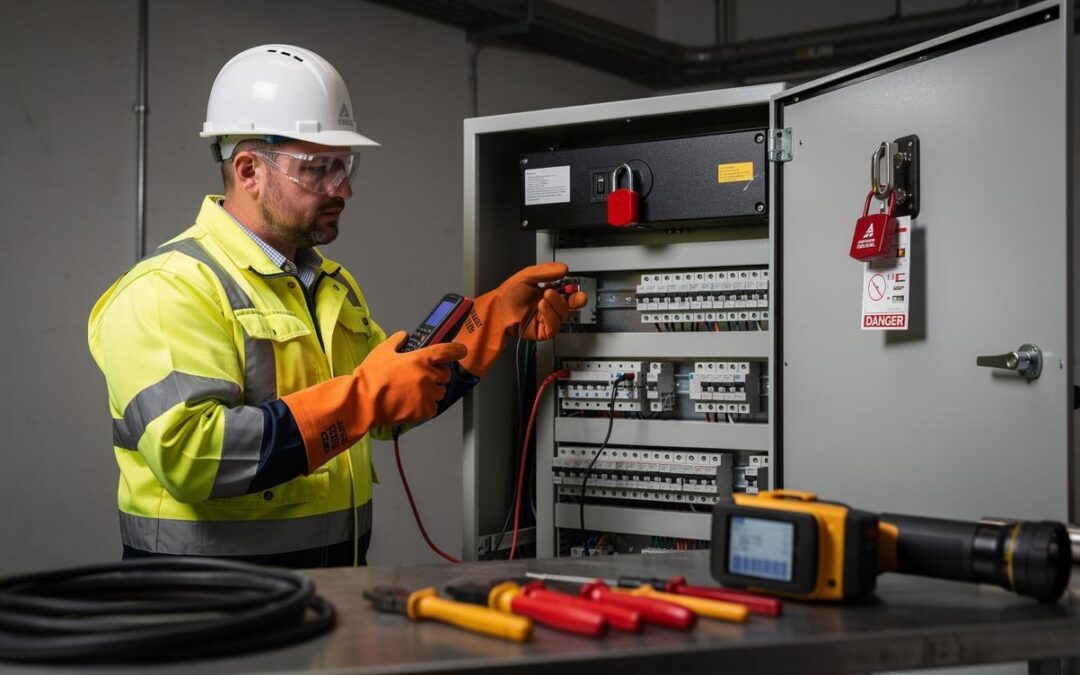
Electrical fires cause an estimated 51,000 home fires annually in the United States, resulting in over 500 deaths and $1.3 billion in property damage. At Osa Property Management, we know that electrical safety maintenance isn’t optional-it’s a fundamental responsibility for protecting your property and the people inside it.
Most electrical hazards go unnoticed until they become dangerous. Regular inspections and proper maintenance catch problems before they turn into fires or accidents.
What Makes Electrical Systems Fail in Properties
Water and Moisture: The Silent Threat
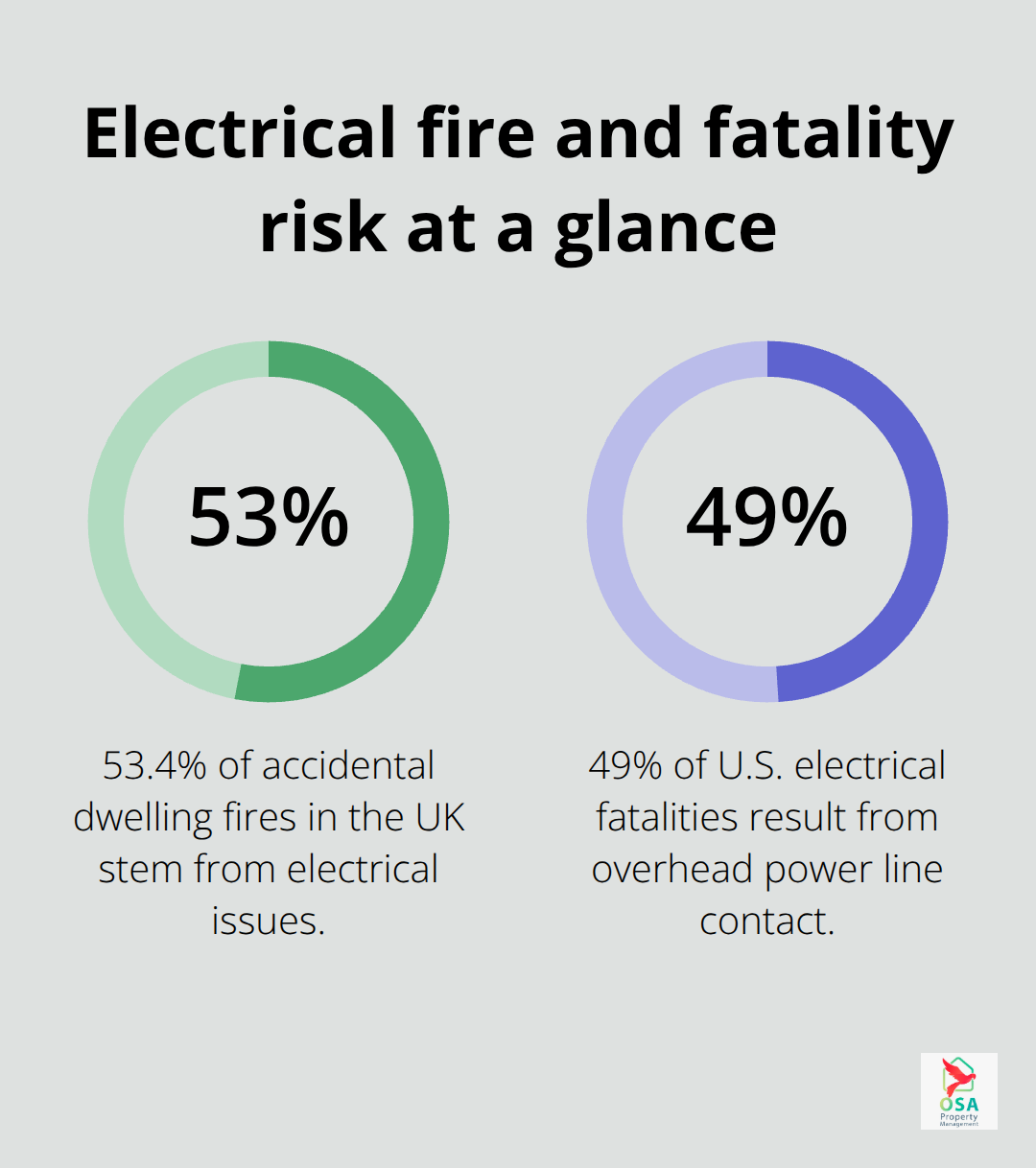
Electrical hazards don’t announce themselves. In the UK, 53.4% of accidental dwelling fires stem from electrical issues, and in the United States, electrical fires cause an estimated 51,000 home fires annually. The problem isn’t that electricity is inherently dangerous-it’s that most property owners and managers ignore the warning signs until damage occurs.
Moisture stands as one of the most common culprits. Water around electrical equipment creates conditions for short circuits, ground faults, and fires. Kitchens and bathrooms are particularly vulnerable because they combine water exposure with high-demand appliances.
Hidden Damage: Wiring, Corrosion, and Dust
Frayed wiring, loose terminals, and corroded connections cause equally destructive damage but often remain hidden inside walls or behind panels. Dust buildup inside electrical enclosures traps heat and raises fire risk significantly. Outdated wiring in older properties operates under stress it was never designed to handle, especially when modern appliances draw far more power than systems installed decades ago can safely supply. Flickering lights, buzzing panels, frequent breaker trips, warm outlets, and burning smells are not minor annoyances-they signal that failure is imminent.
The Cascading Impact on Operations and Safety
Poor electrical maintenance creates a domino effect on property performance and safety. Overloaded circuits cause breaker trips that interrupt operations and frustrate tenants. Degraded grounding and bonding expose people to electric shock and equipment to damage from surges. Thermal imaging reveals hidden hotspots inside electrical systems that standard visual inspections miss entirely, and these hotspots often precede fires by weeks or months. Overhead power line contact accounts for 49% of all electrical fatalities in the United States. Ground-fault fatalities have largely occurred due to the lack of properly installed and tested Ground Fault Circuit Interrupters.
Financial Consequences Beyond Immediate Damage
The financial impact extends beyond immediate fire damage-unreliable electrical systems drive tenant turnover, increase insurance premiums, and reduce property value. Properties with documented electrical hazards face difficulty attracting quality renters and financing. Licensed electricians catch these problems before they escalate, making prevention dramatically more cost-effective than dealing with fires, injuries, or equipment replacement. Understanding what causes electrical failure is the first step; the next step involves knowing how to identify these problems through systematic inspection and testing.
How Often Should You Inspect Electrical Systems
Establish Your Inspection Schedule Based on Property Characteristics
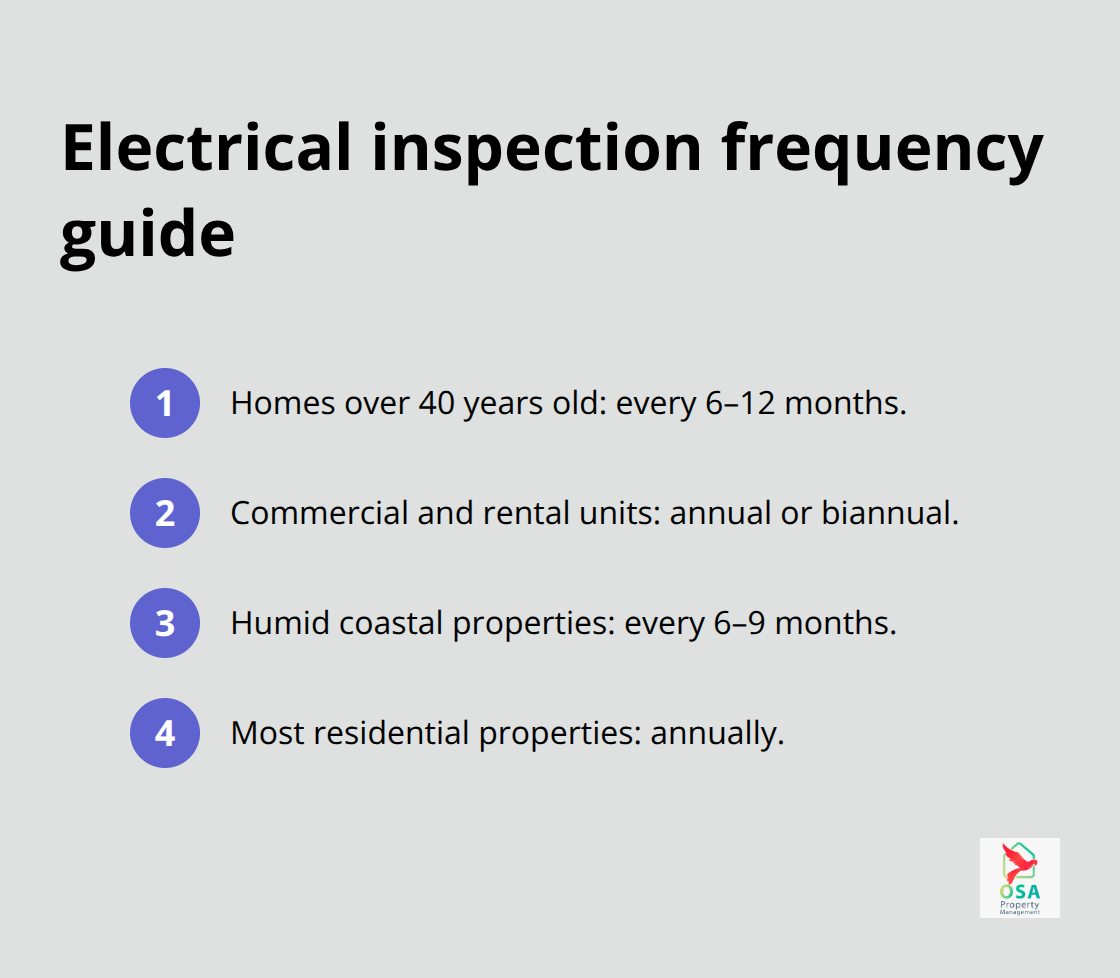
Electrical inspections follow a simple rule: more frequent checks catch problems before they escalate. Annual inspections work for most residential properties, but this baseline shifts based on property age, usage intensity, and environmental factors. Properties over 40 years old with original wiring need inspections every 6 to 12 months because aging insulation deteriorates and connections loosen over decades. Commercial properties and rental units with higher tenant turnover require annual or biannual inspections since heavy usage and frequent occupancy changes strain electrical systems faster. Properties in humid coastal environments face accelerated corrosion and moisture infiltration, requiring inspections every 6 to 9 months.
Monitor for Warning Signs Between Professional Inspections
Between scheduled inspections, walk through your property monthly and look for warning signs: flickering lights, outlets that feel warm to the touch, burning smells near panels or appliances, and breakers that trip repeatedly. These aren’t minor issues to ignore-they indicate imminent failure. Thermal imaging during inspections reveals hidden hotspots inside panels and equipment that visual checks miss entirely, and infrared thermography is used to find areas of excess heat that often precede electrical fires by weeks or months. Licensed electricians use thermal cameras to scan connections, transformers, and distribution boards, identifying temperature anomalies that signal loose terminals, overloaded circuits, or corroded connections before they cause damage.
Focus Your Inspections on High-Risk Components
What you inspect matters as much as how often you inspect. Test ground fault circuit interrupters and arc fault circuit interrupters in kitchens, bathrooms, and outdoor areas monthly by pressing the test button and verify they trip within milliseconds. Check all visible wiring for fraying, cracking, or damage, especially in basements, attics, and utility areas where rodents and environmental exposure cause deterioration. Examine panel boxes for rust, corrosion, or moisture, and keep them in dry, protected locations away from water sources. Inspect outlet covers for cracks or discoloration indicating internal arcing, and verify that all outlets and switches are securely mounted with no gaps. Look inside electrical enclosures for dust accumulation-buildup traps heat and raises fire risk significantly, so clean panels annually.
Test Grounding and Bonding Systems Thoroughly
Test grounding conductors and bonding connections because degraded grounding exposes people to electric shock and equipment to surge damage. Licensed electricians measure resistance in grounding systems and verify that all metal components are properly bonded. For properties with large equipment or high-voltage systems, demand more frequent testing: quarterly inspections catch developing problems faster than annual checks. Properties with documented electrical issues or previous fires need inspections every 3 to 6 months until licensed electricians confirm all hazards are resolved.
Escalate Your Inspection Frequency for High-Risk Situations
High-demand facilities with large equipment and high-voltage systems require heightened monitoring and more proactive maintenance to prevent outages and hazards. Properties in wash-down areas and outdoor equipment zones increase moisture risk, so electrical components in these zones need dry, protected locations and properly rated enclosures. Treat inspections as a continuous responsibility that protects your property value, reduces insurance costs, and keeps occupants safe. The next step involves knowing what specific maintenance actions to take once inspections identify problems-and how to work with qualified professionals to address them properly.
How to Upgrade Systems and Work with the Right Professionals
Outdated wiring installed decades ago operates under constant stress when modern appliances demand far more power than original systems were designed to handle. A 1980s electrical panel rated for 100 amps struggles when tenants add air conditioning units, multiple charging devices, and kitchen appliances that collectively exceed the system’s capacity. Upgrading outdated wiring and equipment isn’t a cosmetic improvement-it’s a structural necessity that prevents fires, reduces insurance premiums, and increases property value. Properties with original wiring over 40 years old should prioritize rewiring to modern standards, which typically involves replacing aluminum wiring with copper, upgrading panel capacity from 100 to 200 amps, and installing modern circuit breakers that respond faster to faults. The cost of upgrading ranges from $3,000 to $10,000 depending on property size and complexity, but this investment returns itself through lower insurance costs, fewer tenant complaints about power availability, and dramatically reduced fire risk.
Install Modern Circuit Protection Devices
Arc Fault Circuit Interrupters and Ground Fault Circuit Interrupters represent critical upgrades that protect against two distinct electrical hazards. AFCIs detect dangerous arcing conditions that precede fires, while GFCIs protect against ground faults that cause electrocution. Installing these devices in kitchens, bathrooms, outdoor areas, and bedrooms is now required by the National Electrical Code, and properties lacking them face compliance violations and increased insurance scrutiny. Ground-fault fatalities have largely occurred due to the lack of properly installed and tested GFCIs, making this upgrade non-negotiable for any property prioritizing occupant safety.
Grounding and Bonding Create the Foundation for Safety
Proper grounding protects both people and equipment by providing a safe path for electrical current to return to earth. Degraded grounding conductors and loose bonding connections expose occupants to electric shock and allow surge damage that destroys appliances and electronics. Licensed electricians test grounding resistance using specialized equipment and verify that all metal components (water pipes, gas lines, structural steel, and equipment frames) are properly bonded together. For properties with large equipment or high-voltage systems, ground resistance measurement should happen quarterly, not annually, because deterioration accelerates in humid or corrosive environments. Adding extra grounding rods for facilities with heavy electrical loads provides redundancy that protects against lightning strikes and surges.
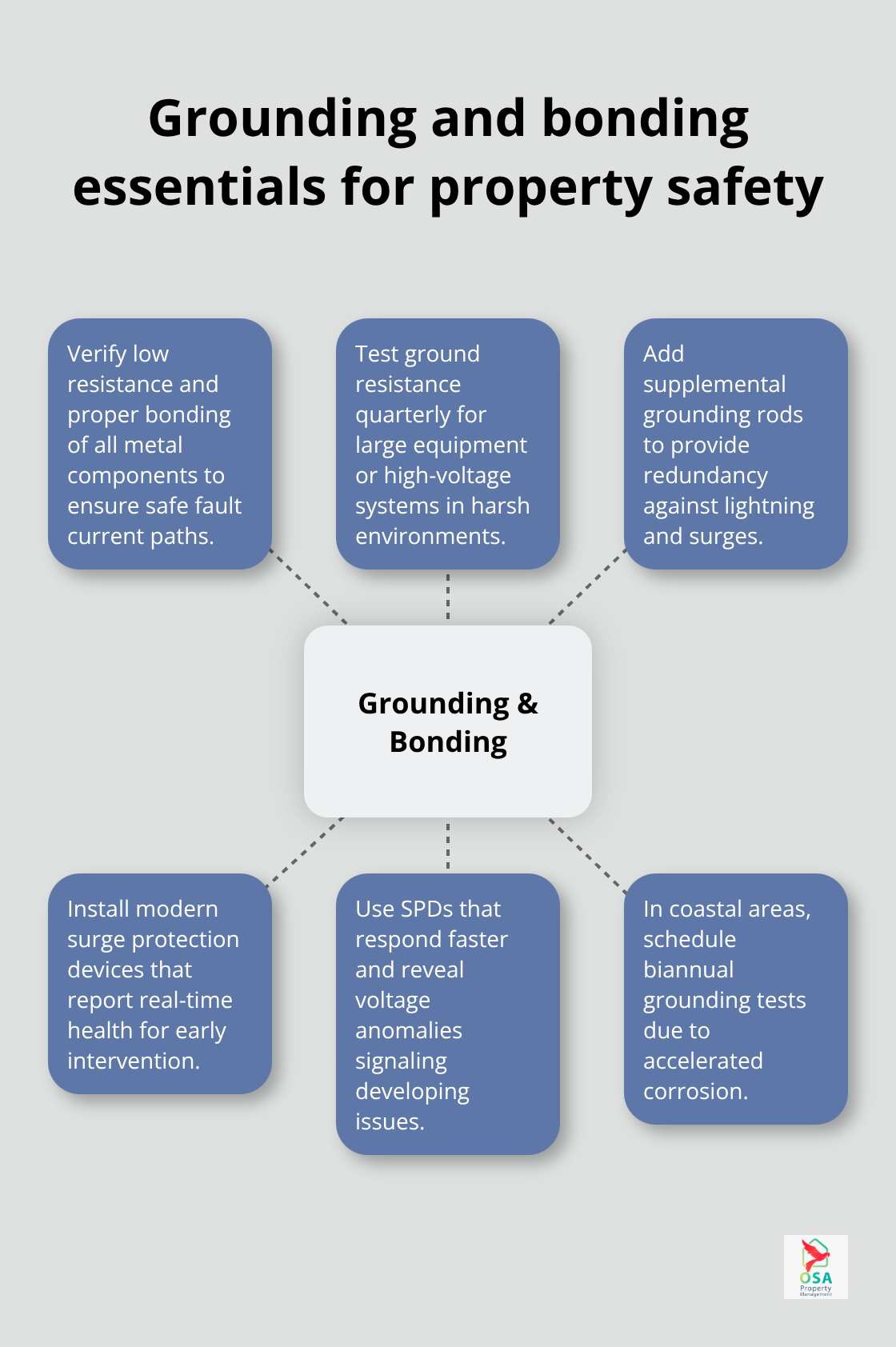
Surge protection devices now deliver real-time health data to maintenance teams, enabling early intervention before long-term damage occurs. These modern SPDs respond faster than older versions and provide visibility into voltage anomalies that indicate incoming problems. Properties in coastal areas face accelerated corrosion of grounding systems, making biannual testing mandatory rather than optional.
Licensed Electricians Identify Problems Before They Become Disasters
Working with licensed electricians isn’t an expense-it’s insurance against catastrophic failure. Qualified electricians hold certifications requiring thousands of hours of training and continuing education to stay aligned with evolving safety standards. They understand lockout and tagout procedures that prevent accidental re-energizing during maintenance, they interpret thermal imaging data to identify hidden hotspots inside panels and connections, and they know which components fail first in your specific property type. Annual inspections by licensed professionals add a critical safety layer that catches warning signs ordinary property managers miss. An electrician walking through your property notices the subtle signs of failure: loose terminals that generate heat, corroded connections that increase resistance, undersized wiring that operates at dangerous temperatures. These professionals also ensure compliance with electrical codes that vary by jurisdiction-the National Electrical Code requires specific safety devices and testing procedures that differ from older standards. Hiring unqualified contractors to save money creates liability exposure that far exceeds the savings. Insurance companies increasingly demand proof of professional electrical maintenance, and policies often exclude claims resulting from work performed by unlicensed individuals. Properties that maintain documented relationships with licensed electricians and keep records of inspections and repairs qualify for lower insurance premiums and face fewer regulatory violations.
Proactive Maintenance Planning Protects Operations
The relationship with a qualified electrical contractor extends beyond emergency repairs. Proactive maintenance planning that schedules service, upgrades, and safety checks reduces downtime and protects operations before problems interrupt business or endanger occupants. Licensed electricians help property owners prioritize upgrades based on risk assessment, budget constraints, and code compliance timelines. They recommend which systems need immediate attention and which can be phased in over time. This strategic approach prevents the costly scenario where multiple failures occur simultaneously, forcing expensive emergency repairs and operational disruptions. Documented maintenance records also strengthen your position with insurance carriers and regulatory inspectors, demonstrating that you take electrical safety seriously and act on professional recommendations.
Final Thoughts
Electrical safety maintenance protects your property, reduces insurance costs, and keeps occupants safe. Annual inspections catch problems before they escalate into fires or injuries, while thermal imaging reveals hidden hotspots weeks before they cause damage. Upgrading outdated wiring and installing modern circuit protection devices eliminate compliance violations and reduce insurance premiums, and testing grounding systems quarterly protects both people and equipment from shock and surge damage.
The financial case for prevention is straightforward: a $3,000 to $10,000 investment in system upgrades returns itself through reduced insurance costs and avoided emergency repairs that cost far more. A single electrical fire destroys property worth hundreds of thousands of dollars and creates liability exposure that insurance may not fully cover, while ground-fault fatalities have largely occurred due to lack of properly installed GFCIs. Licensed electricians cost money upfront but eliminate the liability risk of unqualified work and guarantee compliance with electrical codes that vary by jurisdiction.
Your next step depends on your property’s current condition-if your property is over 40 years old with original wiring, schedule a comprehensive electrical audit with a licensed electrician immediately, and if you’ve identified warning signs like flickering lights, warm outlets, or burning smells, contact a qualified professional this week. We at Osa Property Management handle maintenance coordination, contractor relationships, and compliance documentation so you focus on your property’s success.