

Costa Rica's tropical climate is relentless on properties. High humidity, heavy rainfall, and salt air corrode plumbing, damage roofs, and strain electrical systems faster than in most places.
At Osa Property Management, we've seen how preventive maintenance in Costa Rica stops expensive emergencies before they start. A small repair today costs far less than an emergency breakdown tomorrow.
Why Preventive Maintenance Matters in Costa Rica
Climate Accelerates Deterioration Faster Than Anywhere Else
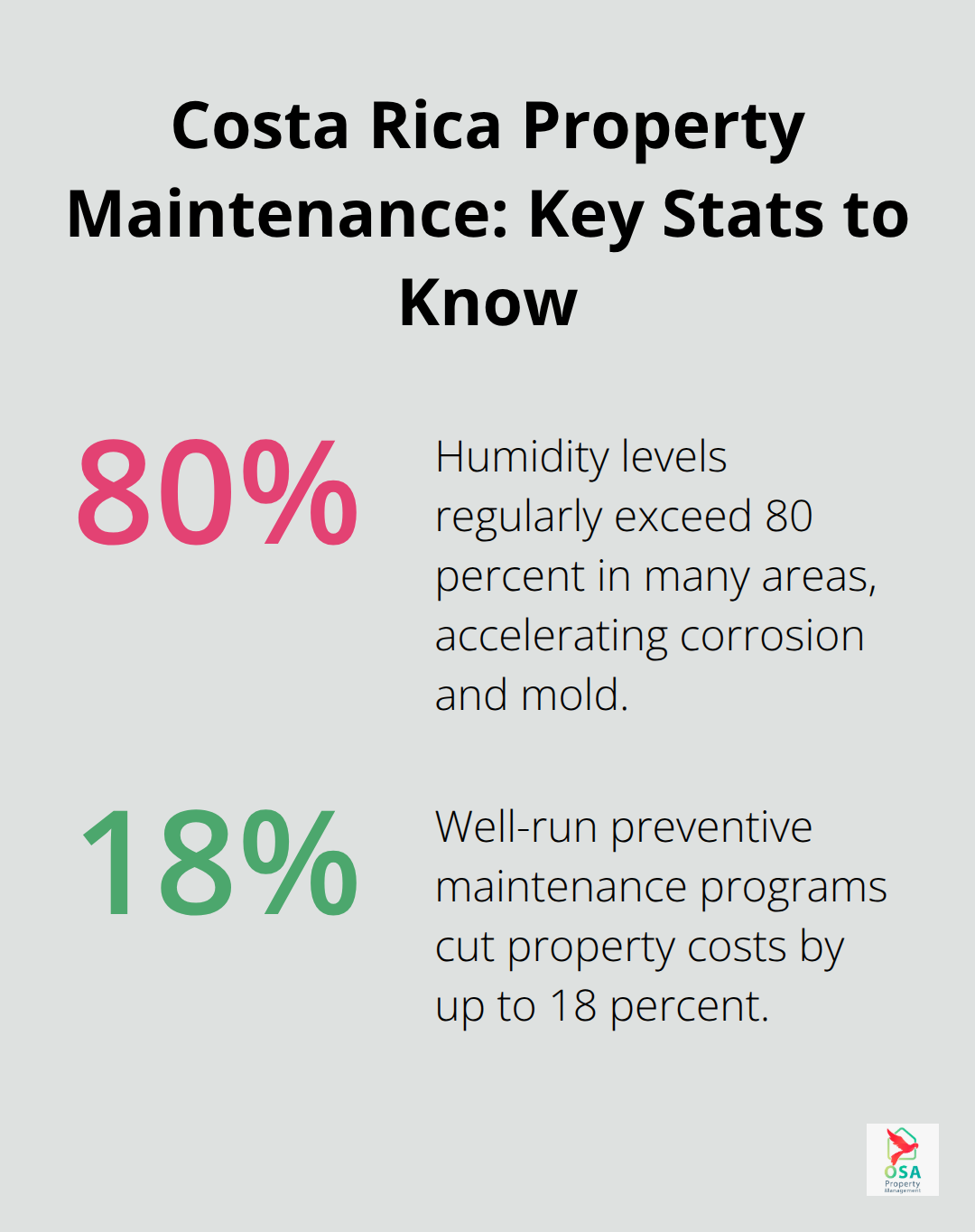
Costa Rica's climate accelerates deterioration in ways that mainland properties never experience. Humidity levels regularly exceed 80 percent, and the rainy season stretches up to eight months annually. Salt air on coastal properties corrodes metal fixtures at triple the rate of inland locations.
Emergency Breakdowns Cost Far More Than Prevention
Unplanned downtime costs an average of $320,000 per hour across all facilities, making breakdowns financially devastating for rental properties or owner-occupied homes alike. A rusted water heater that fails suddenly costs $2,000 to $4,000 for emergency replacement and installation, while a preventive inspection costing $150 catches corrosion before failure occurs. Most property owners in Costa Rica budget 1 to 3 percent of their property value annually for maintenance, which translates to $3,000 to $9,000 for a $300,000 home. Without preventive maintenance, that figure climbs sharply when emergencies force expensive repairs.
Coastal Properties Face Compounded Costs
Coastal properties require exterior repainting every 2 to 3 years at $2,000 to $5,000 per job, but skipping inspections means salt damage penetrates deeper, requiring full structural repairs costing $15,000 or more. Termites and ants thrive in warm, humid conditions, making quarterly licensed pest inspections non-negotiable rather than optional. Regular roof inspections during rainy season catch leaks before water intrusion causes mold damage that spreads through walls and ceilings, turning a $500 repair into a $20,000 remediation.
Prevention Delivers Measurable Savings
Research shows that up to 18 percent cost reduction comes from a well-run preventive maintenance program. The math is simple: invest modest amounts consistently or face catastrophic expenses when systems fail unexpectedly. Understanding these climate-specific challenges sets the foundation for developing a maintenance strategy that actually works in Costa Rica's demanding environment.
The Three Property Killers in Costa Rica
Plumbing Failures Strike Fast in Mineral-Rich Water
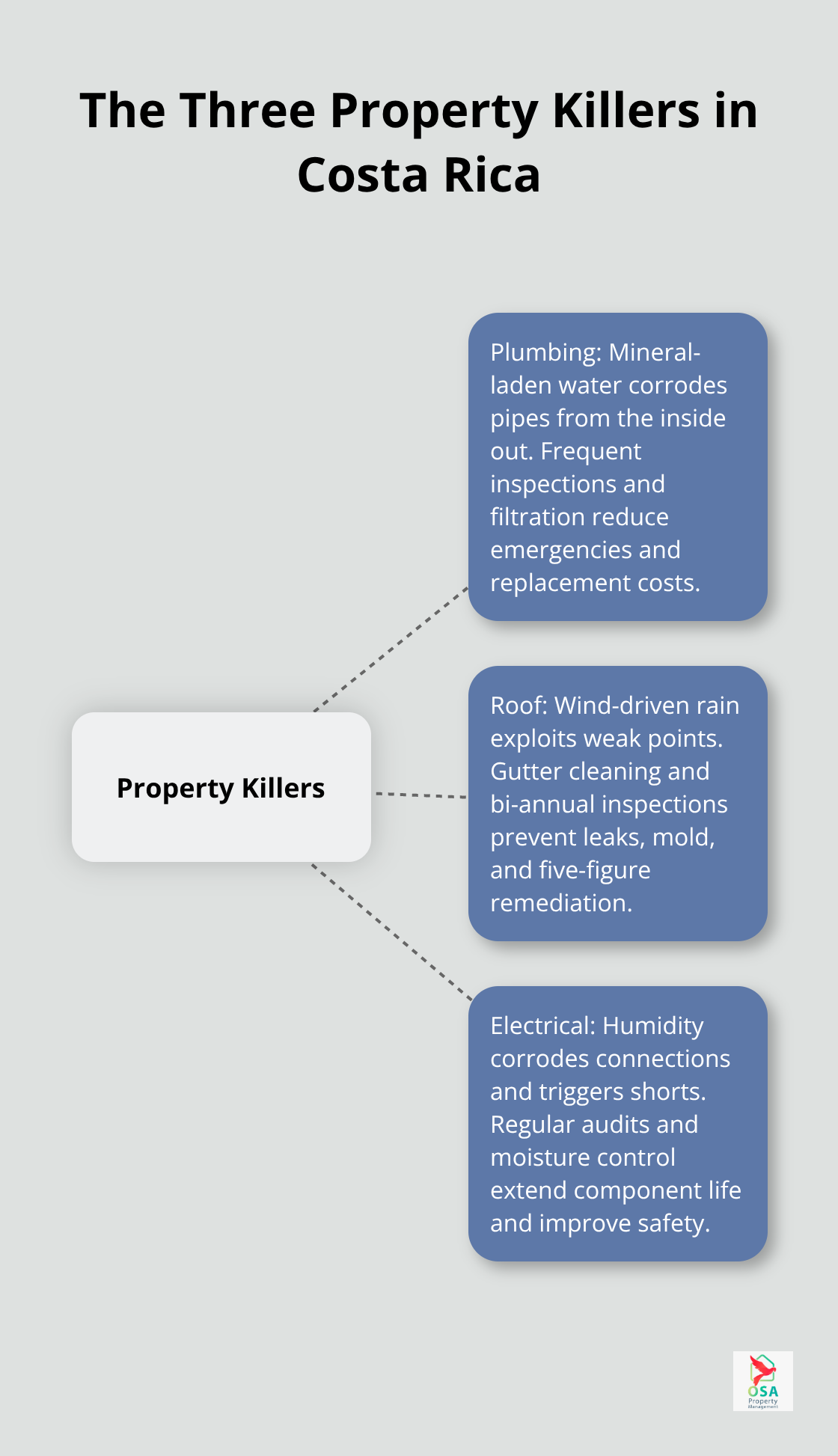
Plumbing failures account for the majority of emergency repairs in Costa Rican properties, and mineral-laden water corrodes pipes from the inside out. Buildup occurs fastest in properties over ten years old, with coastal properties experiencing accelerated corrosion from salt-laden water. A qualified plumber should inspect plumbing systems annually, checking for discoloration inside faucets and pressure drops that signal corrosion. Coastal properties need inspections every six months because salt speeds up the process dramatically. A preventive inspection costs $100 to $200, while emergency pipe replacement reaches $3,000 to $8,000 depending on the extent of corrosion and whether walls require opening. Installing water softeners or whole-house filters costs $1,500 to $3,000 upfront but extends pipe life by years and prevents sediment from clogging fixtures.
Roof Damage Accelerates During Rainy Season
Roof damage happens faster in Costa Rica than most homeowners anticipate because the rainy season brings wind-driven water that finds every weak spot. Gutters clog with debris within weeks during heavy rainfall, forcing water to back up under roofing materials and into attics where mold colonizes rapidly. Quarterly gutter cleaning costs $150 to $300 but prevents water intrusion damage that starts at $5,000 and escalates to $20,000 when mold remediation becomes necessary. Bi-annual roof inspections during and after rainy season identify cracked tiles, missing sealant, and deteriorated flashing before leaks penetrate the structure. High-quality waterproofing treatments applied every three to five years cost $5,000 to $10,000 but prevent exponentially larger repair bills.
Electrical Systems Corrode in Humid Conditions
Electrical systems fail prematurely in humid conditions because moisture corrodes connections and promotes short circuits that can damage appliances or create fire hazards. Monthly visual inspections of outlets, switches, and panel boxes catch green corrosion on copper connections before failures occur. Annual professional electrical audits identify deteriorating components before they fail and protect your home from dangerous faults. Replacing corroded breakers costs $200 to $500 per unit, while rewiring sections of a home runs $2,000 to $5,000 or more. Installing surge protectors and dehumidifiers in electrical enclosures costs $300 to $600 but dramatically extends component lifespan in Costa Rica's aggressive moisture environment.
These three systems demand attention because they fail silently until catastrophe strikes. Understanding what causes each failure type helps property owners prioritize maintenance spending and catch problems before they spiral into five-figure repairs. The next section covers the specific maintenance strategies that stop these killers in their tracks.
How to Build a Maintenance Schedule That Actually Works
Create a Written Inspection Calendar Tied to Your Climate
Inspections matter far more than most Costa Rican property owners realize, but only when they happen on a schedule that matches your climate, not some generic calendar. Properties inspected quarterly for plumbing and electricals catch problems before they become emergencies, while properties inspected annually miss the critical window when corrosion accelerates fastest. Start with a written inspection calendar tied to specific systems: plumbing checks in January and July, roof inspections during May and October when rainy season transitions occur, and electrical audits in March and September. Coastal properties need to add exterior paint inspections every three months because salt air moves fast, while inland properties can extend this to six-month intervals.
Document every inspection with photos and notes about discoloration, corrosion, water stains, or unusual sounds because this history helps contractors identify patterns and predict failures. A professional inspection costs $200 to $400 but catches problems at the $500 repair stage instead of the $5,000 emergency stage.
Adjust Your Approach for Seasonal Vulnerabilities
The seasonal approach matters because Costa Rica's tropical climate creates unique challenges for property owners. Gutters and drainage systems need regular cleaning to prevent blockages, foundation drainage requires attention before rains intensify, and roof sealant should be reapplied before the season starts. Dry season maintenance focuses differently on salt-air protection for coastal homes, pest prevention before humidity spikes, and HVAC system cleaning to remove mold spores before they spread through your property.
Select Contractors Who Understand Costa Rica's Climate Challenges
Finding trustworthy maintenance contractors in Costa Rica requires more than a Google search because quality varies dramatically and communication barriers complicate oversight. Hire contractors who provide written quotes, carry liability insurance, and have references from other property owners in your region, not contractors who show up with a handshake and a verbal price. Interview at least three contractors for major work and ask specifically how they handle Costa Rica's climate challenges because local experience matters tremendously.
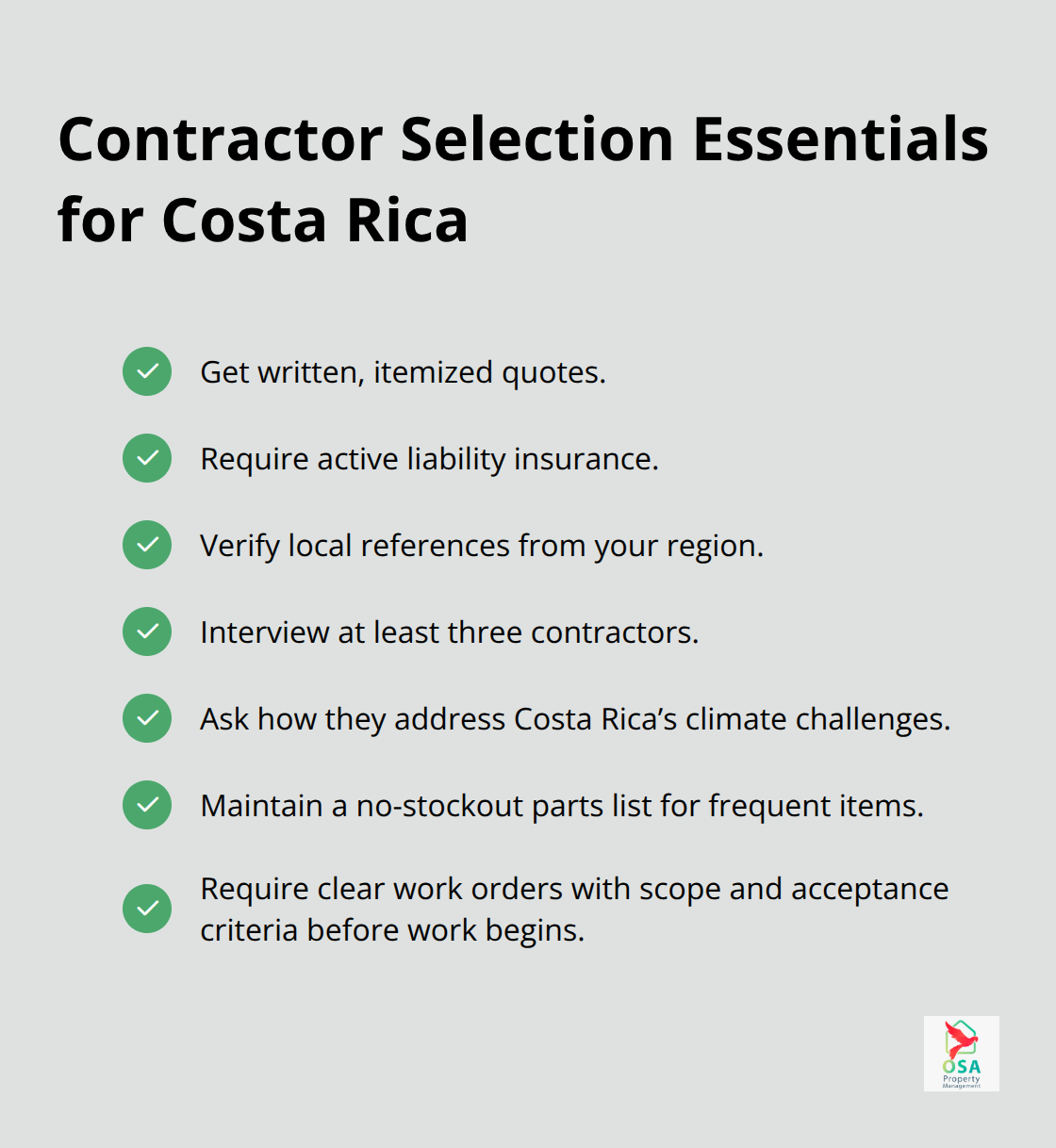
Establish a no-stockout parts list with your primary contractor for high-frequency items like air filters, plumbing seals, and electrical breakers so repairs don't stall waiting for supplies from San José. Request that contractors submit work orders with clear scope, required parts, safety equipment, and acceptance criteria before they begin work, which prevents scope creep and ensures quality control.
Budget Monthly Maintenance and Coordinate Across Systems
Monthly maintenance costs should be budgeted at $300 to $500 for a typical home, with coastal properties running $400 to $700 because salt and humidity accelerate everything. Coordinate maintenance across systems rather than treating each failure separately because a plumber fixing a leak should also inspect water quality and pressure, while an electrician repairing a circuit should assess humidity control around the panel. This integrated approach costs slightly more upfront but prevents secondary failures that emerge weeks later when one problem triggers another.
Final Thoughts
Preventive maintenance in Costa Rica stops expensive emergencies before they drain your budget and stress your life. The numbers are clear: investing $300 to $500 monthly in scheduled inspections and routine care prevents $5,000 to $20,000 emergency repairs that arrive without warning. Costa Rica's climate demands this proactive approach because humidity, salt air, and heavy rainfall accelerate deterioration faster than anywhere else.
Knowing your plumbing, roof, and electrical systems are monitored regularly gives you peace of mind that your property is protected. You sleep better when you have documentation of electrical audits, and you understand exactly what condition your systems are in. This confidence matters whether you own a vacation rental generating income or a family home where you spend holidays.
We at Osa Property Management have spent over 20 years managing properties across the southern Pacific zone, handling maintenance coordination, contractor oversight, and preventive scheduling for homeowners who want results without the headaches. Start your preventive maintenance Costa Rica program today by creating a written inspection calendar, budgeting monthly maintenance costs, and selecting contractors who take your climate seriously.