
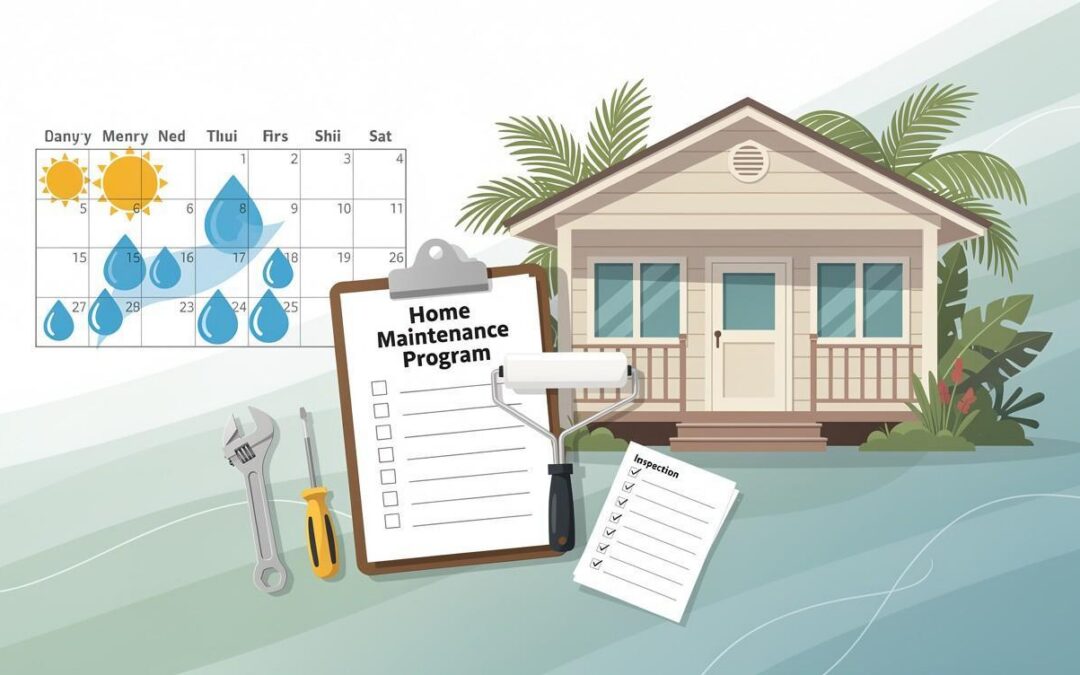
Costa Rica’s tropical climate brings unique challenges to homeowners. Rain, humidity, and intense sun can damage properties quickly if you’re not prepared.
We at Osa Property Management have seen firsthand how a structured home maintenance program protects your investment year-round. This guide walks you through seasonal tasks that keep your Costa Rican home in top condition.
Spring Prep Before the Rainy Season Hits
The four-week window before Costa Rica’s rainy season begins-typically late April through May-is your critical maintenance window. Missing this deadline costs money. A $500 roof inspection and minor repair in May can prevent $5,000 in water damage by October. This timing separates proactive maintenance from reactive emergency spending.
Roof and Gutter Inspection
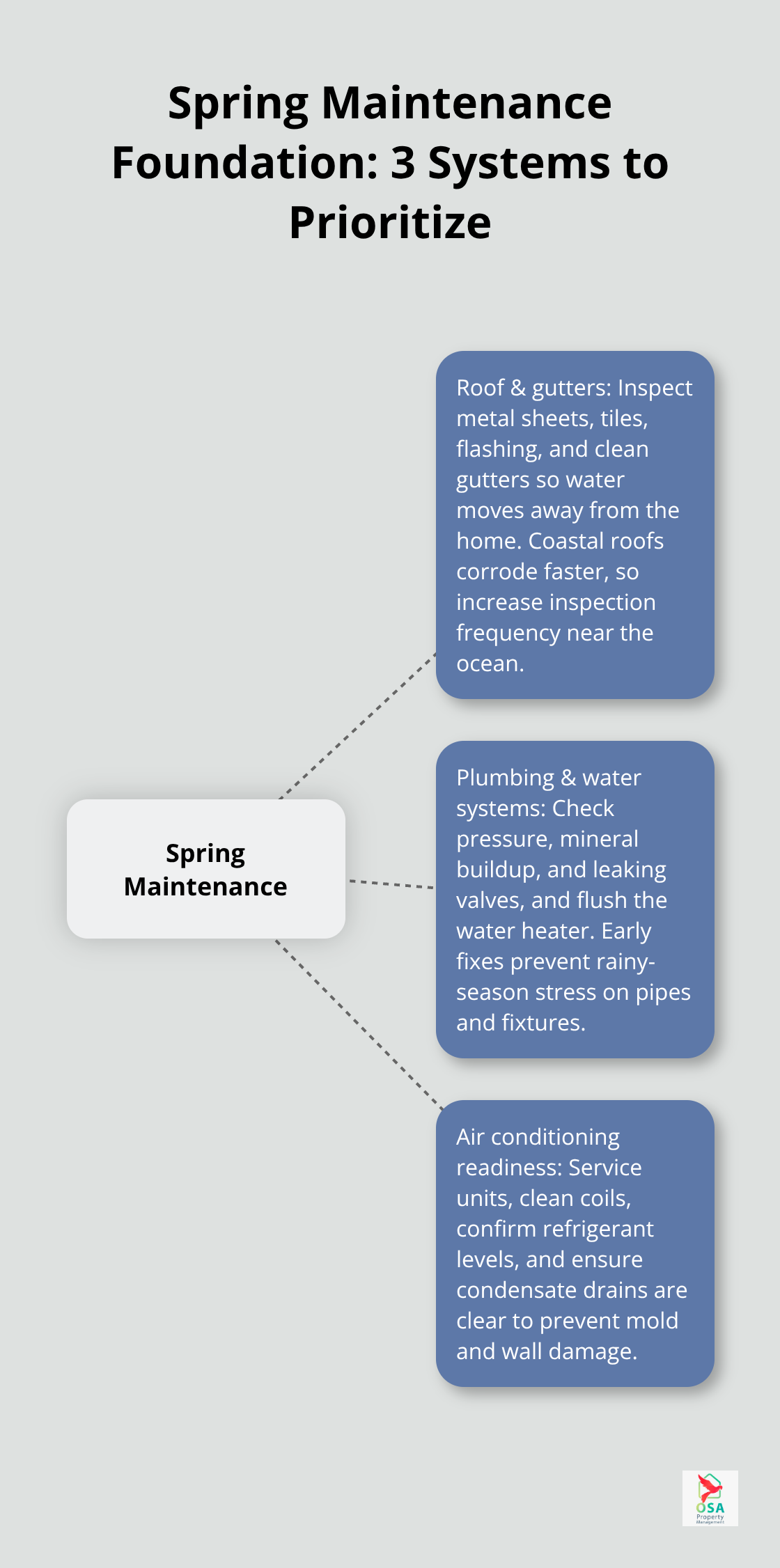
Start with your roof. Schedule a professional inspection to check for loose screws, rust on metal sheets, damaged tiles, and compromised flashing around vents and skylights. Metal roofs in coastal areas corrode faster due to salt exposure, so inspect every six months rather than annually if your property sits near the ocean.
Gutters demand equal attention. Clean them thoroughly before the rainy season arrives and verify they slope toward downspouts at a quarter-inch per ten feet. Downspouts should extend at least five feet away from your foundation. Clogged gutters cause water to overflow directly onto walls and foundations, accelerating moisture damage and mold growth. This single task takes two to three hours and costs $80–$150 if you hire someone, but it prevents foundation issues that run into thousands.
Plumbing and Water Systems
Costa Rica’s mineral-rich water causes scale and corrosion inside pipes. Schedule a professional plumbing inspection in March to identify pressure issues, mineral buildup, and leaking valves before rainy-season drainage stress peaks. Your plumber should flush the water heater and inspect all visible lines under sinks and behind appliances.
Install water leak sensors in kitchens, bathrooms, and under sinks for $50–$100 each. These sensors alert you immediately if moisture develops, catching problems before drywall warps or mold spreads within 24–48 hours in warm conditions. If you have a septic system, pump it every two to three years at a cost of $300–$500 per service. Schedule this work in April rather than waiting until October when contractors charge emergency premiums of 50–100%.
Air Conditioning Readiness
Air conditioning units need servicing before the dry and hot season peaks in April and May. A clogged condenser coil reduces cooling efficiency by 15–25% and drives electricity costs higher. Professional AC servicing costs $60–$100 and includes cleaning coils, checking refrigerant levels, and inspecting condensate drains.
Condensate drains are often overlooked but critical in humid climates. A blocked drain allows water to back up into your unit and surrounding walls, creating mold within 24–48 hours. These three systems-roof and gutters, plumbing, and air conditioning-form your spring maintenance foundation and directly protect against the moisture invasion that damages Costa Rican properties most.
With spring maintenance complete, your home enters the rainy season protected. The next phase focuses on sealing your property against water infiltration and preparing drainage systems to handle months of heavy rainfall.
Seal Your Home Against Water Before the Rains Arrive
Protect Entry Points with Proper Sealing
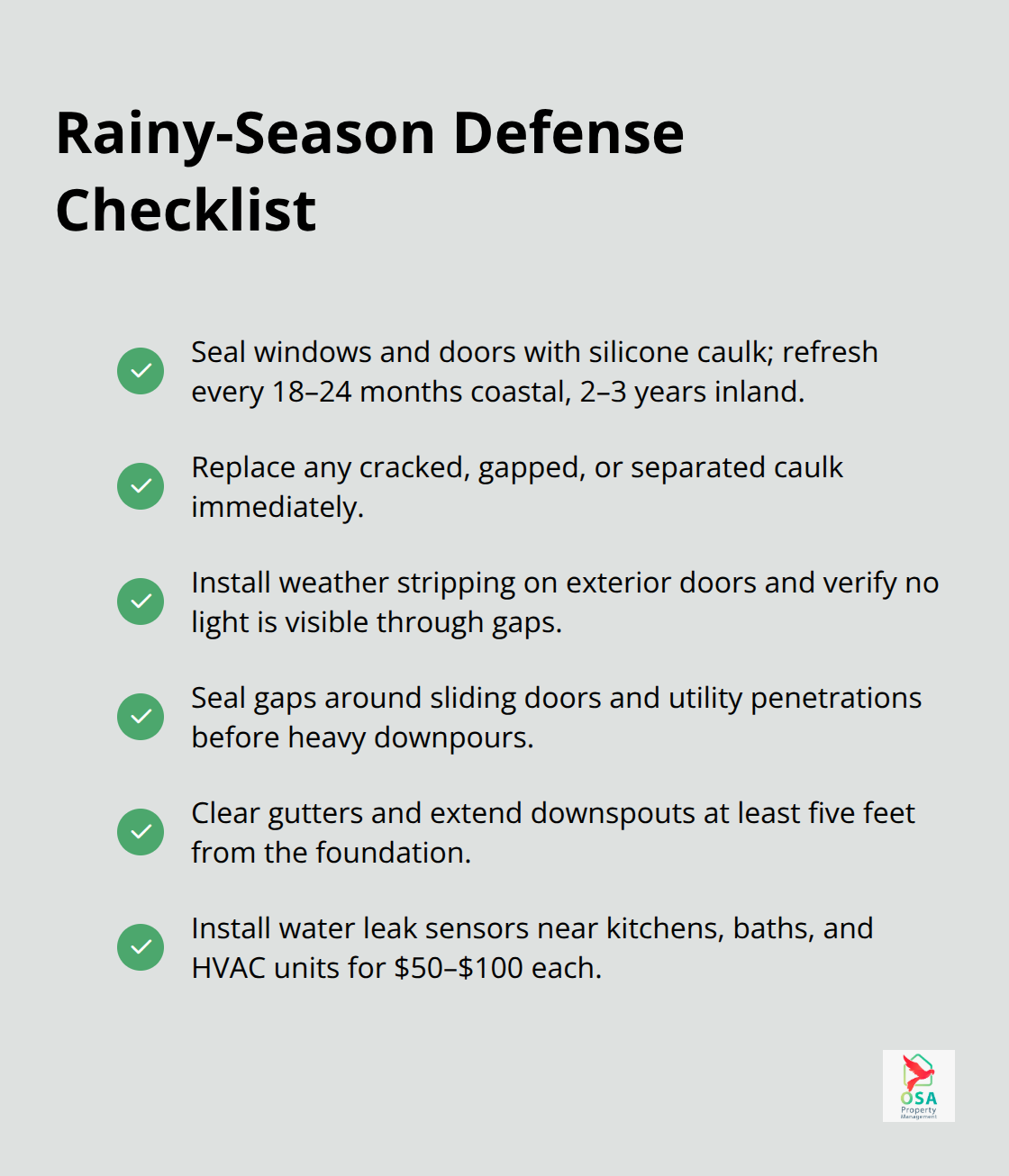
Water infiltration is the single biggest threat to Costa Rican properties during the rainy season, and sealing windows and doors is not optional-it’s mandatory. Silicone-based sealants around windows and doors cost $3–$5 per tube, and you’ll need 4–8 tubes for a typical home. Apply fresh caulk every 18–24 months in coastal areas where salt air degrades sealants faster, or every 2–3 years inland. If your existing caulk shows cracks, gaps, or separation from the frame, replace it immediately. A $50 caulking job now prevents water from wicking behind drywall, where mold begins growing within 24–48 hours in warm, humid conditions.
Weather stripping around door frames adds another layer of protection and costs $20–$40 per door. Check that exterior doors seal completely when closed; if light shows through gaps, your air conditioning leaks cold air and moisture enters. For sliding glass doors, seal gaps around windows, doors, and utility penetrations where water can enter during heavy downpours.
Clear and Verify Drainage Systems
Drainage systems demand equal urgency. Your gutters must be completely clear of leaves, debris, and moss before May arrives. Moss and algae thrive in Costa Rica’s humidity and block water flow; remove them with a 1:1 mixture of water and white vinegar rather than pressure washers, which can damage gutters and force water behind fascia boards. After cleaning, verify downspouts extend at least five feet away from your foundation. If they dump water directly against foundation walls, standing water creates hydrostatic pressure that forces moisture through concrete and into crawl spaces or basements. This single mistake causes foundation cracks, efflorescence, and mold colonies that cost $2,000–$10,000 to remediate.
Drainage systems in the Central Pacific corridor must handle 1,500–2,000 mm of annual rainfall, while areas farther south toward Manuel Antonio receive 3,000 mm or more, so larger-capacity gutters are justified in high-rainfall zones.
Inspect Foundations and Walls for Existing Damage
Foundation and wall moisture damage often goes undetected until serious structural problems emerge. Conduct monthly inspections of dark, damp areas like spaces under sinks, behind appliances, inside closets, and crawl spaces. Look for discoloration, soft spots in wood framing, or a musty odor indicating mold colonization. If you spot mold on hard surfaces, clean it immediately with one cup of bleach per gallon of water; for extensive contamination covering more than a few square feet, hire professional remediation. Mold exposure causes allergies, sinus irritation, headaches, and asthma flare-ups, and children and elderly residents face higher health risks.
Inspect roofs and gutters for damage in April before heavy rains arrive. Hairline cracks in concrete allow water penetration; seal them with concrete caulk or epoxy injection depending on crack width. Foundation settling is normal, but cracks wider than one-quarter inch warrant professional assessment.
Install Early Detection Systems
Install water leak sensors under sinks, in bathrooms, and near HVAC units for $50–$100 each; these devices alert you immediately when moisture develops, catching problems before drywall warping or mold spread accelerates repair costs. If your property has a crawl space, install a sump pump and test it monthly to prevent water accumulation.
These three systems-sealed entry points, functioning drainage, and early moisture detection-form your rainy season defense. Properties that address them before May avoid the emergency repairs and health hazards that plague neglected homes throughout the eight-month rainy season. With your home sealed and drainage systems ready, the next phase focuses on managing the moisture that inevitably enters during months of heavy rainfall and keeping your property dry from the inside out.
Dry Season Maintenance and Repairs
The dry season from December through April is when you address the structural wear that the rainy season accelerates. This is not the time to postpone exterior work-it’s the window when contractors are available and weather cooperates. Exterior painting costs $2,500–$5,000 for a typical home, and coastal properties need repainting every three to five years because salt air degrades finishes faster than inland homes. Schedule this work in the dry season because humidity during the rainy season prevents paint from curing properly. Wood staining runs $15–$25 per square meter and should happen every three to four years on exposed timber to prevent water infiltration and termite vulnerability. Metal roofs in coastal areas benefit from anti-corrosive paint treatment every five to seven years, though surface preparation costs add $500–$1,000 to the total. Low-pressure washing at 1,500 PSI or less costs $300–$800 depending on home size and protects your property from moisture damage. High-pressure water forces moisture behind siding and into wall cavities where mold colonizes within 24–48 hours. Low-pressure washing works well for decking, concrete driveways, and pool areas where water drains away, but avoid directing spray at walls, windows, or roof edges.
Termite Inspection and Wood Treatment
Termites reproduce rapidly in Costa Rica’s warm, humid conditions, and pest-control visits are necessary to protect your investment. Quarterly-only schedules leave three-month gaps where infestations establish colonies undetected. Inspect all exposed wood framing, deck supports, door frames, and trim for soft spots, galleries (mud tubes), or visible damage. Wood-boring insects damage structural integrity silently, so visual inspection alone is insufficient. Hire a licensed pest-control company to inspect annually and treat vulnerable areas with termiticide. Teak and melina wood resist termite damage better than softer woods, so prioritize these species when replacing trim or building additions. Termite damage costs $300–$2,500 depending on severity, but structural damage from untreated infestations can exceed $30,000. The dry season is ideal for treatment work because contractors can access all areas without weather delays, and treated wood needs time to cure before rainy-season moisture exposure.
Pool and Outdoor Equipment Service
Pool equipment deteriorates rapidly in tropical conditions, and dry season servicing prevents breakdowns during peak rental season. Pool pumps cost $400–$800 to replace, but a $150–$250 monthly service contract catches wear early. Check pump seals, clean filter cartridges, verify water chemistry (pH between 7.2–7.6, chlorine 1–3 ppm, alkalinity 80–120 ppm), and brush walls to prevent algae and calcium buildup. Drain and inspect the pool skimmer basket monthly. Pool resurfacing costs $3,000–$8,000, so preventive maintenance extends the surface lifespan significantly. Deck repairs, outdoor furniture restoration, and gutter repainting belong in the dry season because these tasks require days of drying time. Outdoor gas lines and propane tanks need annual inspection for leaks and corrosion. Landscape irrigation systems should be tested and adjusted before the dry season peaks to maintain curb appeal for rental guests.
Deferred Maintenance and Major Projects
The dry season is also when you address deferred maintenance from the rainy season-roof repairs that were temporary fixes, wood damage that needs replacement, or drainage improvements. A realistic dry-season maintenance and repair budget for a three to four bedroom home runs $2,000–$4,000 for routine work, plus $5,000–$15,000 if you tackle major projects like roof replacement or extensive exterior painting. Contractor rates during peak dry season run 10–20% higher than shoulder months, so schedule non-urgent work in early December or late March to capture better pricing while weather remains favorable.
Final Thoughts
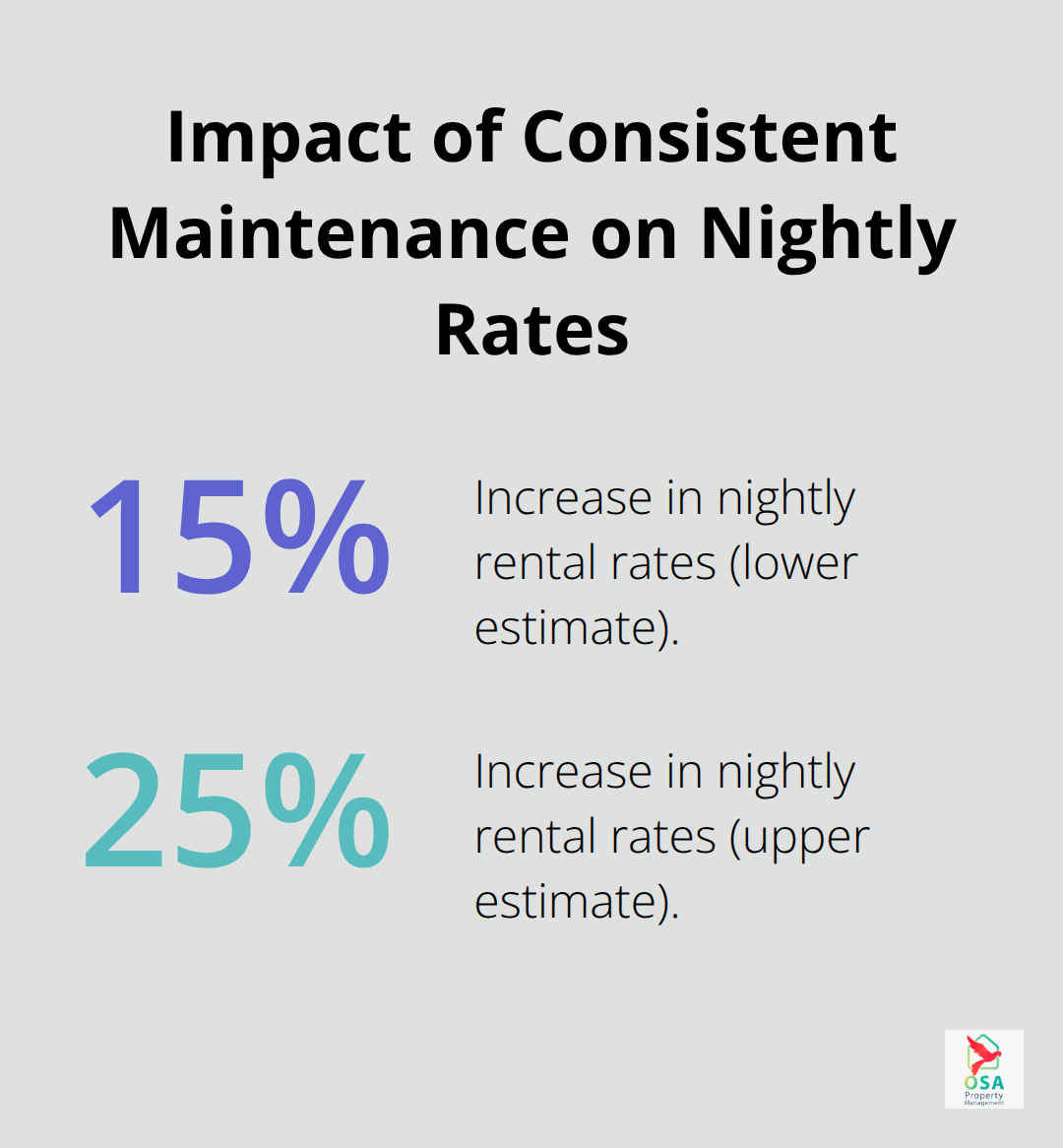
A seasonal home maintenance program for Costa Rican properties isn’t optional-it’s the difference between protecting your investment and watching it deteriorate. Spring preparation prevents rainy-season disasters, rainy-season sealing stops water infiltration before it starts, and dry-season repairs address structural wear before it compounds. This three-phase cycle repeats annually, and properties that follow it consistently maintain higher value, attract better rental guests, and generate 15–25% higher nightly rates than neglected homes.
The financial case is straightforward: a $500 roof inspection in May prevents $5,000 in water damage by October, a $50 caulking job stops mold from colonizing behind drywall where remediation costs $2,000–$10,000, and monthly pest-control visits at $50–$100 prevent termite damage that can exceed $30,000. A realistic annual maintenance budget of $12,000–$22,000 for a three to four bedroom home sounds substantial until you compare it to emergency repairs, health hazards from mold exposure, and lost rental income from a property taken offline for repairs. These aren’t expenses-they’re investments that compound over time.
Executing this program alone while living abroad creates friction that exhausts even organized owners. We at Osa Property Management have managed properties across Tarcoles, Jacó, Dominical, Manuel Antonio, Ojochal, Uvita, and Golfito for over 20 years, and we’ve built systems that handle this complexity through trusted contractors, seasonal inspections, bill payments, and early problem detection. Contact Osa Property Management to learn how professional management keeps your home maintenance program on schedule and your property generating maximum revenue.