
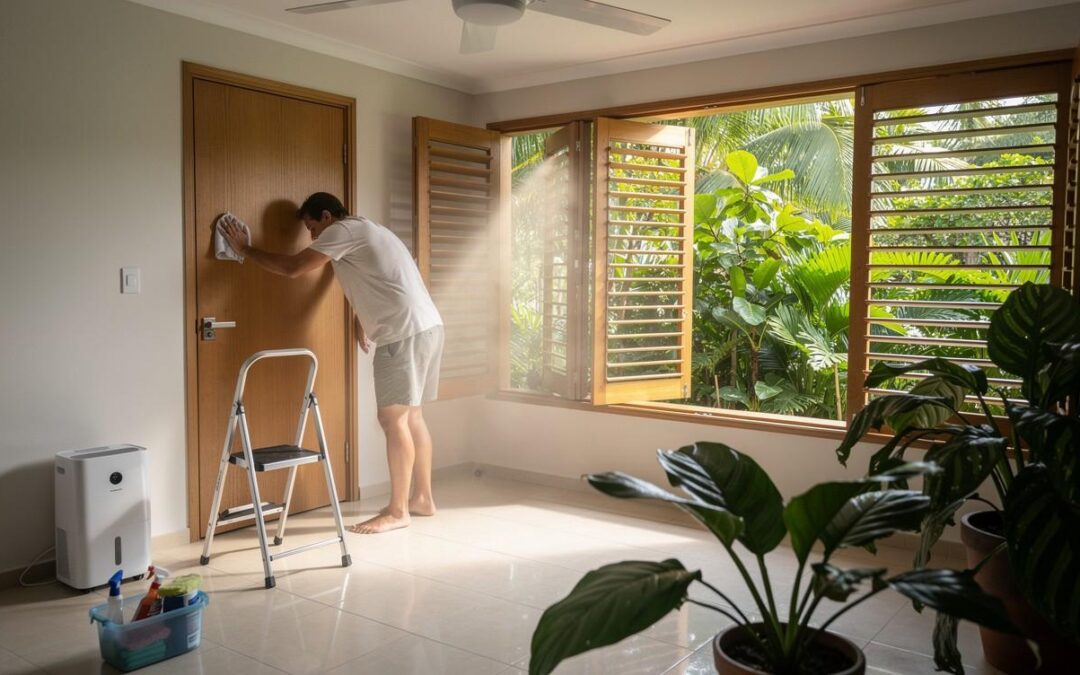
Home upkeep in Costa Rica requires a different approach than most homeowners expect. The tropical climate, high humidity, and intense rainy seasons create unique challenges that demand consistent attention.
At Osa Property Management, we’ve seen firsthand how small daily habits and seasonal tasks prevent costly repairs down the road. This guide walks you through the practical steps that keep your home comfortable and protected year-round.
Daily Habits That Stop Water Damage Before It Starts
Costa Rica’s humidity and rainfall create the perfect conditions for water damage to spiral into expensive repairs. Humidity above 70 percent triggers mold within 24 to 48 hours, and the country receives between 1,500 and 2,000 millimeters of annual rain in central areas, with southern regions exceeding 3,000 millimeters. Water leaks are the number one problem we see destroy homes here, and they almost always start small.
Spot Leaks Before They Spread
Check under sinks, around toilet bases, and where pipes enter walls at least twice weekly. Look for soft drywall, water stains, or that musty smell indicating moisture trapped inside walls. If you spot dampness, address it immediately because hidden water damage costs 3 to 5 times more to repair than early intervention. Keep your main water shutoff valve accessible and test it monthly so you can stop a leak fast if needed. Have spare PVC fittings, shutoff valves, and hose clamps on hand for about 50 dollars total, allowing you to stop flowing water before calling a plumber.
Air Conditioning Filters Control Mold Risk More Than You Think
Your air conditioner serves as your primary defense against mold in Costa Rica’s climate. Replace filters monthly, not quarterly as manufacturers sometimes suggest, because dust-laden filters lose their ability to remove humidity and trap particles that feed mold growth. Monthly filter changes cost roughly 30 dollars and directly cut your mold risk. Keep the AC running even when you’re away during humid days to prevent moisture buildup in closed rooms. If you’re worried about energy costs, use a programmable thermostat to set the unit at a higher temperature during the day while still maintaining humidity control. The EPA recommends keeping indoor humidity below 60 percent, but Costa Rican properties often run around 70 percent during rainy season. Schedule full AC inspections twice yearly-before the rainy season and before the hottest months-to check refrigerant levels and clean condenser coils. Coastal properties face additional stress from salt spray that accelerates corrosion on electrical panels, so test breakers monthly and address any issues before they fail under load.
Doors and Windows Prevent Water Infiltration
Water infiltration around doors and windows causes hidden damage that spreads to framing and insulation. Inspect exterior sealants annually and reseal every two years because UV exposure and tropical weather degrade caulking faster than in temperate climates. Look for cracks in stucco around the home, which can channel water behind finishes and promote mold and structural damage if left unaddressed. Run your hand around window and door frames to feel for gaps or soft spots indicating water has already entered. Squeegee shower doors and wipe down bathroom sinks daily to prevent water from sitting on surfaces where mold thrives. Open blinds in the morning to let sunlight dry surfaces, then close them at night to control heat and humidity.
Move Forward With Professional Guidance
These simple daily habits take minutes but prevent the thousand-dollar remediation bills that follow when water damage spreads. However, spotting problems early requires more than daily checks. Seasonal maintenance tasks demand attention that goes beyond what most homeowners can manage alone, especially when coordinating with local contractors and tracking what repairs have been completed.
Seasonal Tasks That Match Costa Rica’s Climate Rhythm
The rainy season arrives in May and transforms your property’s maintenance priorities overnight. Costa Rica receives average rainfall around 1,300/1,600 mm per year in central areas, with southern regions receiving significantly more, meaning drainage failures during these months lead to flooding, foundation damage, and mold that spreads through walls in days.
Prepare Your Roof Before the Rains Hit
Schedule roof inspections every April before the rains hit to catch loose tiles, worn flashing, and clogged gutters before water intrusion begins. A professional roof inspection costs about 100 to 200 dollars and takes roughly two hours, but skipping this step often causes hidden damage that costs 5,000 to 8,000 dollars to repair. Clear gutters yourself in March and again in early May, removing leaves and debris that block water flow and cause overflow damage to fascia and siding. After heavy rains, conduct a follow-up roof inspection and document findings with photos to track progress and budget repairs.
Protect Your Septic System During Wet Season
Check that your septic system can handle actual occupancy by having an engineer assess tank size for about 300 to 500 dollars, because undersized systems back up during wet season heavy use and cost 2,000 to 5,000 dollars to fix. Test your main water shutoff valve monthly and keep it accessible so you can stop a leak immediately if pipes burst under pressure from backed-up groundwater.
Run Air Conditioning Continuously During the Dry Season
The dry season from December through April brings lower rainfall but sustained high humidity that creates mold risk if air conditioning falls behind. Run your AC during humid periods to maintain indoor humidity between 30-50%, since the system removes moisture better than any other tool you own. Replace AC filters monthly during the dry season and twice monthly if you live in coastal areas where salt spray clogs them faster, maintaining the unit’s ability to pull humidity from indoor air. Schedule full AC inspections before the dry season to clean condenser coils and check refrigerant levels, ensuring peak dehumidification performance when you need it most.
Address Hidden Moisture in Crawl Spaces and Attics
Crawl spaces and attics drive indoor humidity upward through walls, so inspect these areas for standing water and seal any gaps where humid air enters from outside. If your home sits empty for weeks, leave the AC running at a higher setpoint rather than shutting it off completely, since re-cooling a humid house takes days and invites mold growth in the meantime.
Combine Daily Habits With Seasonal Tasks
Supplement AC dehumidification with daily habits: open blinds in the morning to let sunlight dry surfaces, use bathroom and kitchen exhaust fans during and after showers or cooking, and wipe down sinks and shower doors to prevent standing water where mold thrives. These seasonal maintenance tasks demand coordination with local contractors, tracking of completed repairs, and documentation that protects your investment over time-responsibilities that grow complex when managing multiple seasonal priorities across rainy and dry seasons.
Working with Professional Property Management for Consistent Care
How Regular Inspections Catch Problems Early
Daily habits catch obvious problems, but professional inspections find the hidden damage that costs thousands to fix later. Systematic inspections examine areas homeowners typically miss: behind walls, inside crawl spaces, beneath roofing materials, and within HVAC ductwork. A professional roof inspection costs $250 to $600 and takes roughly two hours, yet skipping this step leads to water intrusion repairs costing 5,000 to 8,000 dollars. The difference is simple math: early detection prevents compound damage.
When an inspector documents soft spots in fascia, compromised flashing, or stucco cracks channeling water behind exterior finishes, you address the problem at its source rather than dealing with mold remediation inside walls months later. Professional inspections scheduled before the rainy season in April catch issues when dry weather allows repairs without rushing. After heavy rains, a follow-up inspection with photos creates a maintenance history that tracks what’s been repaired, what’s deteriorating, and where future problems will likely emerge.
Coordinating Maintenance with Trusted Local Contractors
Coordinating multiple contractors across seasonal tasks requires someone who knows local suppliers, understands which companies deliver quality work, and maintains accountability when repairs fall short. Local contractors who understand Costa Rica’s climate-specific challenges bring expertise that prevents costly mistakes.
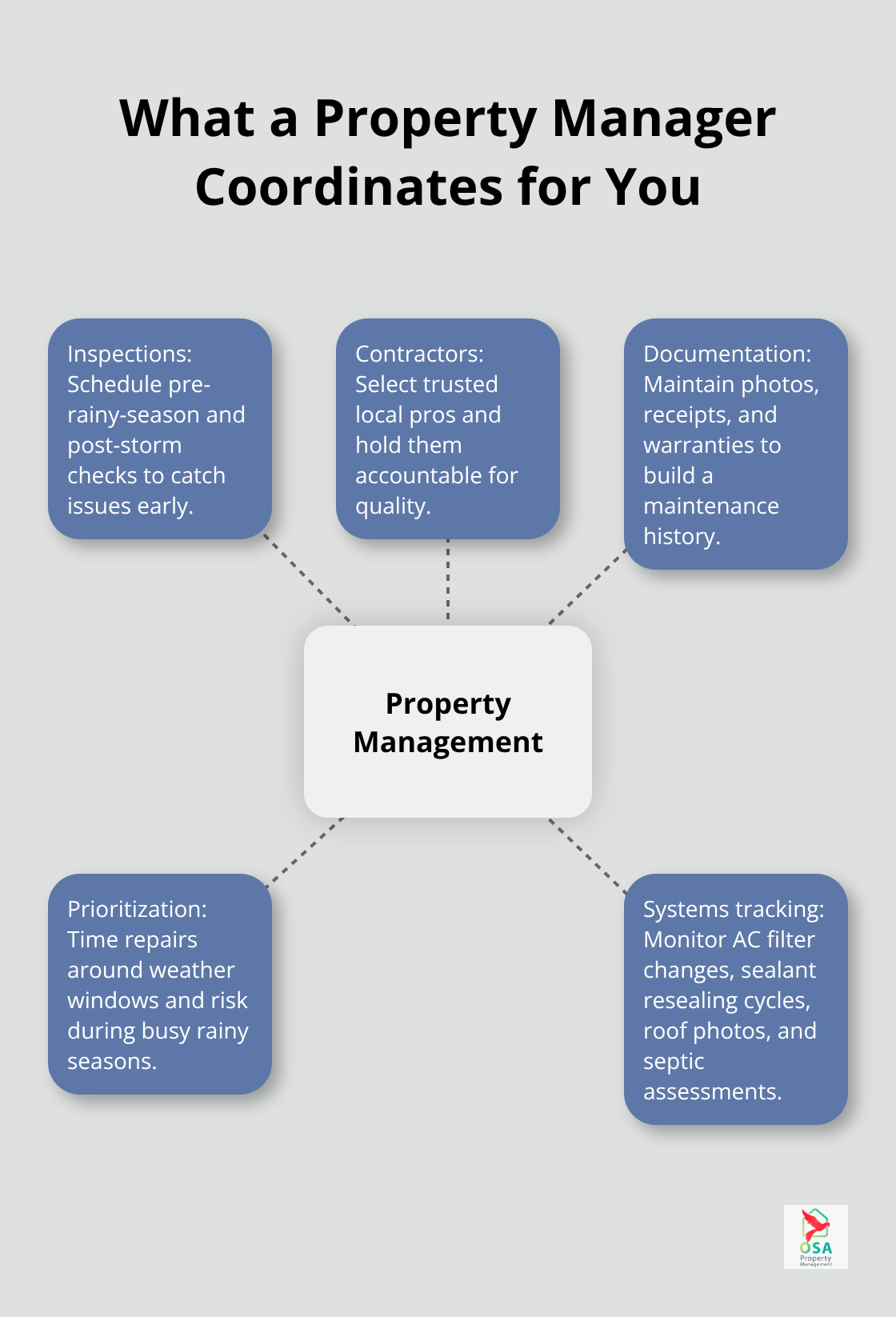
A property manager tracks when your septic system was last assessed for tank capacity, which contractor replaced your AC filters last month, when your exterior sealants are due for resealing every two years, and whether your roof inspection photos from April match current conditions.
Without this tracking system, homeowners either repeat work they’ve already paid for or miss critical tasks entirely. The coordination becomes especially complex during rainy season when multiple properties need urgent repairs and contractor availability shrinks. Professional management handles this pressure seamlessly, prioritizing work based on risk and weather windows.
Tracking Maintenance Schedules and Documentation
Documentation after every repair-contractor name, dates, materials used, costs, and warranty details-creates a lasting record that supports future claims and prevents disputes. This maintenance history proves you’ve invested in upkeep and directly increases property value when you sell your home. A comprehensive tracking system (combining inspection reports, repair receipts, and warranty information) transforms maintenance from a chaotic scramble into a predictable, seasonal process where tasks happen on schedule and nothing falls through the cracks.
Final Thoughts
Consistent home upkeep in Costa Rica transforms maintenance from a source of stress into a manageable routine that protects your investment. The daily habits covered in this guide-checking for leaks, maintaining air filters, and inspecting doors and windows-take minimal time but prevent water damage from spiraling into five-figure repair bills. Seasonal tasks like roof inspections before the rainy season and septic system assessments stop problems before they compound, and when you stay ahead of Costa Rica’s humidity and rainfall, your home remains comfortable and your property value climbs.
The real payoff comes from peace of mind. Homeowners who follow preventative maintenance schedules sleep better knowing their roof won’t leak during the next downpour, their AC will control mold growth, and their plumbing won’t back up unexpectedly. This confidence matters, especially for vacation properties or homes you visit seasonally, since you’re not constantly worried about what deteriorates while you’re away.
Building a sustainable maintenance plan requires more than good intentions-it demands tracking inspection dates, documenting repairs with contractor details and warranty information, and coordinating with local professionals who understand Costa Rica’s climate challenges. We at Osa Property Management handle this complexity for homeowners across Tarcoles, Jaco, Dominical, Manuel Antonio, Ojochal, Uvita, and Golfito, and our team coordinates inspections, manages contractors, and maintains documentation that protects your investment long-term. Contact Osa Property Management to transform home upkeep in Costa Rica from a burden into a predictable, seasonal process.