
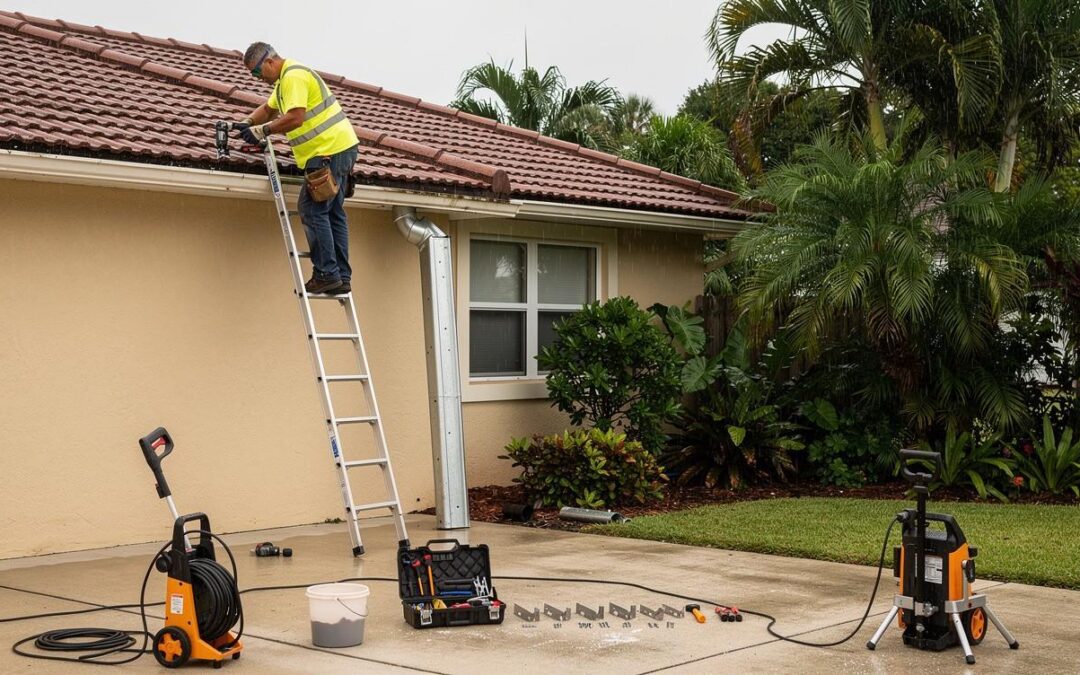
Costa Rica's tropical climate is beautiful, but it's relentless on homes. High humidity, heavy rainfall, and intense sun damage roofs, plumbing, and wooden structures faster than most property owners expect.
At Osa Property Management, we've seen countless homes deteriorate simply because owners didn't know what to maintain or when. The good news is that a solid maintenance plan stops most problems before they become expensive repairs.
What Damages Your Costa Rican Home the Most
Humidity and Moisture: Your Home's Silent Enemy
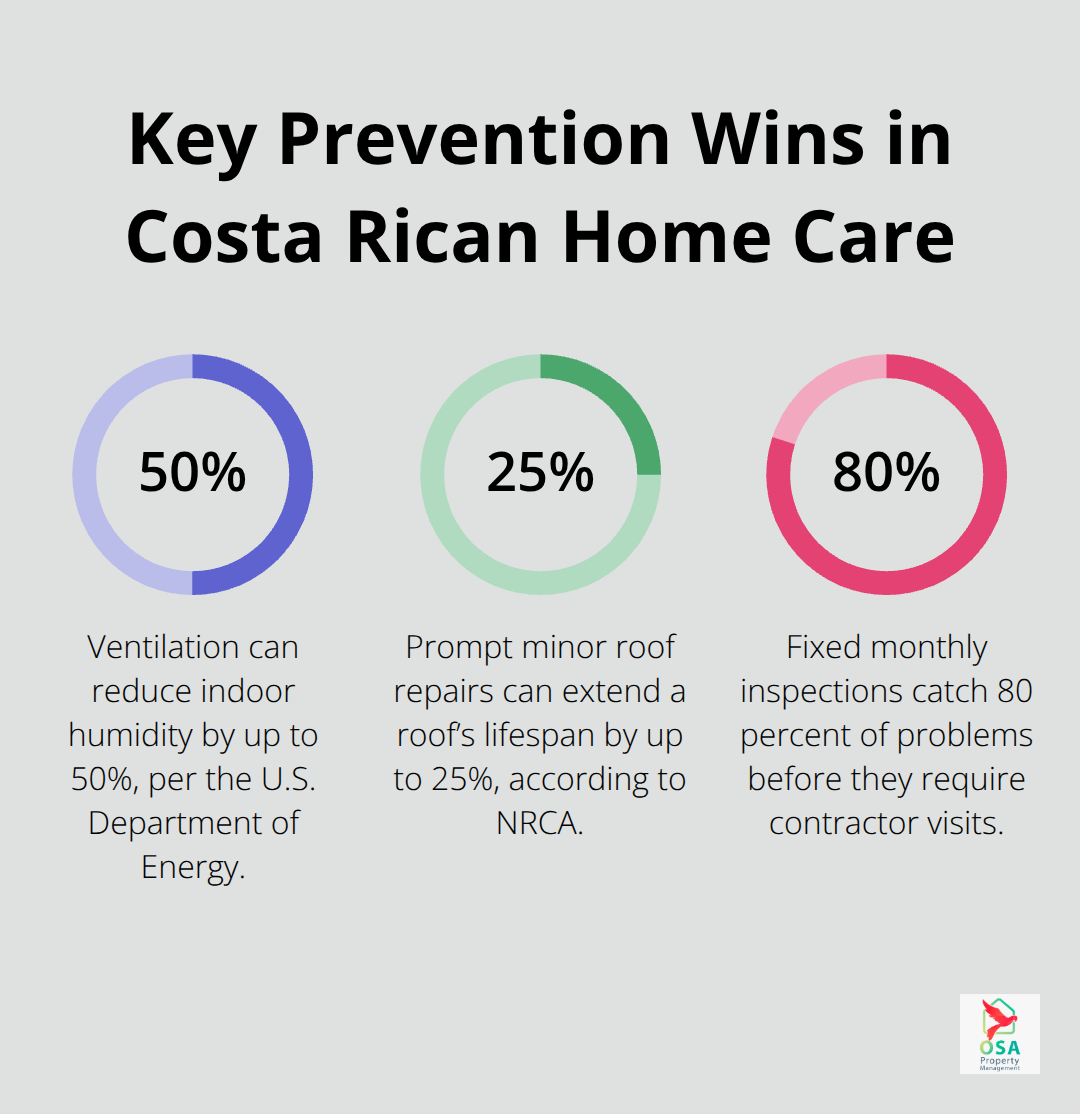
Humidity in Costa Rica isn't just uncomfortable-it's destructive. The U.S. Department of Energy reports that ventilation can reduce indoor humidity by up to 50%, which tells you how aggressive moisture control needs to be here. During rainy season from May to November, coastal areas like Dominical, Uvita, and Manuel Antonio experience constant moisture intrusion that turns wood soft, corrodes metal fasteners, and creates mold within 24 to 48 hours of water exposure, according to the EPA. Your roof doesn't just leak; it rots from underneath. Metal gutters rust through. Wooden deck posts fail structurally.
Most owners don't realize that Costa Rica's annual rainfall varies wildly by region-some areas receive over 150 inches per year-meaning your gutters and drainage systems face water volumes most homeowners never anticipate. If you don't clean gutters every three months and maintain proper slope of one-quarter inch per 10 feet toward downspouts, you invite foundation damage and basement flooding. Extend downspouts at least 5 feet from your foundation; anything closer channels water directly into your home's structural base.
Roof and Structural Protection
The National Roofing Contractors Association states that prompt minor roof repairs extend a roof's lifespan by up to 25%, yet most owners wait until leaks appear. Schedule roof inspection frequency and flashing maintenance twice yearly during spring and fall, focusing on flashing around chimneys, vents, and skylights where water enters. Apply silicone-based sealants around windows, doors, and entry points, and use weather stripping to block moisture intrusion.
For bathrooms and high-moisture areas, tiles or vinyl flooring outperform carpet because they resist moisture retention and mold growth. When you renovate, choose mold-resistant materials and paints with anti-microbial additives that inhibit mold growth for up to five years.
Pest Infestations in Tropical Climates
Pest infestations accelerate in humid environments, and tropical pests in Costa Rica are relentless. Termites thrive in moisture-rich wood, cockroaches multiply in damp kitchens and bathrooms, and mosquitoes breed in standing water. Quarterly professional pest management with a licensed company catches infestations early, which costs significantly less than treating severe damage.
Early Detection Prevents Costly Repairs
Monthly inspections of dark, damp spaces like under sinks, behind appliances, and closets catch discoloration and musty odors early. If mold appears, clean promptly with one cup bleach per gallon of water; extensive mold requires professional remediation. The cost of addressing these issues monthly or quarterly is negligible compared to structural repairs that can run tens of thousands of dollars.
Understanding what damages your home is the first step-but knowing when to act separates owners who preserve their investment from those who face emergency repairs. The next section walks you through the specific maintenance tasks that stop these problems before they start.
The Three Maintenance Tasks That Actually Matter
Roof Inspections and Gutter Maintenance
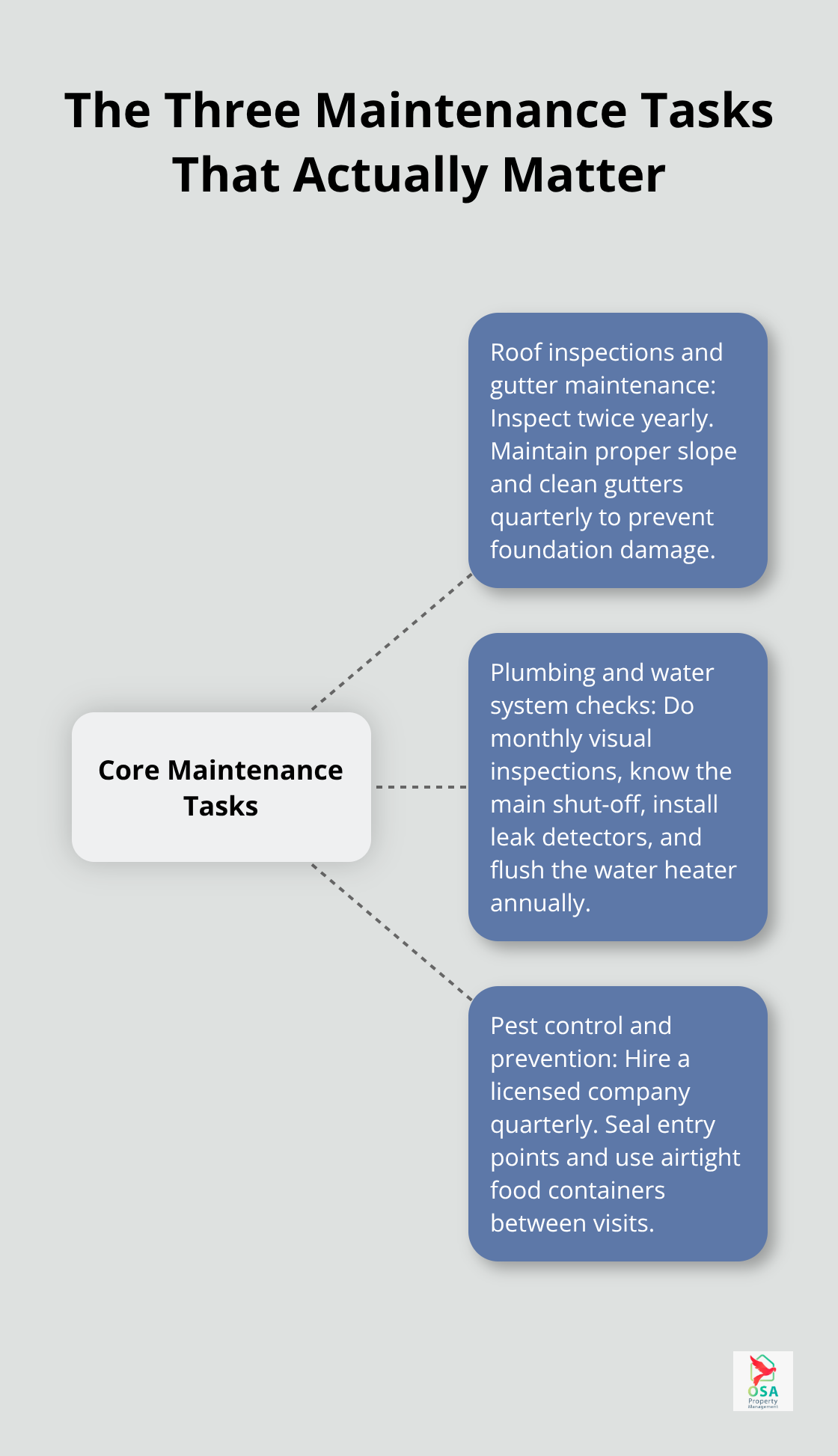
Your roof fails catastrophically without warning, so inspect it twice yearly-once before rainy season in April and again in September after the heaviest months. Check flashing around chimneys, vents, and skylights where water sneaks in before it ever reaches your ceiling. The National Roofing Contractors Association found that prompt minor repairs extend roof lifespan by up to 25%, which means catching a small gap costs hundreds instead of tens of thousands.
Clean gutters every three months, not annually. In regions receiving over 150 inches of rain yearly, three-month intervals prevent the moss and debris buildup that turns gutters into water channels overflowing directly onto your foundation. Maintain proper slope of one-quarter inch per 10 feet toward downspouts, and extend downspouts at least 5 feet away from your foundation-anything closer forces water into your structural base. Apply silicone-based sealants around windows, doors, and entry points annually, and add weather stripping where gaps exist. These tasks take a weekend but prevent foundation damage that requires months of repair.
Plumbing and Water System Checks
Your plumbing and water systems demand monthly visual inspections of exposed pipes for corrosion or leaks because Costa Rica's moisture accelerates metal failure. Know exactly where your main water shut-off valve is located; most owners waste hours finding it during an emergency. Install water leak detectors under sinks and near washing machines (they cost thirty dollars and catch leaks before they cause the average water damage claim of nearly eleven thousand dollars). Flush your water heater annually to remove sediment that reduces efficiency and shortens tank life.
Pest Control and Prevention
Hire a licensed pest control company quarterly rather than waiting for infestations to appear; termites and cockroaches thrive in Costa Rica's humidity and cost exponentially more to eliminate once established. Between professional visits, seal cracks with silicone caulk, fill larger openings with steel wool or copper mesh, and maintain airtight food containers to eliminate pest attractants. Monthly inspections of dark spaces like under sinks, behind appliances, and closets catch early signs of infestation through sticky traps or visible droppings.
These three maintenance categories-roof and gutters, plumbing systems, and pest control-directly determine whether your property appreciates or deteriorates in Costa Rica's climate. Executing them consistently transforms your home from a liability into a stable investment. The next section shows you how to organize these tasks into a realistic schedule that fits your life and protects your property year-round.
Building a Maintenance Rhythm That Protects Your Property
Set Fixed Inspection Dates
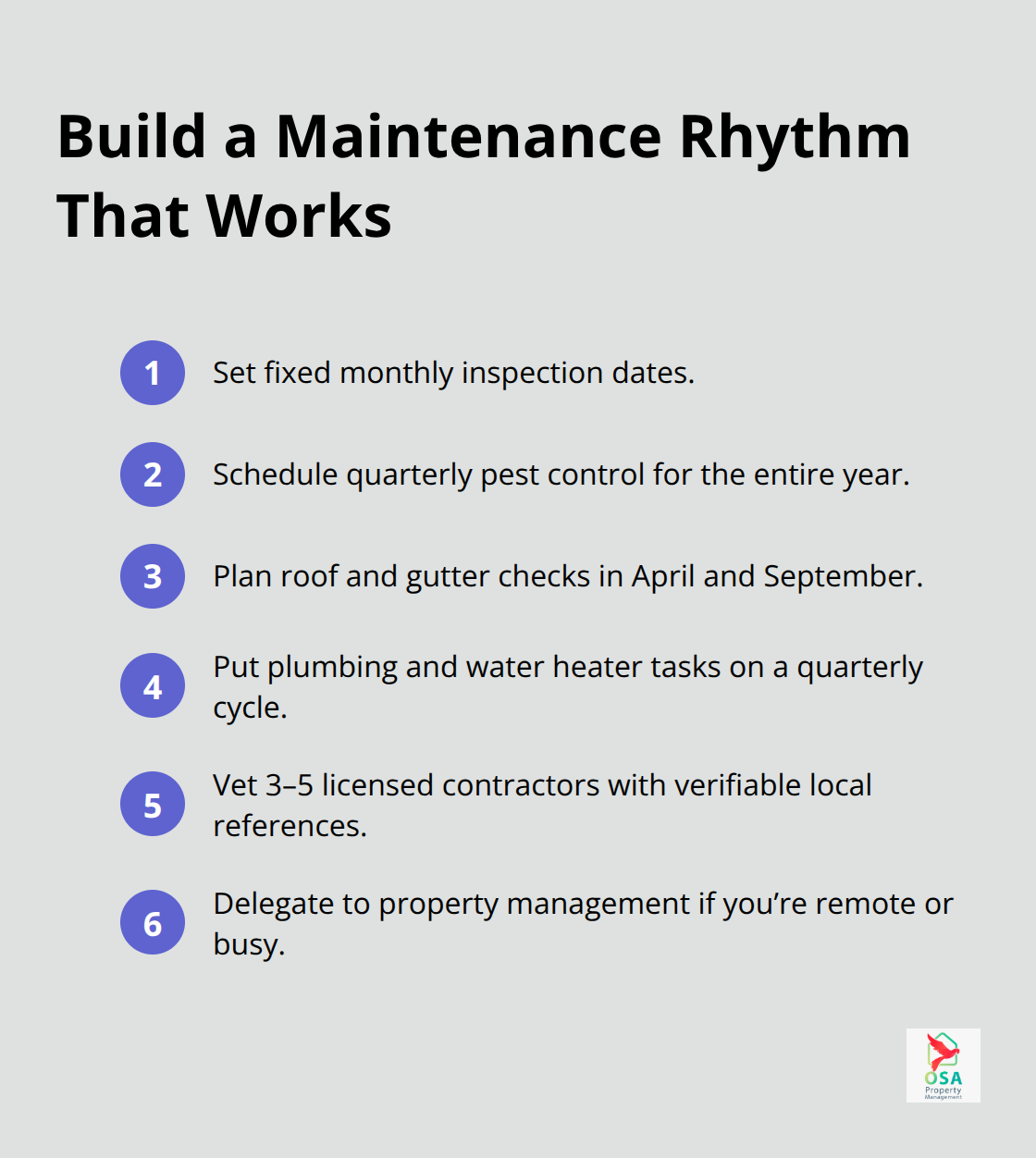
A maintenance schedule works only when you match it to Costa Rica's seasonal patterns and your property's actual vulnerabilities. Most owners fail because they treat maintenance as something to do when problems appear, not before. Your monthly inspections must happen on a fixed date, not whenever you remember. Set them for the first Saturday of each month and walk your property for 30 minutes, checking exposed pipes for corrosion, dark spaces under sinks and behind appliances for mold or pest activity, and window sealants for gaps. This consistency catches 80 percent of problems before they require contractor visits.
Schedule Quarterly and Seasonal Tasks
Quarterly pest control appointments should land on the same dates every three months-schedule them now for the entire year so your licensed pest control company blocks the time. Roof and gutter inspections happen twice yearly: April before the heavy May-to-November rainy season, and again in September after the wettest months. Water heater flushing and plumbing inspections also follow quarterly schedules. The difference between owners who spend $2,000 annually on maintenance and those who spend $15,000 is not the age of their homes-it's preventive maintenance discipline.
Vet Contractors Before You Need Them
A licensed contractor in regions like Ojochal or Golfito should provide proof of liability insurance, current business registration, and at least three verifiable references from property owners in your area (not from their friends). Call those references and ask specifically about response time, quality of first-time repairs, and whether they returned to fix problems without pushback. Poor workmanship accounts for roughly 30 percent of premature roof failures, so your contractor choice directly impacts whether your roof lasts 15 years or 25 years. Build relationships with three to five contractors before emergencies force you to hire whoever answers the phone. When you call them for routine maintenance, you learn their reliability. When a pipe bursts at midnight, you already know who picks up.
Delegate the Operational Burden
If managing contractors feels overwhelming-scheduling inspections, vetting workers, tracking invoices, following up on quality-professional property management handles this completely, freeing you from the operational burden while ensuring consistent, professional care. We at Osa Property Management maintain relationships with vetted contractors across our service regions precisely because reactive hiring costs more and delivers worse results.
Final Thoughts
Your Costa Rican property appreciates through consistent care or deteriorates through neglect. The maintenance tasks outlined in this guide-roof inspections, gutter cleaning, plumbing checks, and pest control-directly determine whether you face minor repairs costing hundreds or structural damage costing tens of thousands. Home maintenance in Costa Rica isn't optional; it's the difference between a property that generates income and one that drains your finances.
Regular maintenance protects your investment by stopping problems at their source. A gutter cleaned quarterly prevents foundation damage, a roof inspected twice yearly catches leaks before they rot structural beams, and quarterly pest control eliminates infestations before termites compromise wooden supports. These preventive actions compound over years, extending your property's lifespan and maintaining its market value in competitive regions like Dominical, Uvita, and Manuel Antonio.
The operational burden of managing contractors, scheduling inspections, tracking repairs, and ensuring quality work overwhelms most property owners, especially those managing homes remotely. We at Osa Property Management handle the complete maintenance operation-vetting contractors, scheduling inspections, overseeing repairs, and ensuring quality standards-so you receive consistent, professional care without the administrative headache. Contact Osa Property Management to discuss how professional management simplifies home care while protecting your investment year-round.