
Rental property owners face a simple reality: higher occupancy rates and smarter pricing don’t automatically follow each other. Rent revenue optimization requires a deliberate approach across three core areas-market positioning, operational efficiency, and guest satisfaction.
At Osa Property Management, we’ve seen owners increase returns by 20-30% through systematic improvements in these areas. This guide walks you through actionable strategies that work in competitive markets.
Pricing Your Property to Match Market Reality
Analyze What Comparable Properties Actually Command
The market doesn’t care about your mortgage or what you paid for the property-it cares about what comparable units command and how demand shifts seasonally. In Central Florida, single-family rentals typically yield cap rates between 5% and 7%, which means your pricing directly determines whether you hit those benchmarks or fall short. Start by analyzing comparable properties in your exact neighborhood, not what they charged three months ago.
Pull rental data from your local market daily and track net effective rent, which accounts for any concessions or incentives competitors offer. This number tells you what guests actually pay after discounts, not the advertised rate. Many owners make the mistake of comparing headline prices without adjusting for free nights, cleaning fee waivers, or flexible cancellation policies that competitors bundle in. Your pricing should reflect the gap between your property’s actual features and what the market leader offers. If a competitor has a renovated kitchen and you don’t, pricing at the same rate guarantees lower occupancy.
Respond to Seasonal Demand Swings
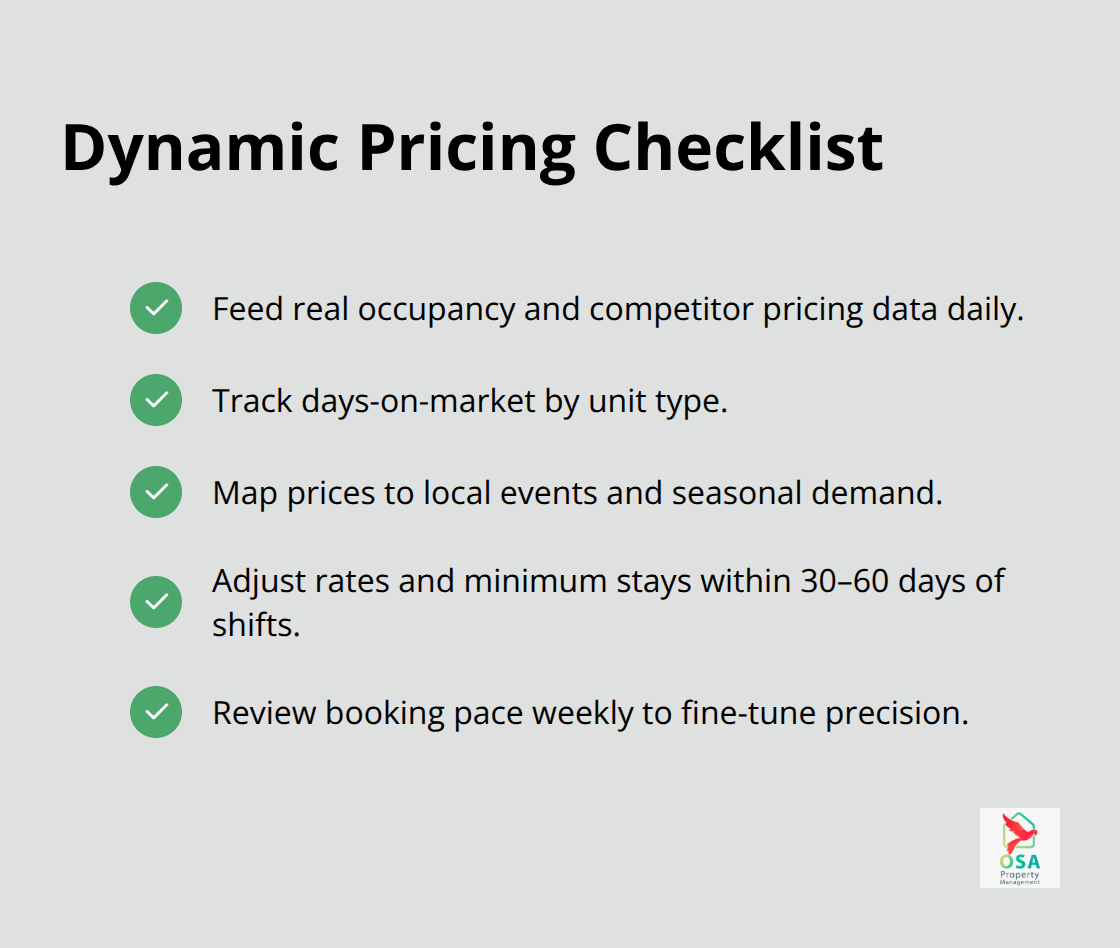
Seasonal demand swings are not subtle-they represent the difference between 90% occupancy and 40% occupancy in the same property. Track your local market’s demand patterns monthly and adjust your minimum stay requirements and rates within 30 to 60 days as conditions shift. Spring and winter typically see 1–2% rent bumps in many markets, while summer demand can justify 10–20% premiums in high-demand areas.
Dynamic pricing models work only when you feed them real data: occupancy rates, days-on-market per unit type, competitor pricing, and local events that drive bookings. This strategy adjusts prices based on real market conditions to optimize revenue. As supply continues to grow in the vacation rental market, pricing precision becomes more critical than ever.
Position Premium Properties for Higher Rates
Properties positioned as premium command higher rates when they offer distinct features-updated kitchens, second bathrooms, smart-home technology, or exclusive outdoor amenities. A second bathroom can justify 5–15% higher netting depending on your market. Smart locks, programmable thermostats, and security systems add $150–$300 per unit in costs but support premium pricing because guests perceive modern convenience as worth paying for.
Set your objective first: maximize next year’s revenue, protect occupancy during soft seasons, or support a future sale. Your pricing strategy must align with that goal, not the other way around. Once you establish this foundation, operational efficiency determines whether your pricing strategy actually translates into higher returns.
How to Cut Costs Without Sacrificing Guest Experience
Operational efficiency separates owners who hit their revenue targets from those who watch profits disappear into maintenance bills and extended vacancy periods. The math is straightforward: vacancy costs roughly 1.9% of annual rent weekly and 8.3% monthly, meaning a single week of downtime between guests erases meaningful returns. Three operational levers directly impact your bottom line and deserve your attention.
Reduce Vacancy Through Faster Turnover
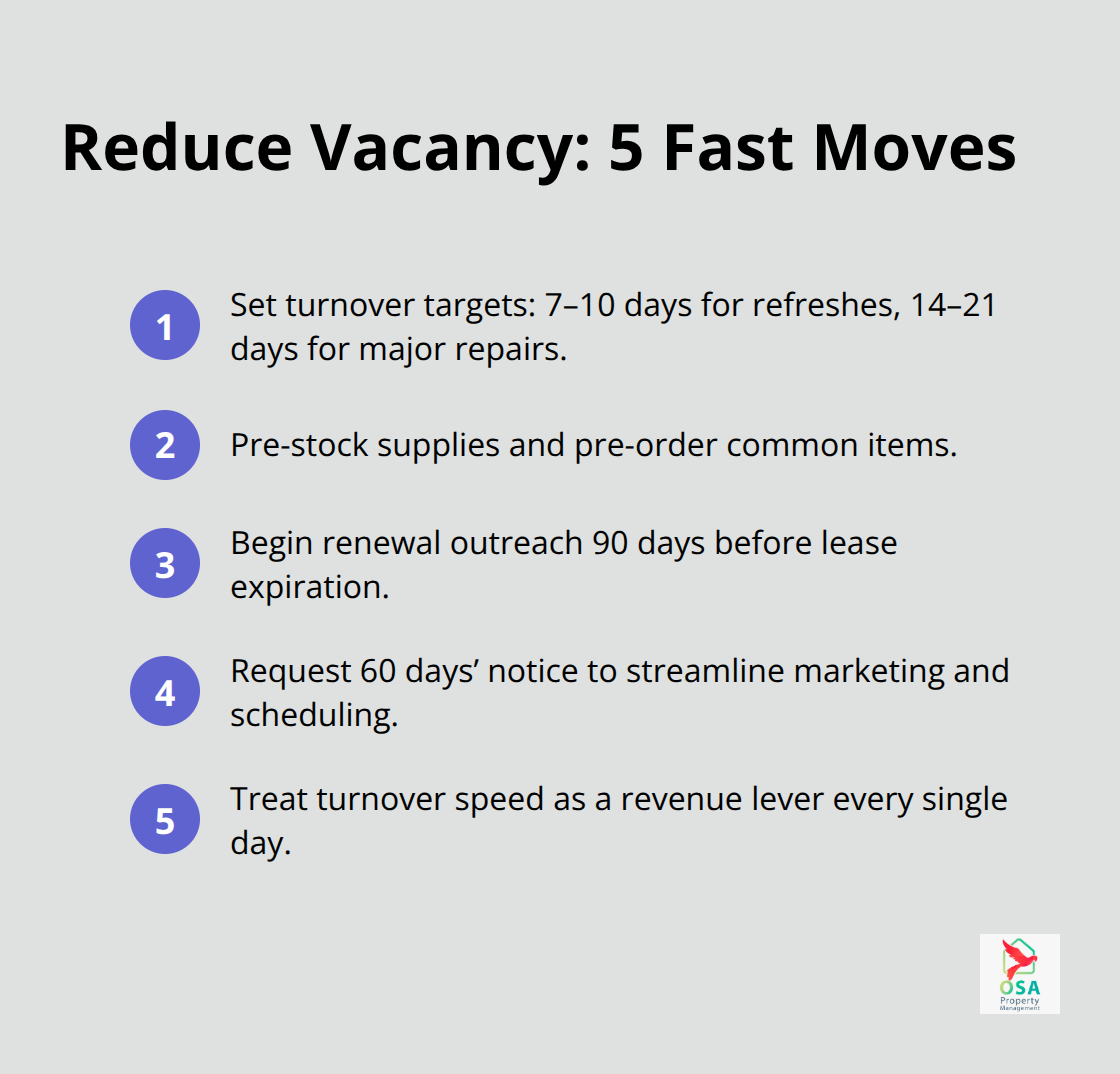
Try targeting turnover timelines of 7 to 10 days for basic refreshes and 14 to 21 days for major repairs. This requires you to maintain ready-to-use supplies and pre-order common items so you’re not scrambling when a guest checks out. Start renewal conversations 90 days before lease expiration and request 60 days’ notice to streamline marketing and reduce gaps between tenants. Each day your property sits empty costs you money, so treat turnover speed as a revenue lever, not just a logistical task.
Implement Preventive Maintenance Systems
Preventive maintenance catches small issues before they become expensive problems that force you offline. Scheduled inspections cost far less than reactive repairs that disrupt your occupancy calendar. Track maintenance costs as a percentage of rental income monthly; if costs exceed 10% of revenue, you have a systems problem that pricing alone won’t fix. This approach protects both your margins and your guest experience by preventing the service failures that damage reviews and occupancy rates.
Leverage Technology and Vendor Relationships
Property management software handles online rent collection, digital documentation, and cloud storage while reducing administrative costs and improving tenant communication speed. Smart-home integrations like programmable thermostats and smart locks lower utility expenses and reduce manual adjustments, while simultaneously supporting the premium positioning discussed in the previous section. Vendor relationships matter more than you might think: negotiate volume discounts across your portfolio, bundle insurance policies to reduce rates, and consider cost segregation on larger properties to accelerate depreciation benefits. Seasonal staffing adjustments also protect margins-hire additional maintenance contractors during peak seasons when turnover accelerates, then scale back during slower periods.
These operational improvements create the foundation for your pricing strategy to actually deliver returns. Once you’ve tightened your cost structure and reduced vacancy, the next step involves converting that efficiency into guest loyalty and repeat bookings that sustain your revenue gains over time.
Guest Experience and Revenue Sustainability
Target Upgrades That Guests Actually Value
Property upgrades command higher rates only when guests perceive them as worth paying for, which means your renovation strategy must target what actually moves the needle in your market. Kitchen modernization deserves 15–20% of your annual rental income because a $5,000 refresh justifies a $200–$300 monthly rent increase with an 18–24 month payback period. Adding a second bathroom can support 5–15% higher pricing depending on local demand, and energy-efficient improvements like LED lighting, programmable thermostats, and window replacements yield 2–6% rent premiums, with exceptional cases reaching 10–25%.
Smart-home features including smart locks, thermostats, security systems, video doorbells, and robust WiFi cost $150–$300 per unit but justify premium positioning because guests equate modern convenience with reliability. Outdoor space improvements matter more than most owners realize: enhanced patios, landscaping, and lighting increase perceived value, while shared amenities like grills and gardens support higher rents on multi-unit properties. The critical mistake most owners make is upgrading without benchmarking against local comparables first-a renovated kitchen means nothing if your market’s premium properties already have one.
Build Relationships That Generate Repeat Bookings
Guest retention generates repeat bookings that cost far less to acquire than new customers, which is why relationship-building directly impacts your revenue sustainability. Respond to guest inquiries within 2 hours during business hours and provide neighborhood context during property tours-guests who understand local transit, schools, and employment options make faster booking decisions. Collect feedback systematically through post-stay surveys and act on specific complaints within 48 hours, because guests who see you respond quickly leave higher reviews and recommend your property to friends.
Reviews drive occupancy: properties with ratings above 4.8 stars command 10–20% higher rates than identical units with 4.2-star reviews, which means review management is a revenue strategy, not customer service overhead. Offer loyalty incentives for multi-month leases or repeat bookings, and negotiate strategic rent increases during renewals at 3–5% annually. Consider smaller increases for top tenants to encourage retention and protect your occupancy stability.
Monitor Performance Metrics That Reveal Problems
Track your Days on Market metric by unit type-if units sit listed longer than local averages, your pricing or property presentation needs adjustment. Professional photography and staged showings reduce Days on Market, and flexible tour times including evenings and weekends accommodate working guests. Track your vacancy rate weekly and measure average days between tenants; if your metric exceeds local benchmarks, your guest experience or pricing strategy has a problem worth solving before it erodes your annual returns.
Final Thoughts
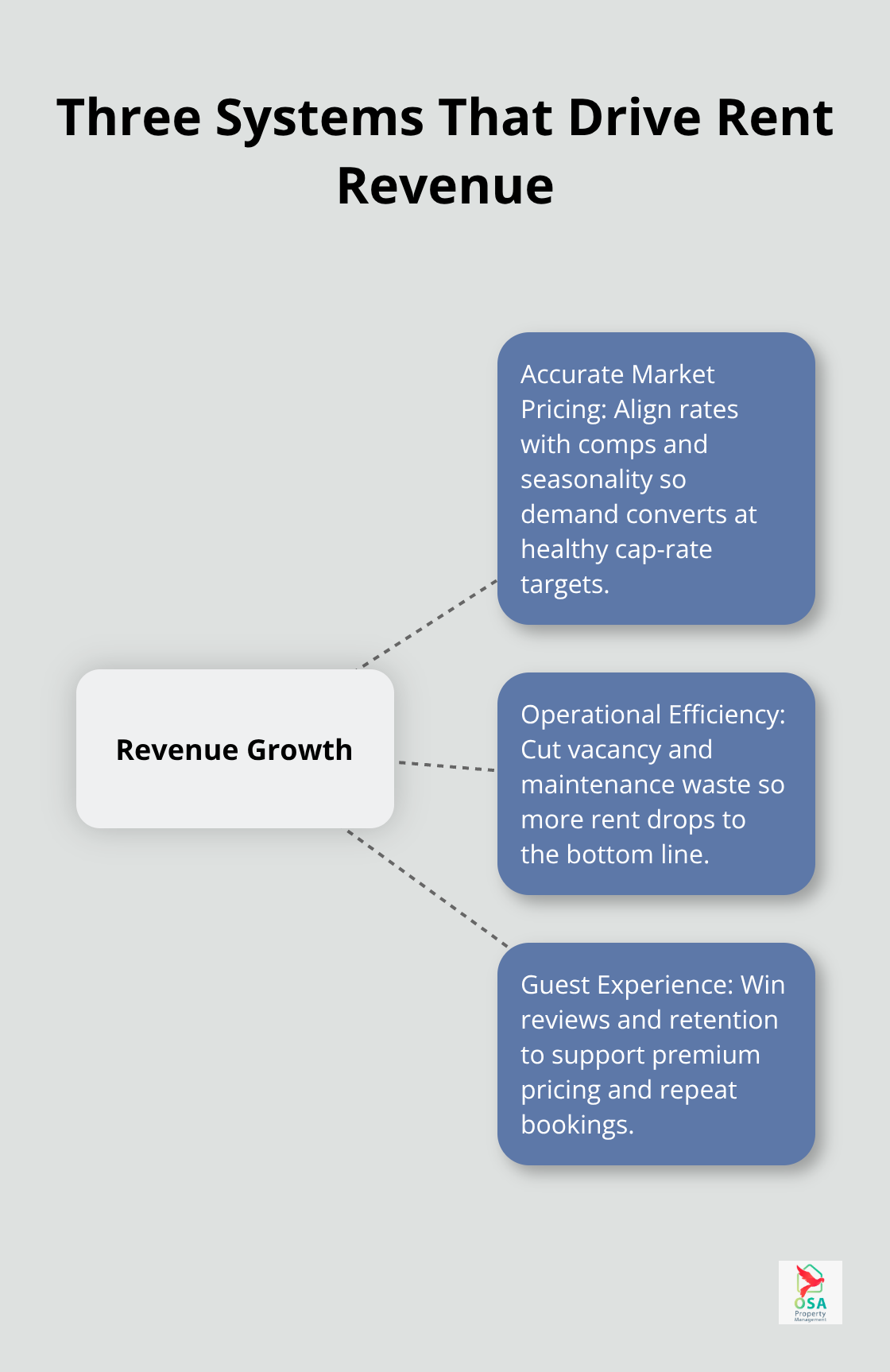
Rent revenue optimization compounds over time through three interconnected systems: accurate market pricing creates your foundation, operational efficiency protects your margins, and guest experience drives the repeat bookings that sustain growth. Owners who implement all three typically see 20–30% returns within the first year, while those who focus on pricing alone watch gains disappear into vacancy costs and maintenance problems. Each improvement builds on the previous one, creating momentum that accelerates your competitive advantage.
Start with your weakest area and fix it first. If your Days on Market exceeds local benchmarks, your pricing or presentation needs work before you raise rates. If maintenance costs exceed 10% of revenue, your preventive systems require attention before you invest in upgrades. If your reviews lag competitors, guest experience improvements will justify premium positioning faster than any other strategy. We at Osa Property Management have guided property owners through this exact process across Costa Rica’s most competitive markets, and our team handles the operational details so you can focus on strategic decisions.
Audit your current performance against the metrics discussed here and track your cap rate, Days on Market, maintenance costs, and guest reviews for the next 30 days. That data reveals exactly where your biggest opportunity lies, and the owners who act on this information first gain competitive advantage in their markets.