

Owning rental property in Costa Rica comes with tax obligations that many property owners overlook or misunderstand. Getting rental tax compliance right protects you from penalties and keeps your business running smoothly.
We at Osa Property Management help property owners navigate these requirements every day. This guide breaks down what you need to know about taxes, deductions, and common mistakes to avoid.
What Income Gets Taxed and When You Pay
Rental income in Costa Rica is taxed based on where your property sits, not where you live. If your property is in Costa Rica, Hacienda taxes that income regardless of your residency status. Short-term rentals under 30 days fall under hotel-style activity and attract 13% VAT charged to guests, which you remit monthly to Hacienda. Long-term rentals over 30 days avoid VAT but remain subject to income tax on the rental itself.
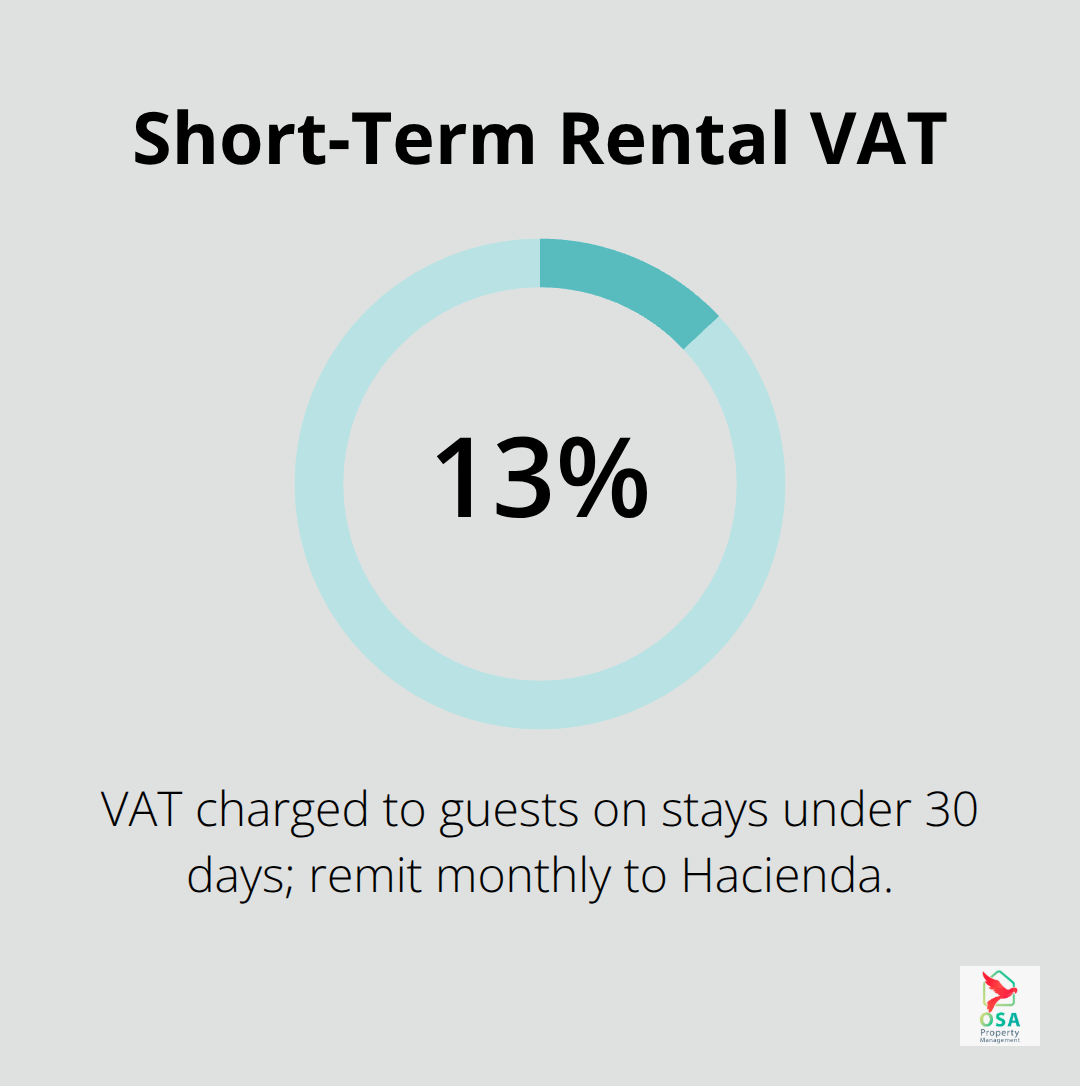
The distinction matters because VAT collected from guests does not count toward your taxable rental income-you report and remit it separately.
Tax Rates Based on Your Residency Status
Residents pay progressive income tax on net rental income after deductions, with rates climbing from 10% to 25%. Non-residents face a flat 12.75% withholding on gross rental income with no deductions allowed. Platforms like Airbnb now report rental data directly to Hacienda, making underreporting nearly impossible and increasing enforcement significantly in 2026.
Your Filing Timeline
Costa Rica’s tax year runs from October 1 to September 30, not the calendar year. Residents must file quarterly installments on February 20, May 20, August 25, and November 20, with the annual return due by December 15. Non-residents remit withholding taxes monthly. Form D-125 must be filed monthly even if you earned no rental income that month, and Form D-104 handles monthly VAT declarations due by the 15th of each month.
Penalties and Record-Keeping Requirements
Penalties for late payments or filing errors reach up to 50% of unpaid taxes plus interest, according to Costa Rica’s tax authority guidance. Non-compliance can trigger audits, frozen bank accounts, and complications during residency applications. You must keep all records for at least four years (lease agreements, rent receipts, expense records, bank statements, utility bills, maintenance invoices, and insurance documents). Digital reporting is now mandatory, so cloud-based accounting software like QuickBooks Online or Xero simplifies compliance and reduces the risk of errors that trigger audits.
Understanding your tax obligations sets the foundation for managing deductions effectively. The next section covers which expenses you can claim to reduce your taxable income.
What Expenses Reduce Your Taxable Rental Income
Residents in Costa Rica can deduct legitimate expenses from gross rental income before calculating taxes, which significantly lowers your tax liability compared to the flat withholding non-residents face. The allowable deductions include utilities, property management, repairs and maintenance, depreciation, internet, cleaning, insurance, platform commissions from Airbnb or booking sites, accounting and legal fees, mortgage interest, HOA fees, and advertising costs. Many property owners miss thousands in annual tax savings by overlooking these categories or failing to document them properly. Property owners who track and claim every eligible expense can reduce their tax burden by 20–30%.
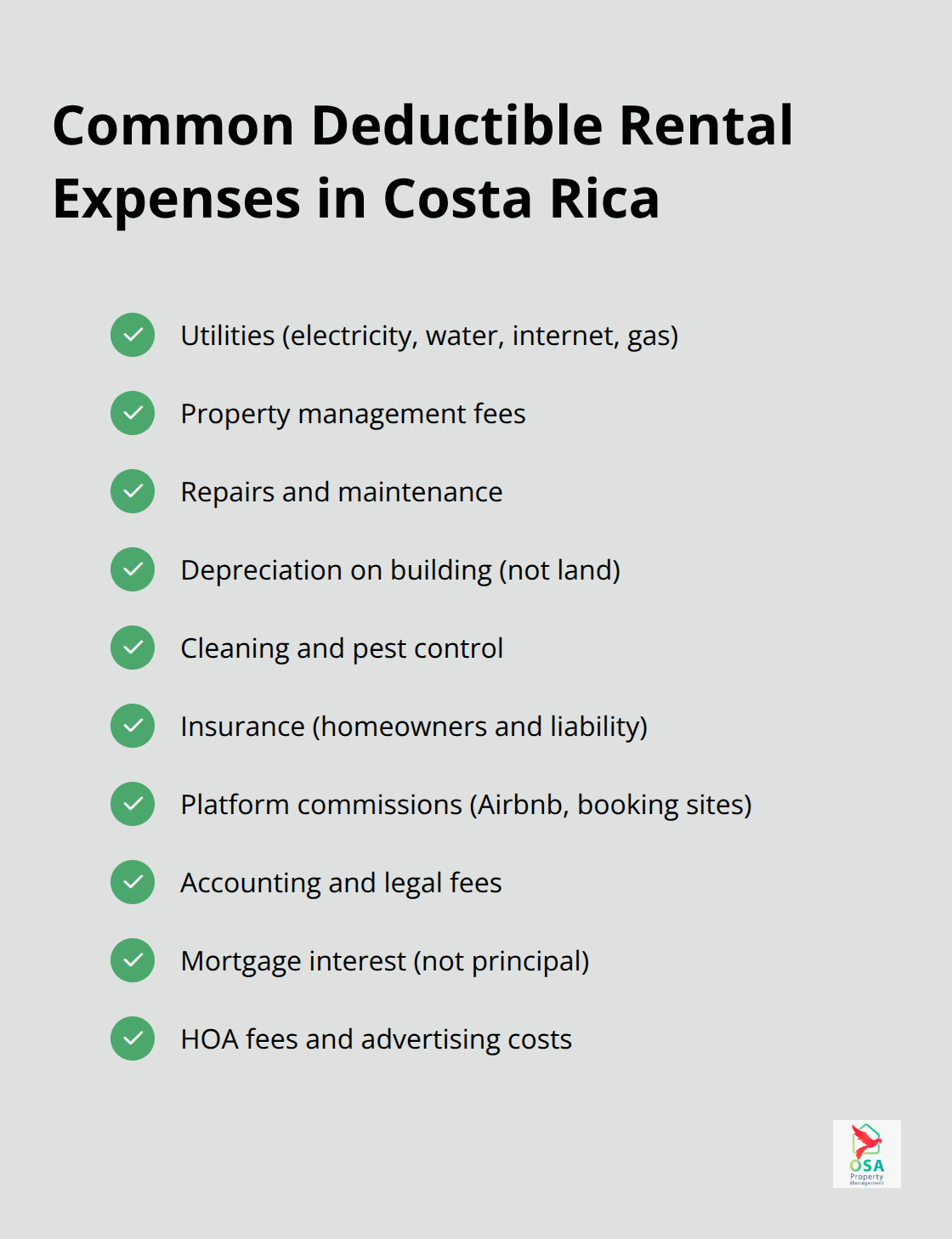
The key is maintaining organized records and understanding which costs qualify under Costa Rica’s tax law.
Maintenance and Repairs in Tropical Climates
Maintenance and repair costs are fully deductible and often represent the largest expense category for rental properties in tropical climates like Costa Rica. Drainage repairs, AC servicing, humidity control upgrades, roof inspections, and pest treatments all count as deductible repairs. Properties in areas like Jacó, Manuel Antonio, and Uvita typically spend 8–12% of gross rental income annually on repairs and utilities due to salt air, humidity, and seasonal weather. You should keep every receipt and invoice in a dedicated digital folder organized by month and category.
Utilities, Property Management, and Administrative Costs
Utilities including electricity, water, internet, and gas are deductible in full. Property management fees, whether you hire a professional firm or handle it yourself, are deductible. If you self-manage, you can document your time and administrative costs (software subscriptions, phone, office supplies). Professional property managers charge between 20–30% of gross monthly rental income but handle marketing, guest communication, maintenance coordination, accounting, and tax compliance, which often justifies the cost by preventing costly errors and maximizing occupancy rates.
Insurance, Mortgage Interest, and Strategic Deductions
Homeowners insurance and liability coverage are fully deductible expenses that protect both your asset and your tax position. Mortgage interest deductibility (not principal) is deductible, though principal payments are not. If you carry a mortgage on your rental property, you should separate interest from principal on your loan statements to claim only the deductible portion. HOA fees are deductible if your property is in a community with mandatory fees. Advertising costs for your rental listing, including photography, virtual tours, and platform upgrades, qualify as deductions. Accounting and legal fees paid to Costa Rican tax professionals or attorneys for tax planning, compliance, and contract review are fully deductible.
Depreciation and Cloud-Based Tracking
Depreciation on the building structure (not land) can be claimed over 20 years, reducing taxable income further, though this requires proper asset valuation and documentation. The Costa Rica Income Tax Law allows a 15% deductible expense allowance as a baseline if you do not itemize, but organized property owners often benefit from itemizing actual expenses, which typically exceed 15% in practice. Cloud-based accounting software like QuickBooks Online or Xero helps you track these expenses automatically, reducing manual entry errors and making tax season straightforward. Platforms like Airbnb now report your rental income directly to Hacienda, so your reported deductions must align with your actual expenses and documentation. Mismatched or missing receipts trigger audits, so consistency between your accounting records and your tax filing is essential.
Understanding which expenses you can claim sets the stage for avoiding costly mistakes. The next section covers the errors that property owners make most often and how to prevent them.
Where Property Owners Lose Money on Taxes
Most rental property owners in Costa Rica make one critical mistake: they treat their rental like a side project rather than a business that requires disciplined financial management. Hacienda’s 2026 reporting push means platforms now send your rental data directly to tax authorities, eliminating the possibility of underreporting without serious consequences. If you earned $50,000 in gross rental income but reported $35,000, Hacienda will cross-reference platform statements and flag the discrepancy immediately. Non-compliance triggers audits, frozen bank accounts, and fines reaching 50% of unpaid taxes plus interest.
Separating Business and Personal Finances
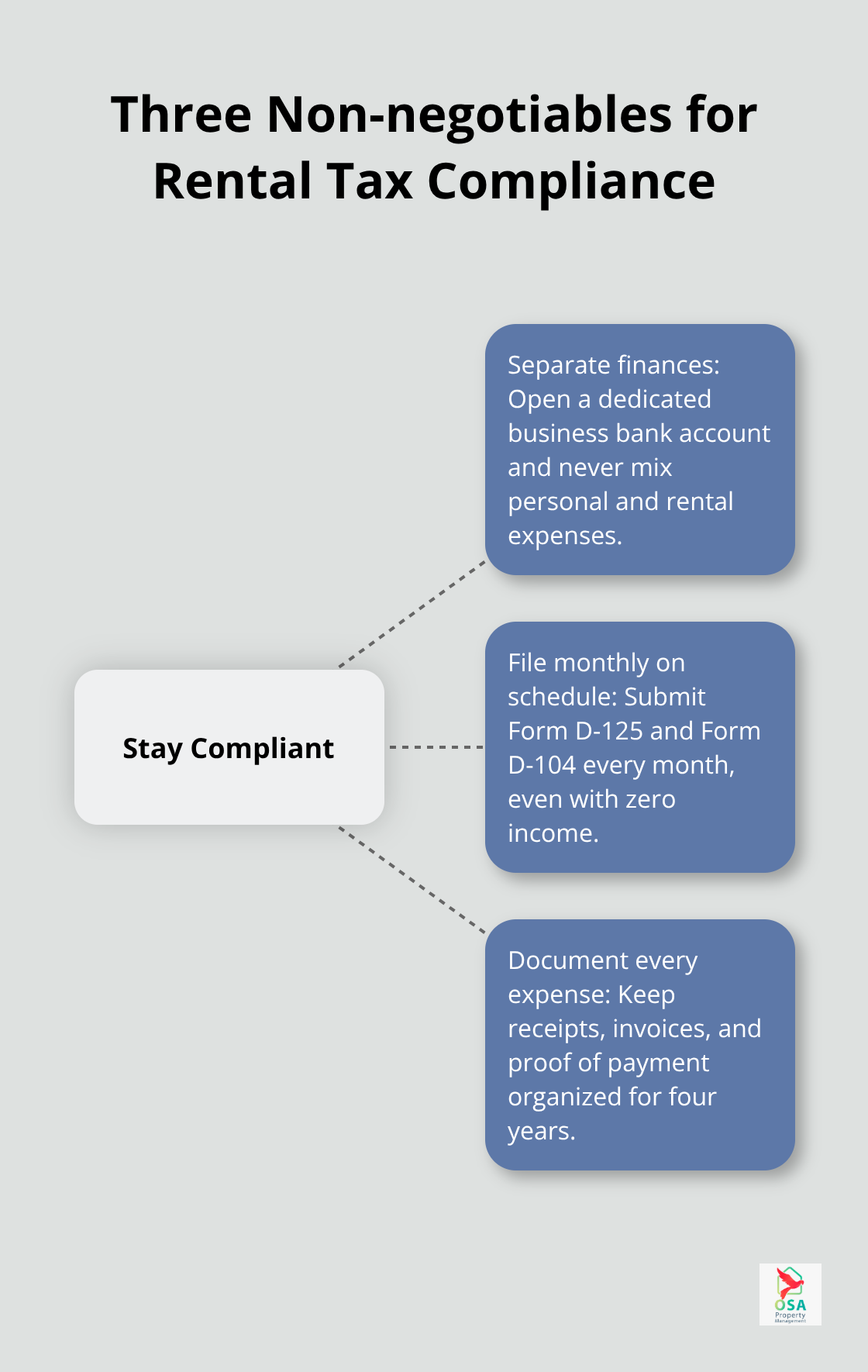
Property owners who fail to separate business and personal finances, who skip monthly filings, or who lose receipts midyear end up scrambling in December with incomplete records and inflated tax bills. The fix is straightforward but demands consistency. Open a dedicated business bank account for your rental property and never mix personal expenses with rental expenses. File your monthly Form D-125 income tax advance and Form D-104 VAT declaration on schedule, even if you earned zero income that month. Many owners skip the zero-income months thinking it does not matter, but Hacienda expects 12 filings per year without exception.
Cloud-based accounting software like QuickBooks Online or Xero eliminates the guesswork. These tools automatically categorize transactions, flag missing receipts, and alert you to filing deadlines. The cost of these tools (roughly $15–30 per month) is negligible compared to the penalty exposure or the accounting fees you will pay recovering from a disorganized year.
Documentation: The Foundation of Deductions
You cannot claim a $2,000 maintenance expense without a receipt, invoice, and proof of payment. Hacienda audits typically request four years of supporting documents, and if you cannot produce them, the deduction is disallowed and you owe back taxes with interest. Property owners in tropical climates like Jacó and Uvita spend 8–12% of gross rental income on repairs and utilities annually, but only those with documented receipts get the deduction.
Create a digital folder organized by month and expense category, store receipts immediately after purchase, and reconcile your bank statements monthly against your accounting records. If you use a property manager, request itemized monthly statements that match your bank deposits and clearly separate income, VAT collected, and expenses paid on your behalf. Professional property managers charge 20–30% of gross rental income but handle this documentation burden, which often justifies the fee by preventing costly filing errors and ensuring every deductible expense is captured.
Claiming Every Eligible Deduction
Overlooking eligible deductions is a self-inflicted wound. If you carry a mortgage, only mortgage interest is deductible, not principal-yet many owners claim the full payment. Advertising costs, platform commissions, accounting fees, HOA charges, and depreciation on the building structure are all deductible but require proper categorization and supporting evidence.
Property owners who itemize actual expenses instead of accepting the 15% baseline deduction typically reduce their tax liability by 20–30% annually. The difference between claiming $8,000 in documented deductions versus claiming nothing can save you $1,200–$2,000 in taxes per year on a $50,000 rental income. Organized owners win, and disorganized owners pay penalties.
Final Thoughts
Rental tax compliance in Costa Rica requires three non-negotiable steps: separate your business finances from personal accounts, file monthly forms on schedule regardless of income, and document every expense with receipts and invoices. These habits prevent the costly mistakes that trigger audits, frozen bank accounts, and penalties reaching 50% of unpaid taxes.
Property owners who stay organized typically reduce their tax liability by 20–30% annually simply by claiming eligible deductions they would otherwise miss.
Hacienda’s 2026 reporting push means platforms now send your rental data directly to tax authorities, eliminating any margin for error or underreporting. This shift makes working with a local professional essential-a Costa Rican tax advisor or property manager familiar with current rules helps you structure your rental activity correctly, maximize deductions, and file on time. The cost of professional guidance is far lower than the cost of penalties, audits, or complications during residency applications.
We at Osa Property Management handle rental tax compliance, accounting, and monthly filings for property owners across the southern Pacific zone and beyond. Our team manages the documentation burden, coordinates with Hacienda, and ensures every deductible expense is captured and properly reported. Contact us to discuss how we can help you navigate Costa Rica’s rental tax rules with confidence.