
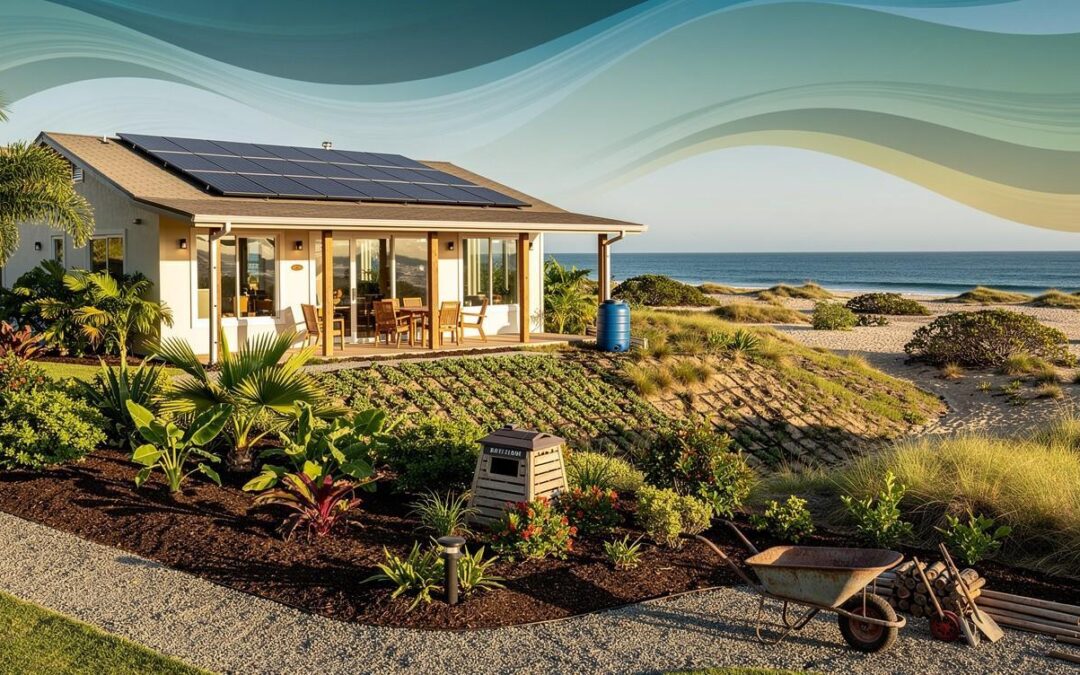
Coastal properties in Costa Rica face unique challenges that standard maintenance simply can’t address. Salt air, humidity, and strict environmental regulations demand a different approach to property upkeep.
At Osa Property Management, we’ve seen firsthand how green coastal property maintenance protects both your investment and the ecosystems your guests come to experience. The right sustainable practices make all the difference.
Why Coastal Properties in Costa Rica Demand Green Maintenance
Salt air corrodes metal fixtures and electrical components faster than most property owners expect. Stainless steel resists corrosion better than standard steel, but even quality materials can weaken structural components without regular freshwater rinsing and protective coatings. Humidity creates mold and mildew that penetrate walls, damage belongings, and compromise air quality-a serious concern for guests with allergies or respiratory sensitivities. The intense Pacific sun fades paint, roofing materials, and outdoor furniture, requiring more frequent repainting than temperate climates demand.
Standard maintenance approaches rely on chemical cleaners and energy-intensive cooling systems that worsen these problems. Chemical runoff from conventional cleaning products flows into coastal waters, harming the marine ecosystems that attract guests to Costa Rica in the first place. High-energy air conditioning units work harder in humid conditions, increasing electricity consumption and carbon emissions while still failing to prevent salt corrosion of internal coils. This creates a cycle where property owners spend more money fighting deterioration while damaging the very environment their rental income depends on.
Environmental Regulations Make Eco-Friendly Upkeep Non-Negotiable
Costa Rica’s environmental protections near beaches are strict and enforced. Properties near national parks, refuges, or wetlands face mandatory setbacks from mangroves and estuaries, with restrictions on runoff, lighting, and vegetation management. Turtle nesting grounds require lighting controls and habitat-preserving measures during nesting seasons. The Ministry of Environment and Energy requires environmental viability studies before development, and these conditions carry forward to ongoing maintenance obligations. Violations result in fines, forced remediation, and potential concession revocation for beachfront properties.
Eco-friendly maintenance practices like native plant landscaping, natural cleaning products, and water conservation systems keep your property compliant while reducing long-term costs. Green practices protect your investment legally and financially.
Travelers Now Expect Sustainable Accommodations
Travelers booking Costa Rica vacation rentals increasingly prioritize eco-friendly accommodations. Properties featuring non-toxic cleaning products, energy-efficient appliances, LED lighting, and sustainable amenities command higher nightly rates and attract repeat bookings. Guests appreciate reusable water bottles, biodegradable toiletries, and locally sourced décor-details that signal genuine environmental commitment rather than greenwashing. Reviews on platforms like Airbnb highlight these features prominently, directly influencing booking decisions.
Properties that implement green practices report higher guest satisfaction scores and longer occupancy rates. Sustainability has become a baseline expectation for quality coastal rentals, not a premium feature. This shift means that property owners who ignore eco-friendly maintenance fall behind competitors who embrace it. The next section explores the specific strategies that protect your property while meeting these rising guest expectations.
How to Maintain Coastal Properties Without Harming the Environment
Non-toxic cleaning products outperform chemical alternatives on Costa Rican coastal properties. Standard bleach and ammonia-based cleaners corrode aluminum fixtures, damage tropical finishes, and leave residues that attract salt particles and accelerate deterioration. Plant-based, biodegradable cleaners eliminate these problems while protecting indoor air quality for guests with respiratory sensitivities. These products use biodegradable, non-toxic agents without synthetic fragrances, meeting eco-safety standards while delivering superior results on salt-affected surfaces. For glass and mirrors, water alone or vinegar solutions prevent streaks without chemical buildup. Reusable microfiber cloths replace disposable paper towels-this single change reduces waste and improves cleaning efficiency on salt-crusted windows and outdoor railings. Natural, plant-based cleaners cost slightly more upfront but reduce guest health complaints, lower replacement frequency for damaged fixtures, and eliminate chemical runoff that violates Costa Rica’s environmental regulations near beaches and wetlands.
Water Conservation Cuts Operating Costs
Coastal properties consume excessive water fighting salt deposits and humidity. Rainwater harvesting systems capture rainfall during Costa Rica’s wet season (May through November) and store it for dry-season irrigation and cleaning. Drip irrigation delivers water directly to plant roots, reducing evaporation by 50% compared to overhead sprinklers in high-humidity conditions. Low-flow showerheads and faucet aerators cut water usage without sacrificing guest experience. These fixtures cost under $50 per unit but reduce water bills by 20–30% annually. Energy-efficient washers consume 40% less water than standard models while handling the salt-laden laundry common in coastal rentals. Scheduling cleaning during daylight hours eliminates artificial lighting and reduces air conditioning strain from indoor humidity generated during wet cleaning. Properties implementing these systems report lower operating costs and stronger environmental compliance scores during municipal inspections.
Marine-Grade Materials Resist Salt Corrosion
Stainless steel, aluminum, and brass fixtures resist salt corrosion far better than standard steel or painted hardware. Repairs requiring replacements should specify marine-grade or tropical-grade materials rated for salt air exposure. UV-resistant outdoor furniture and powder-coated metal components last 3–5 years longer than conventional alternatives in coastal environments. Hardwood interiors outperform particleboard in humidity, preventing swelling, warping, and mold penetration that forces expensive replacements. Quality tropical-grade paint and roofing materials designed for intense sun exposure require repainting every 3–5 years rather than annually. Energy-efficient appliances and LED lighting reduce operational stress on electrical systems vulnerable to salt corrosion. These material choices cost 15–25% more initially but eliminate emergency repairs, reduce guest downtime, and protect long-term property value. Properties built or renovated with climate-minded materials from reputable developers experience 40% fewer maintenance emergencies than those using standard construction materials.
Professional Management Handles Sustainable Upkeep
Managing coastal properties sustainably requires local expertise, trusted trade relationships, and consistent oversight. A professional property manager coordinates quarterly air conditioning maintenance to prevent salt corrosion, schedules regular freshwater rinsing to remove salt buildup, and applies corrosion-inhibiting sprays on metal components. Moisture absorbers placed in closets and enclosed spaces reduce mold risk and protect guest belongings. UV-blocking window film and breathable outdoor furniture covers preserve interior furnishings and reduce repainting frequency. Building an annual maintenance sinking fund of 1–2% of property value covers ongoing upkeep and repairs without financial strain.
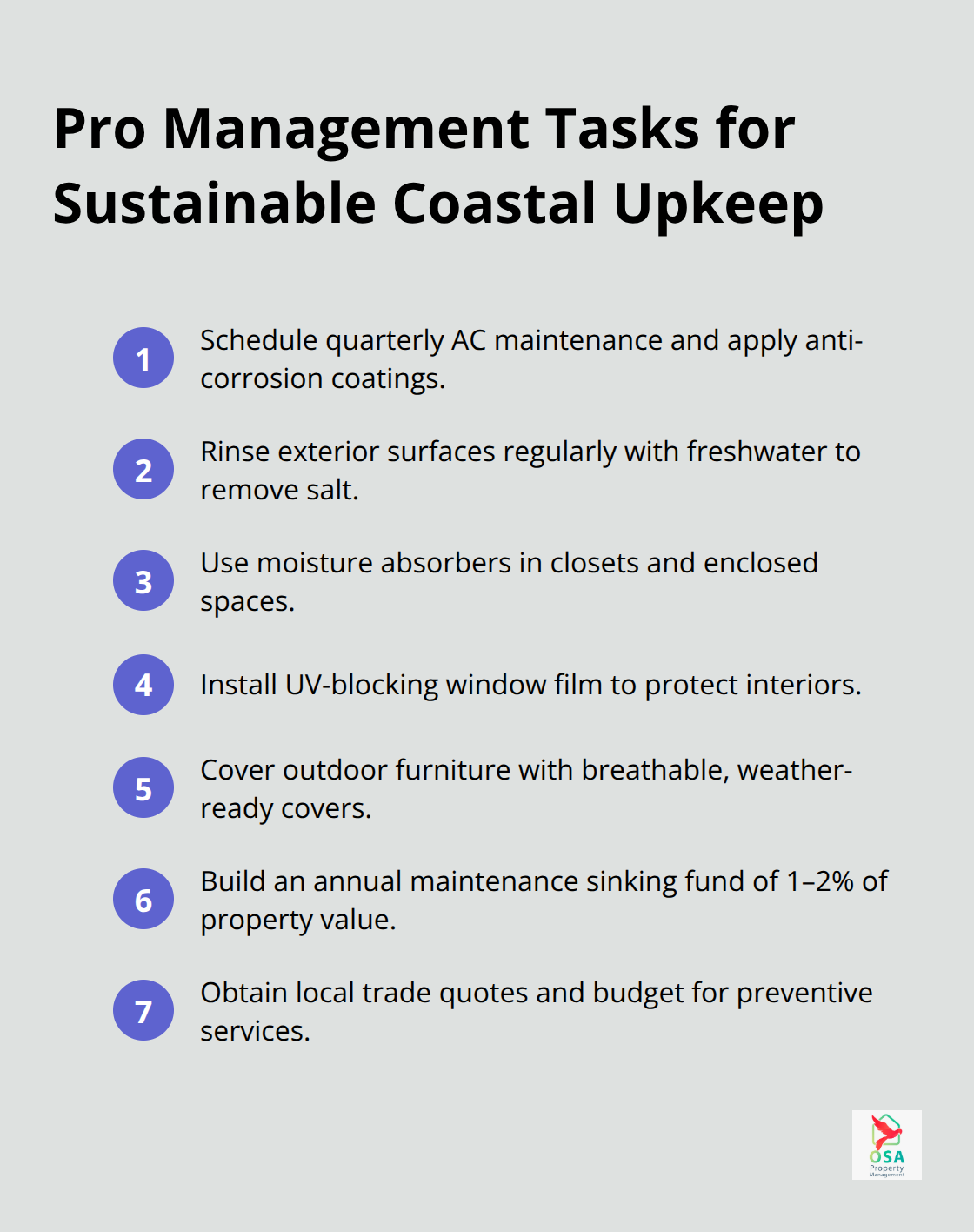
Professional managers obtain local trade quotes, budget accurately for common services, and implement preventive maintenance that extends asset life. This approach transforms coastal property maintenance from reactive emergency repairs into strategic, cost-effective stewardship that protects both your investment and Costa Rica’s marine ecosystems. The next section examines the common mistakes that undermine these efforts and how to avoid them.
The Real Cost of Cutting Corners on Coastal Maintenance
Chemical Cleaners Destroy Marine Ecosystems and Trigger Fines
Standard cleaning products used on coastal properties don’t just fail to protect your investment-they actively destroy the marine ecosystems that make your rental business viable. Ammonia-based cleaners, bleach, and phosphate-heavy detergents flow directly into groundwater and coastal waters through drainage systems, killing fish larvae and disrupting the nutrient cycles that support the biodiversity guests travel thousands of miles to experience. Costa Rica’s environmental regulations explicitly prohibit chemical runoff in coastal zones, and municipal inspections now test water quality near rental properties. Properties caught violating these standards face fines ranging from $500 to $5,000 per violation, plus mandatory remediation costs that often exceed $10,000. Owners who ignore this requirement discover their concession renewal gets denied due to chemical contamination records. The financial penalty extends beyond fines-guests increasingly research water quality before booking, and negative environmental reports tank occupancy rates faster than any maintenance failure. Plant-based, biodegradable cleaners eliminate this risk entirely while actually outperforming chemical alternatives on salt-corroded surfaces.
Improper Waste Disposal Violates Environmental Audits
Improper waste disposal on coastal properties creates compounding problems that most owners don’t anticipate until inspections reveal violations. Single-use plastics, packaging materials, and general trash left in open bins attract wildlife, contaminate beaches during storms, and generate fines under Costa Rica’s waste management regulations. Properties without proper composting systems or recycling infrastructure lose points during environmental audits that municipalities now conduct annually in protected zones. Waste management violations can result in fines and mandatory infrastructure upgrades that cost $3,000 to $8,000 per property. Owners who implement recycling and composting systems from the start avoid these penalties while reducing operational waste by 40–60%. Proper waste sorting protects your environmental compliance record and strengthens your property’s appeal to eco-conscious travelers who verify sustainability practices before booking.
Energy-Intensive Systems Fail to Address Root Causes
Energy-intensive air conditioning and heating systems compound these mistakes by increasing your carbon footprint while failing to address the root causes of coastal deterioration. A standard AC unit running continuously in high-humidity conditions consumes 3–4 times more electricity than properly maintained systems, yet still allows salt corrosion to damage internal coils, requiring replacement every 4–6 years instead of the standard 10–12 year lifespan. Annual maintenance with corrosion-inhibiting coatings costs under $300 per service but extends unit life by 50%, saving $6,000 to $8,000 per property over a decade. Owners who skip this maintenance and rely on constant cooling instead end up spending more money while producing higher emissions and delivering inferior guest comfort due to inadequate humidity control. Dehumidifiers and proper ventilation address the underlying moisture problem more effectively than oversized cooling systems that waste energy without solving the core issue.
Final Thoughts
Green coastal property maintenance in Costa Rica isn’t optional anymore-it’s the foundation of a profitable, compliant rental business. Properties that adopt sustainable practices protect their structural integrity against salt air and humidity while meeting Costa Rica’s strict environmental regulations. Owners who implement non-toxic cleaners, water conservation systems, and marine-grade materials avoid costly fines, reduce operating expenses by 20–30% annually, and attract guests willing to pay premium rates for eco-conscious accommodations.
Professional property management transforms sustainable upkeep into a strategic advantage that extends asset life while protecting marine ecosystems. We at Osa Property Management coordinate quarterly maintenance, source trusted local trades, and implement preventive systems that keep properties performing at peak efficiency across Tarcoles, Jaco, Dominical, Manuel Antonio, Ojochal, Uvita, and Golfito. Our clients generate stronger returns, maintain higher occupancy rates, and build lasting guest loyalty through authentic sustainability practices that actually work.
The financial math is straightforward: investing in green practices now prevents emergency repairs that cost 5–10 times more later, and Osa Property Management specializes in delivering this professional oversight that balances profitability with environmental stewardship.