
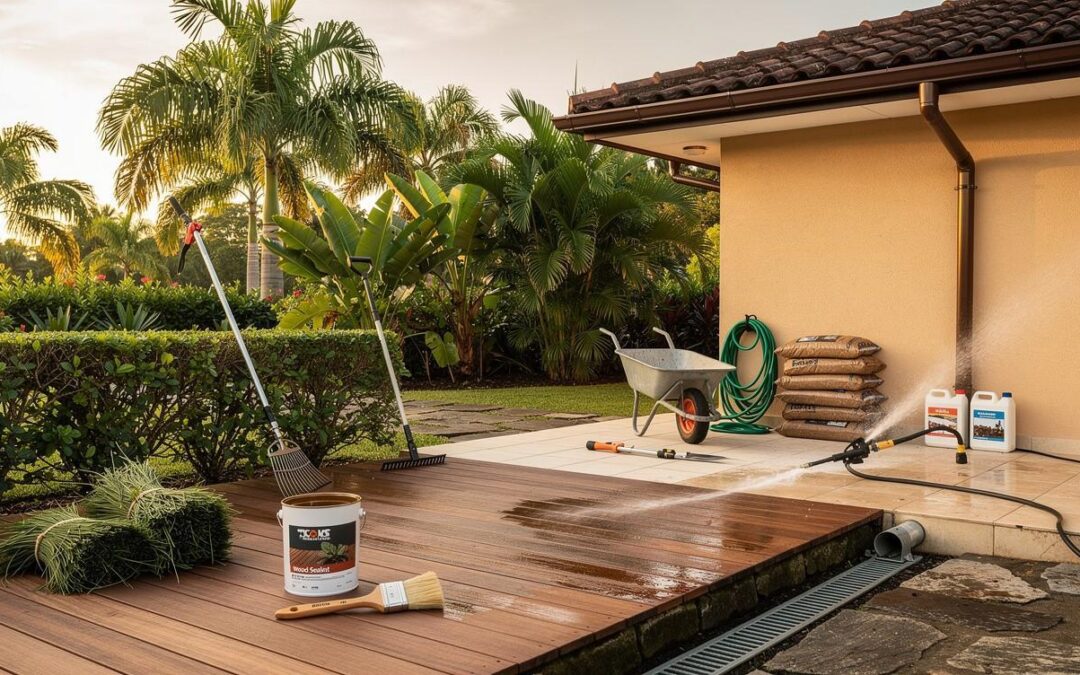
Costa Rica's tropical climate is beautiful, but it's relentless on outdoor spaces. Heavy rains, salt spray, humidity, and pests create constant threats to your property's exterior.
At Osa Property Management, we've seen firsthand how outdoor maintenance in Costa Rica requires a different approach than other regions. The good news is that with the right strategies, you can protect your investment year-round.
What Threatens Your Outdoor Spaces Most in Costa Rica
Moisture and Rainfall Damage
Costa Rica's rainy season from May through November brings moisture that penetrates every corner of outdoor structures. During these months, rainfall averages between 8 and 12 inches per month in many regions, creating constant dampness that accelerates deterioration. The real problem isn't just the rain itself-it's what happens after. Standing water around foundations, clogged gutters, and poor drainage systems turn minor moisture issues into structural damage within weeks.
Weekly gutter inspections during rainy season prevent debris buildup that forces water to overflow and pool against your home's exterior. This pooling leads to foundation cracks and wood rot that can cost thousands to repair. The damage compounds quickly once water finds its way into structural elements.
Salt Spray and Coastal Corrosion
Coastal properties face an additional threat from salt spray that corrodes metal fixtures, accelerates paint failure, and weakens sealants. Salt air affects metals more than 50 miles inland in some cases, meaning even properties a few blocks from the beach experience significant corrosion. Metal railings, outdoor fixtures, and window frames deteriorate three to four times faster in coastal zones compared to inland areas.
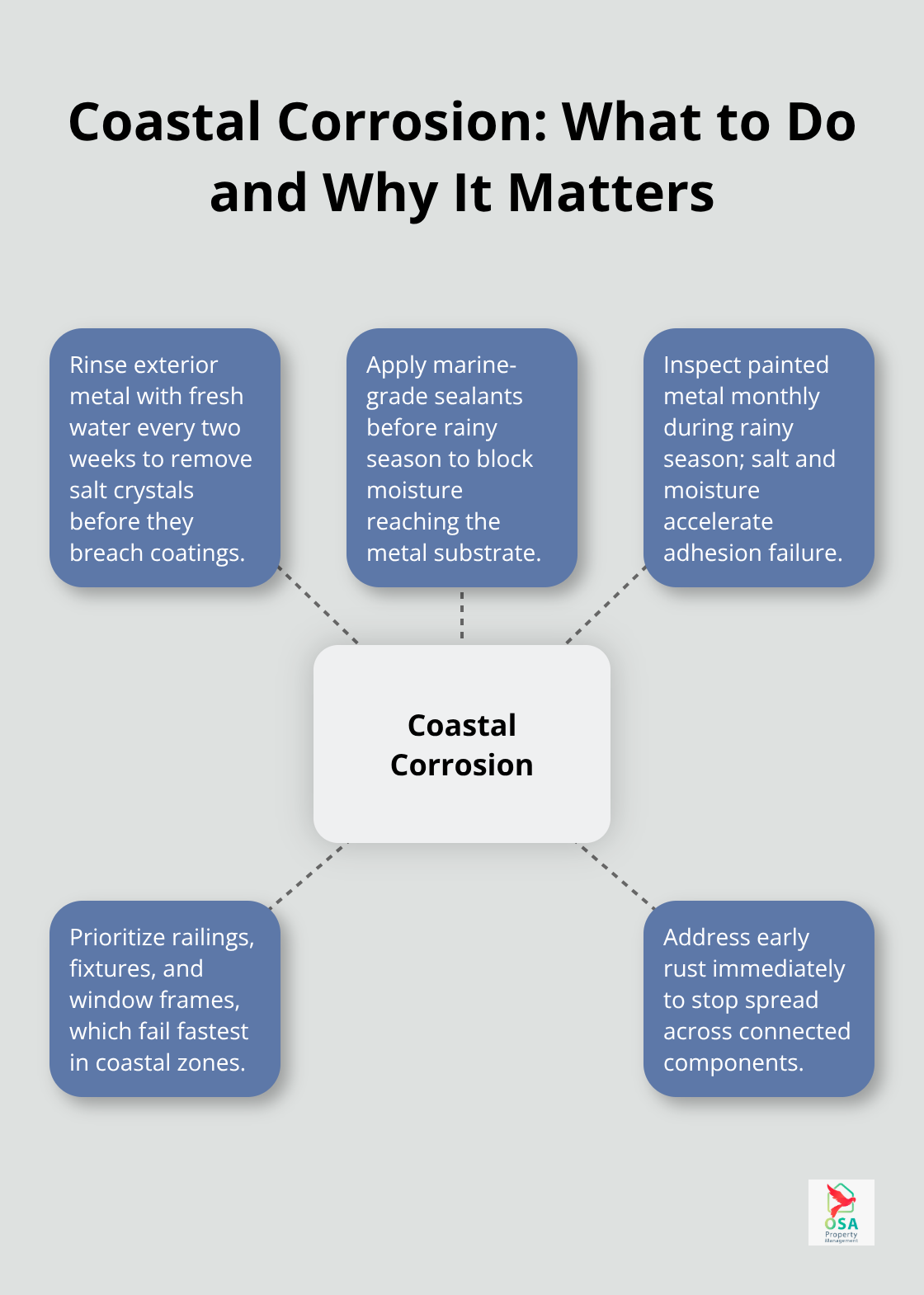
For coastal homes, rinsing exterior surfaces with fresh water every two weeks removes salt accumulation that otherwise crystallizes and damages finishes. This simple practice prevents expensive corrosion that spreads across metal components and painted surfaces.
Mold, Mildew, and Pest Pressure
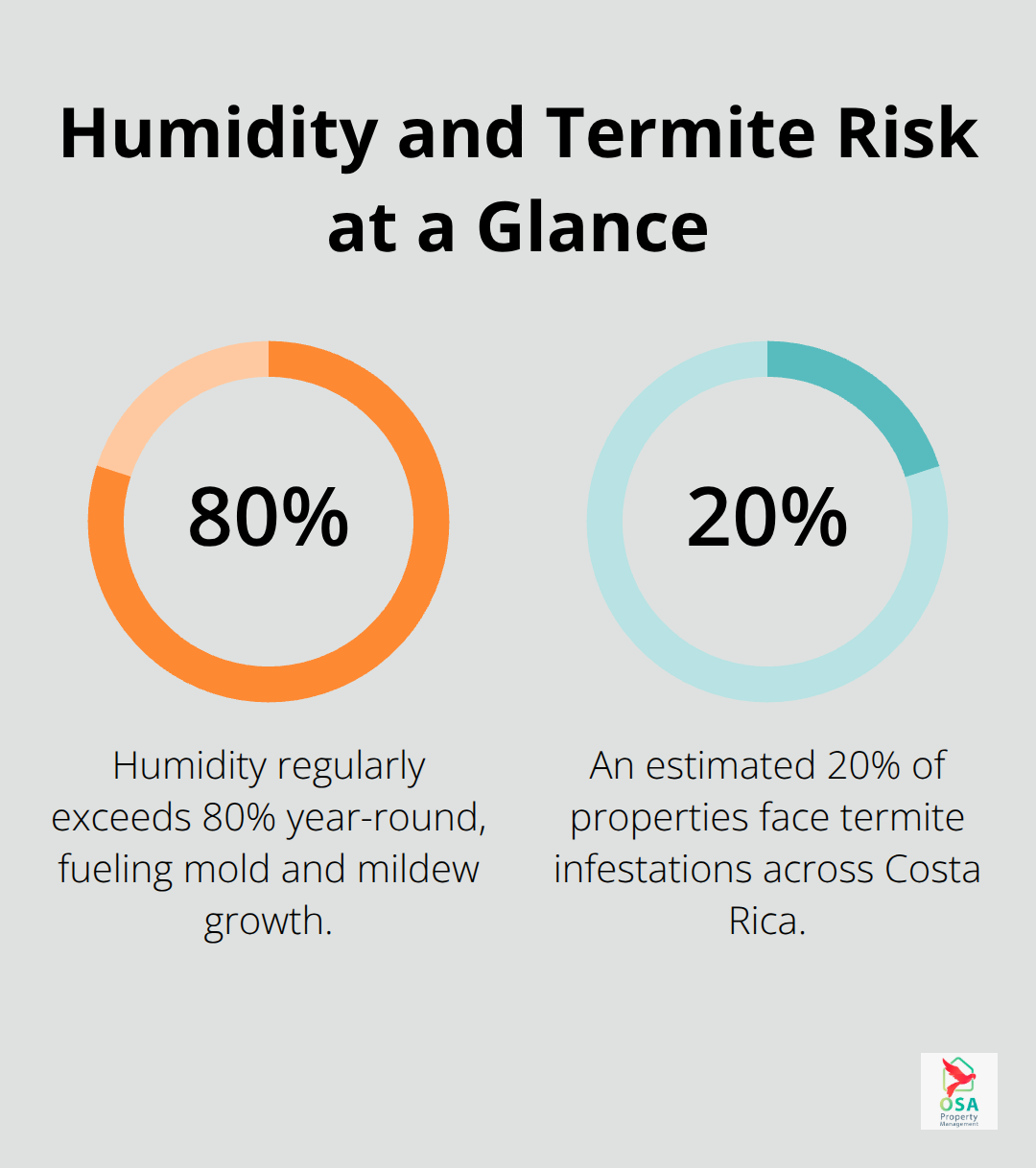
Mold and mildew thrive in Costa Rica's humidity, which regularly exceeds 80 percent year-round. These organisms don't just damage appearance-they degrade wood fibers, compromise paint adhesion, and create health hazards for occupants. The University of Costa Rica's research on termite damage shows that Costa Rica loses millions annually to wood-destroying insects, and moisture creates the exact conditions these pests prefer.
Inside the home, maintain airflow with ceiling fans and run air conditioning units regularly to prevent mold growth in enclosed spaces. This active approach stops moisture from accumulating in areas where it causes the most damage.
Seasonal Timing for Exterior Work
The dry season from December through April offers your only reliable window for exterior repairs and preventive work. During this period, temperatures hover between 75 and 90 degrees Fahrenheit with minimal rainfall, making it ideal for painting, sealing, and deep cleaning outdoor surfaces. Paint application requires dry conditions to cure properly-attempting exterior painting during rainy season results in poor adhesion and premature peeling.
Professional contractors in the region recommend scheduling major exterior work between January and March when weather is most predictable. Inspect your roof before rainy season begins, checking for loose tiles, cracked shingles, and deteriorated flashing. Small roof problems become major leaks within days once heavy rains arrive.
Pre-Rainy Season Preparation
Clear outdoor drains and trim tree branches hanging over your property to prevent water blockages. Seal gaps around windows, doors, and utility penetrations where water can enter during heavy downpours. Drip irrigation systems should run on adjusted schedules-twice weekly during dry season to maintain landscaping, but only a few times weekly during rainy season when natural rainfall provides most moisture needs.
These seasonal adjustments separate owners who preserve their properties from those who watch their investments deteriorate rapidly. Understanding what your outdoor spaces face each season allows you to act before problems develop into costly repairs. The next section explores specific problems that emerge when maintenance falls behind and the solutions that address them effectively.
How to Build a Maintenance System That Actually Works
Weekly and Monthly Inspection Schedules
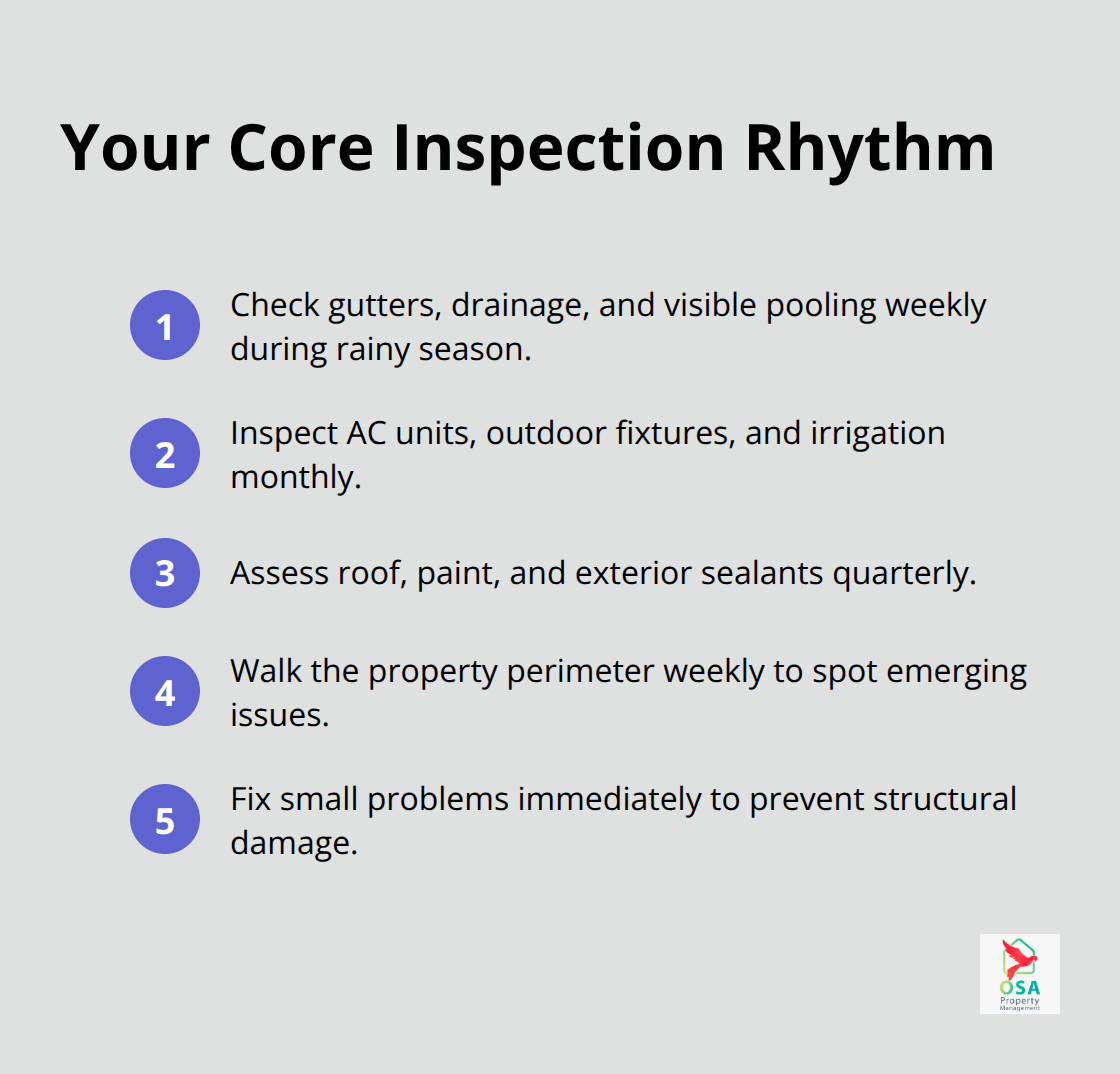
Inspection schedules fail when owners treat them as optional tasks rather than non-negotiable commitments. You need to establish a tiered inspection calendar that matches Costa Rica's seasonal demands. Weekly checks during rainy season should focus on gutters, drainage around foundations, and any visible water pooling near the structure. Monthly inspections cover air conditioning units, outdoor fixtures, and landscape irrigation systems. Quarterly assessments examine roof integrity, paint condition, and sealant effectiveness on all exterior surfaces. This structured approach catches problems when they're small and fixable, not after they've spread into structural damage.
Paint and Sealant Protection in Tropical Conditions
Tropical sun degrades finishes three times faster than temperate climates. Exterior paint in coastal areas lasts only 18 to 24 months before UV exposure and salt air cause chalking and peeling, compared to three to five years inland. You should apply marine-grade sealants to all wood surfaces, metal railings, and window frames before rainy season arrives. This protective layer stops moisture from penetrating wood fibers and corroding metal components. Without proper sealants, your property faces accelerated deterioration that compounds each season.
Drainage Systems That Protect Structures
Drainage systems deserve equal attention because they're the difference between a protected structure and one that slowly rots from moisture accumulation. You must install gutters with proper slope toward downspouts, ensuring water flows away from foundations. Many properties fail because gutters clog with debris, forcing water to overflow and pool against exterior walls. Clean gutters weekly during rainy season and clear downspout extensions of leaves and sediment. If your property sits in an area with poor natural drainage, consider installing French drains or gravel-filled trenches that direct water away from vulnerable structures. These systems prevent the foundation damage and wood rot that emerge when water accumulates around your home's perimeter.
Seasonal Irrigation Adjustments
Drip irrigation systems need seasonal adjustments because overwatering during rainy season wastes water and creates the exact soggy conditions that trigger fungal disease and pest problems. Switch from twice-weekly watering during dry season to once or twice weekly during rainy months, depending on rainfall amounts in your specific location. This flexibility keeps your landscape healthy without promoting the moisture-dependent problems that plague poorly managed properties. The next section explores how professional support transforms maintenance from a burden into a reliable system that protects your investment year after year.
What Damages Metal and Wood Fastest in Costa Rica
Salt Corrosion on Metal Fixtures
Metal fixtures in coastal properties corrode at a rate that shocks most owners who haven't experienced tropical coastal exposure. Salt spray penetrates properties within 5 kilometers of the coast, meaning even properties blocks away from the beach face significant corrosion on railings, fixtures, and window frames. Metal components deteriorate three to four times faster in coastal zones compared to inland areas, with visible rust appearing within weeks if left unprotected.
How Moisture Accelerates Metal Deterioration
High humidity accelerates not only corrosion but also wood-destroying insect activity, costing the country millions annually. This means your coastal property faces a double threat: salt air corrodes metal while moisture creates conditions that termites and wood-boring beetles actively seek.
Once corrosion starts, it spreads rapidly across connected metal components, making prevention far cheaper than replacement. Metal fasteners, hinges, and brackets corrode from the inside out, weakening structural connections long before visible rust appears on surfaces. Protect all metal components-not just visible railings-with appropriate sealants and coatings.
Wood Rot and Fungal Decay
Wood rot prevention requires understanding that Costa Rica's high humidity and rainfall create perfect conditions for fungal decay that progresses silently inside wood fibers. Wood exposed to moisture without proper sealant protection fails within one to two years, particularly in coastal areas where salt and humidity combine.
Check wooden decks, railings, window frames, and trim quarterly for soft spots that indicate active rot has begun. Marine-grade sealants applied every 18 to 24 months protect wood from moisture penetration, but only if applied to all surfaces (including edges and fastener holes where water enters). Without complete coverage, water finds entry points and spreads decay through the wood structure.
Termite Activity and Wood-Destroying Insects
Termites become active during rainy season when soil moisture rises, making this the critical window for implementing targeted termite management. An estimated 20% of Costa Rican properties face termite infestations, which hollow out wooden structural elements before visible damage appears. Maintain at least six inches of clearance between soil and any wooden structural elements, removing mulch or debris that creates a bridge for termites to reach your home.
Pest control for wood-destroying insects should focus on prevention through moisture management and physical barriers rather than relying on chemical treatments after damage appears. Regular landscape maintenance that removes dead wood, trimmed branches, and organic debris eliminates the food sources that attract termites and wood-boring beetles to your property.
Final Thoughts
Outdoor maintenance in Costa Rica demands consistency, not heroic efforts during crisis moments. Weekly gutter inspections during rainy season, biweekly salt rinsing on coastal properties, and seasonal sealant applications prevent the expensive damage that catches unprepared owners off guard. These actions separate properties that hold their value from those that deteriorate despite your investment.
Proactive maintenance planning saves money because small repairs cost a fraction of what structural damage costs. A clogged gutter cleaned weekly costs nothing, while water damage from that same gutter costs thousands. Marine-grade sealant applied every 18 to 24 months protects wood for years, whereas replacing rotted wood structural elements costs tens of thousands. The math is straightforward: prevention beats repair every time.
Most property owners in Costa Rica lack the local knowledge to navigate seasonal demands, coordinate with reliable contractors, or respond quickly when problems emerge. We at Osa Property Management have spent over 20 years managing properties across Tarcoles, Jaco, Dominical, Manuel Antonio, Ojochal, Uvita, and Golfito, handling everything from routine inspections to emergency repairs with a team of trusted local contractors. Contact us to build a customized outdoor maintenance Costa Rica plan that matches your property's specific needs and location.