

Property inspections in Costa Rica aren't optional if you want to protect your investment. The tropical climate, seasonal rains, and local building conditions create unique challenges that most property owners don't anticipate until damage becomes expensive.
At Osa Property Management, we've seen firsthand how regular inspections catch problems early and save owners thousands in repair costs. This guide walks you through what matters most for your property.
Why Inspections Matter in Costa Rica's Climate
Structural Damage Accelerates in Tropical Conditions
Structural damage in Costa Rica advances faster than in most countries, and delaying action costs owners significantly. The tropical climate-with heat, humidity, and heavy rains-creates conditions where wood rot, mold, and foundation deterioration spread rapidly. A roof leak ignored for six months in Costa Rica causes structural damage that would take years in a drier climate. Property owners who skip inspections for a single season often face repair bills exceeding $15,000 that a $400–$500 inspection and early intervention could have prevented.
Hidden Threats: Termites, Electrical, and Plumbing
Termites and other wood-eating insects remain active year-round in Costa Rica, not just during certain seasons. A single termite colony compromises structural integrity silently over months, and visible damage signals that load-bearing beams need replacement. Electrical systems deteriorate faster due to humidity and salt air in coastal areas; faulty wiring causes fires, and corroded connections create shock hazards. Plumbing failures lead to foundation damage and mold that spreads through walls and attics. These problems hide behind walls and under roofs until an inspection reveals them.
Property Value and Rental Appeal Depend on Condition
Property value depends directly on condition, and rental appeal collapses when inspections uncover deferred maintenance. Renters reject properties with visible mold, water stains, or signs of pest activity, and vacation rental platforms like Airbnb penalize listings with poor condition ratings.
The Cost of Delayed Detection
A property inspected twice yearly catches problems at the 10–20% damage stage; one inspected annually often reaches 50–70% damage before issues surface. The difference between these scenarios amounts to thousands of dollars in repair costs and lost rental income. Insurance companies increasingly require inspection documentation before covering claims, and lenders demand inspections before approving refinancing. Understanding what happens during each inspection helps you plan a schedule that protects your property before damage escalates.
What Inspectors Actually Find in Costa Rican Properties
Water Infiltration: The Most Common Threat
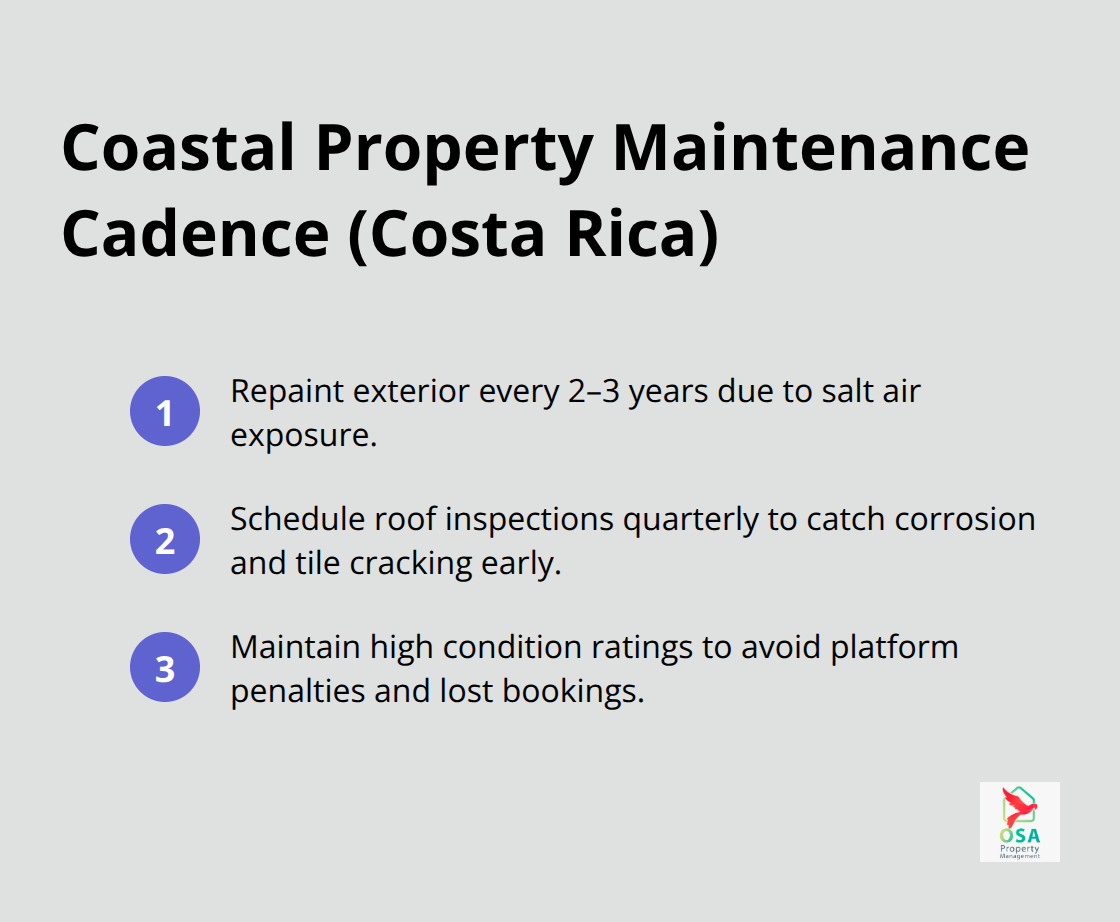
Water infiltration ranks as the most frequently identified problem during inspections across Costa Rica, and it appears in forms that most owners don't recognize until structural damage spreads. Inspectors find active leaks during the May-to-November wet season and dried stains during the dry months, meaning seasonal timing matters when assessing roof condition. Cracked roof tiles, deteriorated sealant around flashings, and blocked gutters clogged with leaves create pathways for water to penetrate walls and attics. Coastal properties demand quarterly roof inspections rather than annual checks because salt air accelerates corrosion of metal roofing and fasteners, with visible rust indicating imminent failure.
Interior moisture manifests as mold on ceilings and walls, peeling paint on exterior surfaces, and soft spots in wooden beams that signal rot advancing behind visible surfaces. Inspectors use moisture meters to detect water trapped inside walls before mold becomes visible, catching problems at the 10-20% damage stage where repair costs stay under $2,000 rather than escalating to $10,000 or more. Gutters and downspouts require clearing of blockages to prevent water pooling around foundations, and proper grading away from the house structure prevents water from saturating soil beneath foundations.
Termites and Wood-Eating Insects
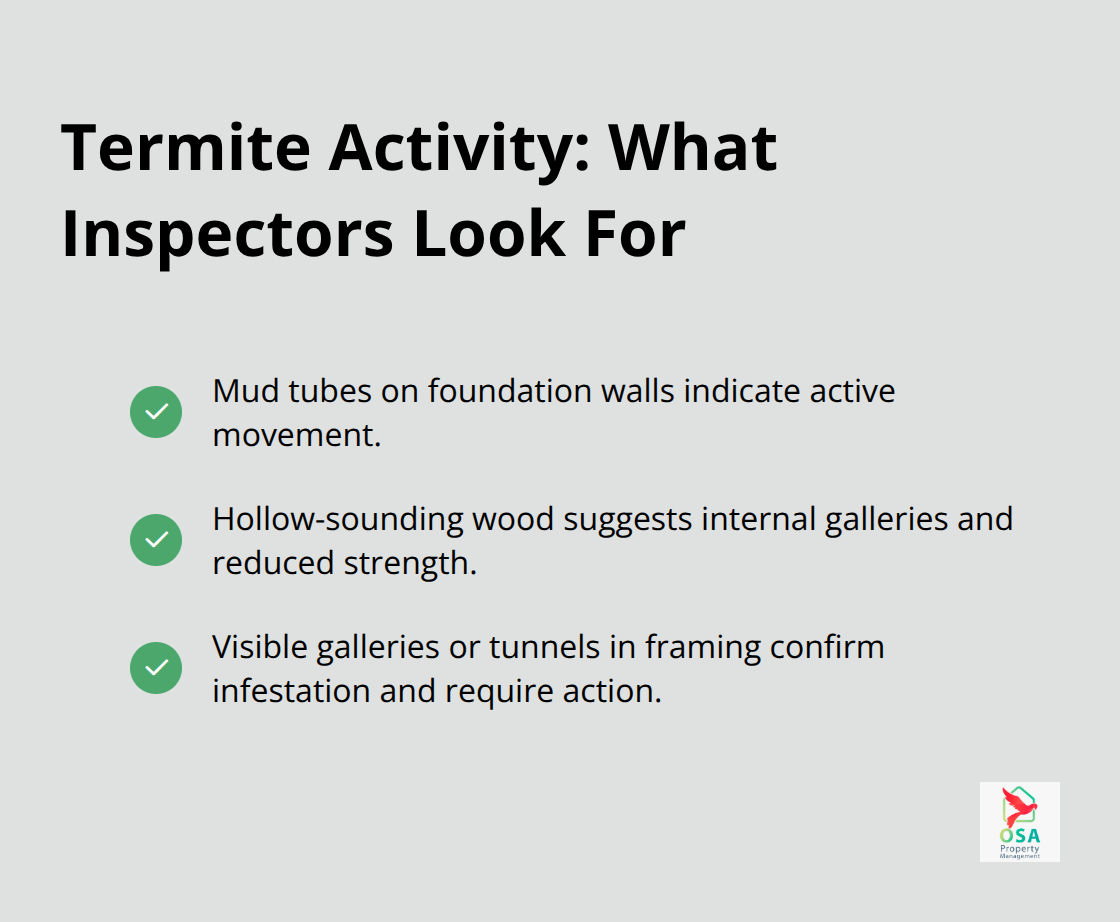
Termites and wood-eating insects inflict damage year-round in Costa Rica's warm climate, with colonies working silently inside structural members until load-bearing capacity becomes compromised. Inspectors identify termite activity through mud tubes running up foundation walls, hollow-sounding wood when tapped with a tool, and visible galleries inside wooden framing.
Electrical System Deterioration
Electrical systems deteriorate faster in humid and coastal environments, with corroded copper connections creating fire hazards and ungrounded wiring in older homes posing shock risks. Licensed electricians conducting pre-purchase inspections verify that main breaker panels are accessible and properly rated, test outlets for correct polarity using ground and current testers, and identify halogen fixtures that waste energy and generate excessive heat.
Plumbing and Water Supply Issues
Plumbing inspections reveal leaks that cause foundation damage, corroded pipes that restrict water pressure, and undersized systems that fail to handle peak usage, with septic systems requiring verification that P-traps are properly vented and functioning. Water supply reliability checks include confirming the source, testing treatment methods, and verifying backup systems like cisterns or tanks function during power outages, since many Costa Rican properties lack centralized municipal water or sewage connections. These findings shape what happens next: understanding your property's specific vulnerabilities allows you to prioritize which inspections matter most and how often you need them.
Creating an Inspection Schedule That Works for Your Property
Seasonal Timing Reveals Different Problems
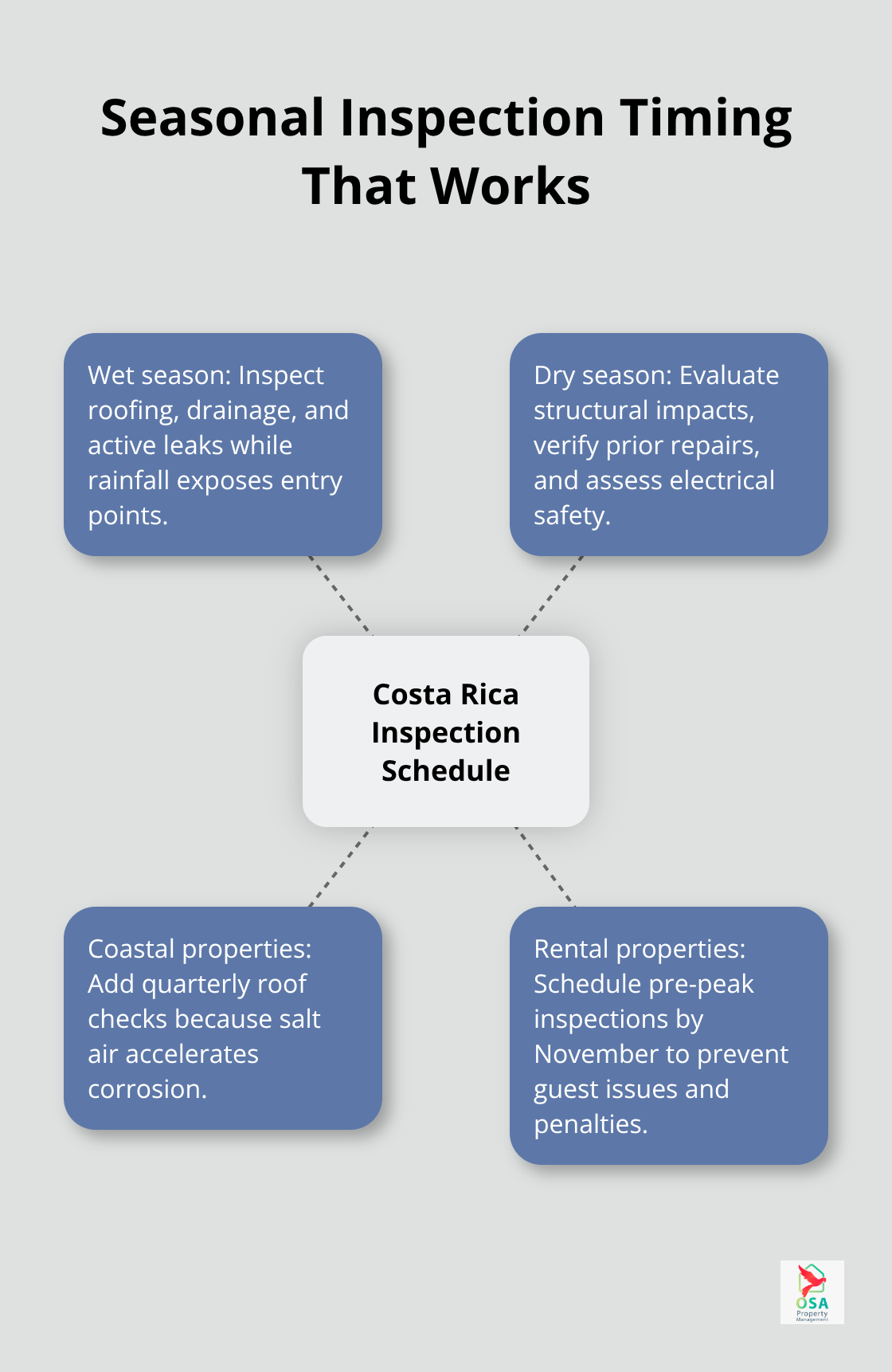
Costa Rica's climate demands a different inspection schedule than northern properties because wet and dry seasons reveal different problems. The May-to-November rainy season activates leaks that hide during dry months, so you need inspections timed to catch active water infiltration when it happens. Coastal properties require quarterly roof checks rather than annual inspections because salt air accelerates corrosion on metal roofing and fasteners, with rust visible within months of exposure.
What to Check During Each Season
The inspection checklist shifts based on what each season reveals most clearly. Wet season inspections focus on roofing, gutters, drainage patterns around foundations, interior moisture using moisture meters to detect hidden water trapped inside walls, and plumbing leaks under sinks and around water heaters. Dry season inspections emphasize electrical system safety by verifying grounding in older homes and testing outlets for correct polarity, assessing termite activity through visual inspection of mud tubes on foundation walls and wood condition, evaluating exterior paint condition and mold growth on walls, and checking that previous wet season repairs actually addressed root causes rather than surface symptoms.
Working with Local Inspection Professionals
A licensed electrician for electrical reviews costs $150–$300 and catches fire hazards that general inspectors miss, while a specialized air conditioning technician review runs $100–$200 and identifies whether cooling systems will survive another season or need replacement planning. Your inspection professional should have at least ten years of local experience and access to infrared cameras or moisture detection tools that reveal leaks and moisture behind walls before visible damage spreads. These tools produce detailed digital reports with high-resolution photos and prioritized maintenance recommendations that guide your repair budget decisions.
Trusted local contractors across Jaco, Uvita, Dominical, and Ojochal understand region-specific vulnerabilities and can move quickly when inspections reveal problems needing immediate attention. The right professional partner responds fast to findings and coordinates repairs efficiently, protecting your property from escalating damage while keeping costs manageable.
Final Thoughts
Property inspections in Costa Rica stop expensive repairs before they start. A $400–$500 inspection catches problems at the 10–20% damage stage, preventing repair bills that reach $15,000 or more when damage spreads unchecked. Owners who inspect twice yearly spend far less on repairs than those who wait until visible damage forces emergency action, and the financial difference compounds across the life of your property.
Inspections protect your rental income and property value in ways that extend beyond repair costs. Vacation rental platforms penalize listings with poor condition ratings, renters reject properties showing mold or water stains, and coastal properties lose value fastest when salt air damage goes unchecked (with exterior repainting and roof repairs becoming urgent within two to three years). Properties inspected on schedule maintain their appeal and command higher rental rates than those with deferred maintenance.
We at Osa Property Management handle property inspections Costa Rica across Jaco, Manuel Antonio, Dominical, Uvita, Ojochal, and Golfito with a team experienced in identifying region-specific vulnerabilities and coordinating repairs efficiently. Contact us to build an inspection schedule tailored to your property's location and rental status, protecting your investment with professional oversight.