

Costa Rica's tropical climate takes a toll on rental properties. High humidity, heavy rains, and salt air accelerate damage to roofing, plumbing, and structural elements that directly impact your rental income.
Property inspections in CR aren't optional-they're essential to catching problems early before they become expensive repairs. At Osa Property Management, we've seen firsthand how regular inspections protect both your investment and your bottom line.
Why Regular Property Inspections Matter in Costa Rica's Tropical Climate
Costa Rica's humidity actively destroys rental properties. Most homeowners know the general rule: it's important to dry water-damaged areas and items within 24 to 48 hours to prevent mold growth, wood rot weakens structural beams, and salt air corrodes metal fixtures faster than anywhere else. The Ministry of Health conducts health and safety inspections on rental properties, and properties with mold, poor sanitation, or missing fire safety equipment face fines and temporary closures. Landlords who ignore early warning signs lose entire months of rental income. Monthly inspections catch moisture problems before they spread, identify roof leaks at the first sign of water staining, and document plumbing issues before pipes fail. This protects your income stream from the climate that actively works against it.
Tenant Damage and Unauthorized Changes
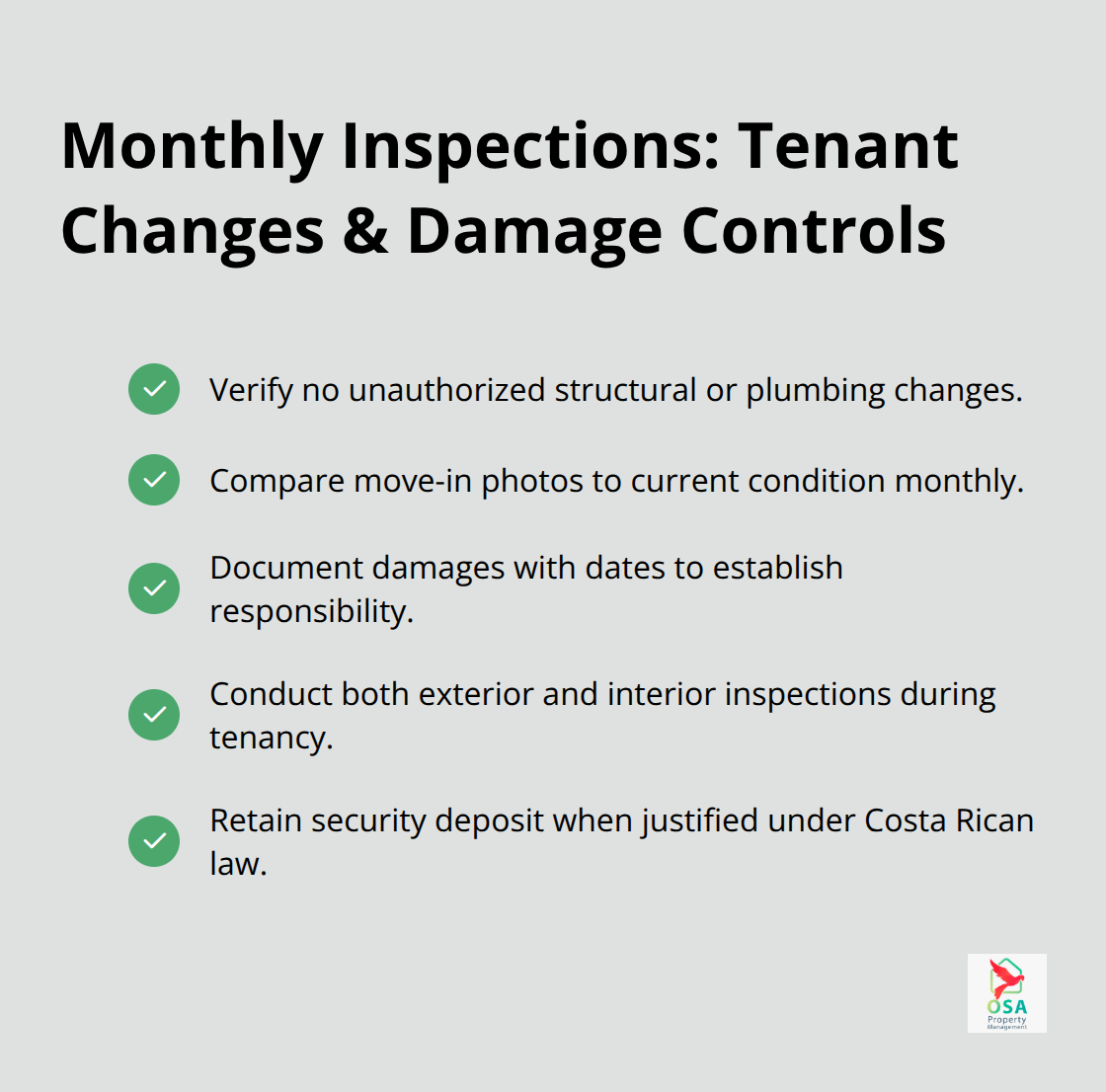
Tenants in Costa Rica cannot make permanent structural changes without landlord permission, and any permanent improvements legally become part of the property. Monthly inspections verify that renters haven't modified electrical systems, removed walls, or altered plumbing without authorization. Photograph the property's original condition before tenants move in, then compare those photos to inspection findings each month. If damage occurs, Costa Rican law allows landlords to retain a security deposit equal to one month's rent to cover repairs from wear and tear. Without regular documentation, you lose the ability to prove when damage happened or who caused it.
Legal Compliance and Regulatory Protection
Costa Rica's ICT (Instituto Costarricense de Turismo) requires short-term rentals to hold tourism licenses and register with tax authorities. Operating without proper licenses incurs fines up to 10 times the license cost and may result in property closure. The Dirección General de Tributación cracked down on unreported rental income, identifying hundreds of properties with unpaid taxes. Monthly inspections document that the property is maintained to standards and used as intended. If authorities conduct surprise inspections, records of regular maintenance and compliance checks protect you from violations related to fire safety, sanitation, or structural defects. Booking platforms increasingly require proof of legal compliance before allowing listings, and platforms may suspend properties lacking proper documentation.
What Inspections Reveal About Your Property's True Condition
A systematic inspection uncovers problems that tenants won't report and that casual walkthroughs miss. Electrical wiring embedded in concrete becomes difficult to modify later, so early detection of code violations prevents costly future work. Plumbing quality varies across Costa Rica; septic systems require professional inspection and confirmation of access for pumping. Split-system air conditioning units (common in CR) need monthly filter checks and refrigerant inspections to maintain efficiency and prevent tenant complaints. Roof condition deteriorates rapidly in the tropics-inspections catch missing shingles, flashing gaps, and water damage before interior mold takes hold. Energy-efficient appliances and proper ventilation reduce operating costs, and inspections verify that bathrooms and kitchens vent to the outside with functional ducts and exterior caps that keep out rain and pests.
Moving Forward with Professional Oversight
Landlords who manage inspections alone spend hours documenting findings, coordinating repairs, and tracking compliance records. Professional property management companies handle systematic inspection schedules, maintain detailed documentation, and coordinate repairs with trusted local contractors who understand Costa Rica's building standards and climate challenges. This approach transforms inspections from a burden into a strategic tool that protects your rental income and maintains property value. The next section covers what happens when you partner with experienced management to oversee these inspections and turn findings into action.
What to Check During Property Inspections
Roof Condition and Water Intrusion
Roof condition demands your immediate attention during every inspection. Costa Rica's heavy rainfall and intense UV exposure degrade roofing materials faster than most climates, and a single missed leak triggers mold growth within 24 to 48 hours. Inspect for missing or curled shingles, gaps in flashing around chimneys and vents, water stains on interior ceilings, and deterioration of gutters that direct water away from the structure. Document all findings with dated photographs and detailed notes that establish property condition before tenant occupancy, creating a clear baseline for future damage assessment.
Electrical and Plumbing Systems
Electrical systems present hidden risks because wiring embeds directly in concrete, making modifications costly and dangerous once installed. Have a professional electrician inspect for exposed main breakers in common areas, verify that circuits are properly graded for tropical humidity, and confirm that switches and outlets function safely. Plumbing quality varies dramatically across Costa Rica, and septic systems require professional inspection with documented access for regular pumping. Ask tenants whether they've been instructed to place toilet paper in a wastebasket instead of flushing it-this signals an undersized septic system that will fail during peak usage. Verify that P-traps are genuine fixtures rather than tubing substitutes, which deteriorate rapidly and allow sewer gases into living spaces. Check water source documentation, treatment records, backup cistern capacity, and whether neighbors experience seasonal shortages during dry months.
Air Conditioning and Appliance Efficiency
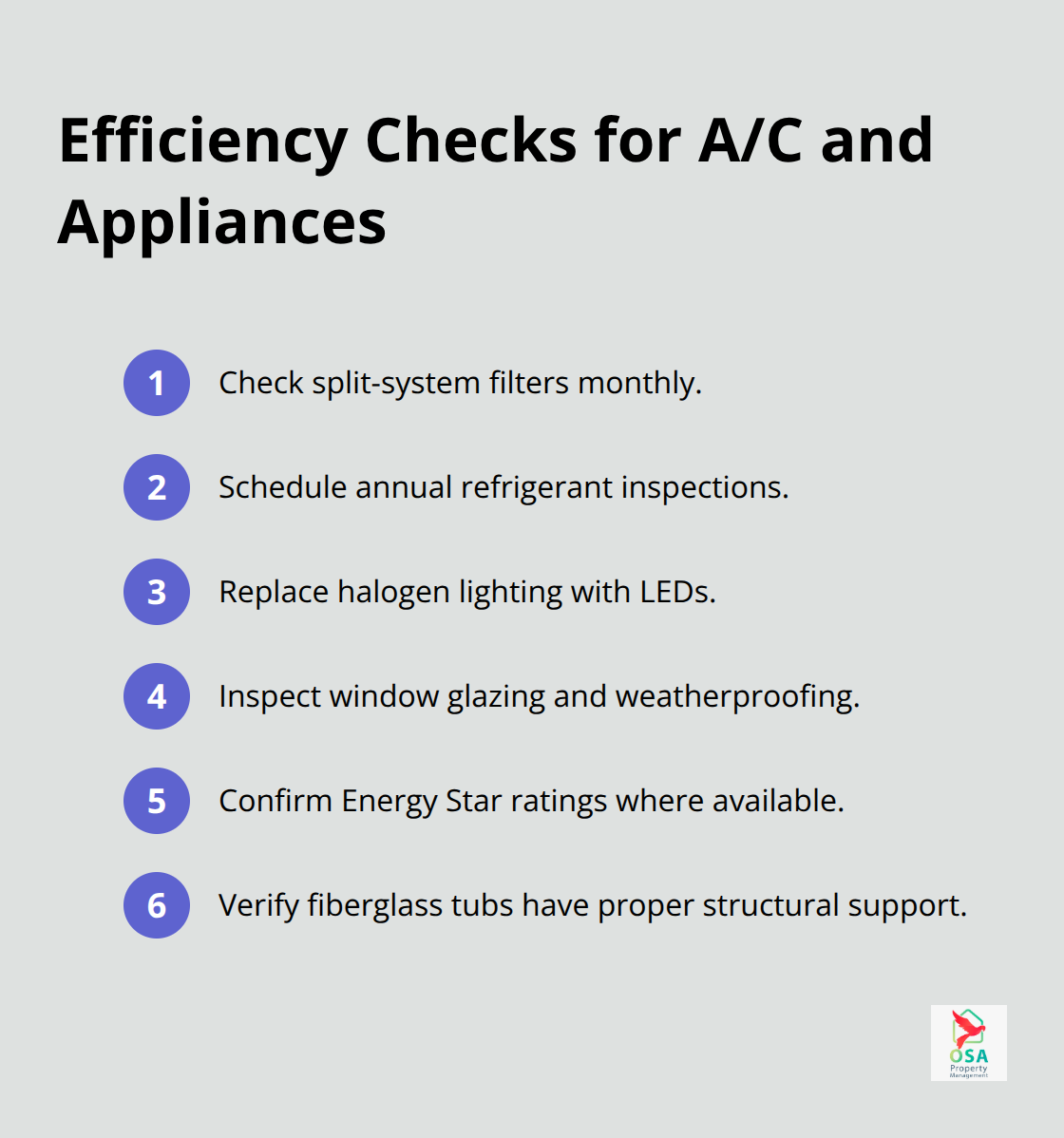
Split-system air conditioning units, which are standard throughout Costa Rica, require monthly filter checks and annual refrigerant inspections to maintain cooling efficiency and prevent tenant complaints during the rainy season. Energy consumption directly impacts tenant satisfaction and your operating costs, so assess whether halogen lighting has been replaced with LED alternatives, check that windows are single or double-glazed with proper weatherproofing, and confirm that appliances carry Energy Star ratings where available. Fiberglass bathtubs require careful inspection because they're often poorly installed and prone to cracking-confirm proper support underneath and avoid relying on inadequate installations that will require expensive replacement.
Exterior Maintenance and Drainage
Exterior maintenance protects structural integrity and prevents water intrusion that accelerates deterioration. Inspect retaining walls and drainage systems for cracks or poor water flow, since landscape failures often compromise building foundations in Costa Rica's steep terrain. Verify that bathroom and kitchen ventilation ducts exit to the exterior with functional self-closing flaps and exterior caps that prevent rain and pest entry. This documentation protects your security deposit claims and provides evidence if disputes arise regarding wear and tear versus tenant negligence.
These inspection findings form the foundation for coordinated repairs and maintenance planning. The next section explains how systematic documentation and professional coordination transform inspection results into actionable maintenance schedules that protect your property's long-term value.
How Osa Property Management Handles Inspections
Systematic Documentation and Monthly Schedules
We at Osa Property Management conduct systematic inspections on a fixed monthly schedule for short-term rentals and quarterly for long-term leases, with every finding recorded in detailed reports that track property condition over time. This consistency matters because Costa Rica's climate deteriorates properties fast, and gaps in inspection schedules allow problems to escalate before anyone notices. Our team photographs each inspection, records measurements for wear patterns, tests electrical outlets and plumbing pressure, and maintains a searchable database so you can pull historical records whenever you need them. Documentation protects your security deposit claims against tenants, satisfies ICT compliance requirements for tourism licenses, and provides evidence if tax authorities question your property's condition or maintenance spending.
Landlords who skip monthly inspections typically discover major damage only when tenants report it, which means the problem has been developing for weeks. Monthly checks catch a roof leak in week one, not week six when mold already colonizes the attic. We identify electrical code violations before they create fire risks, spot plumbing leaks before they flood interiors, and photograph deteriorating appliances before they fail during peak season when replacement costs spike.
Expert Team Identifying Issues Early
Our team knows what Costa Rica's building standards demand because we work with the same local contractors repeatedly, so we spot substandard work immediately. We operate in Tarcoles, Jaco, Dominical, Manuel Antonio, Ojochal, Uvita, and our newest office in Golfito, giving us deep regional knowledge of construction practices and climate-specific vulnerabilities in each area. This expertise allows us to detect issues early-a subtle roof deterioration pattern that signals imminent failure, electrical wiring that violates local codes, or plumbing configurations that will fail under peak usage.
Coordinating Repairs with Trusted Contractors
Once we identify issues, we coordinate repairs with trusted local contractors who understand tropical construction challenges and have proven track records in your property's region. We maintain relationships with specific companies that deliver quality work on schedule rather than rotating contractors randomly or using the cheapest bidder. We obtain multiple quotes for major repairs, negotiate pricing based on our volume, and oversee work completion before final payment. This coordination removes the burden from you and prevents the common scenario where landlords spend weeks chasing contractors, missing deadlines, or paying inflated emergency rates.
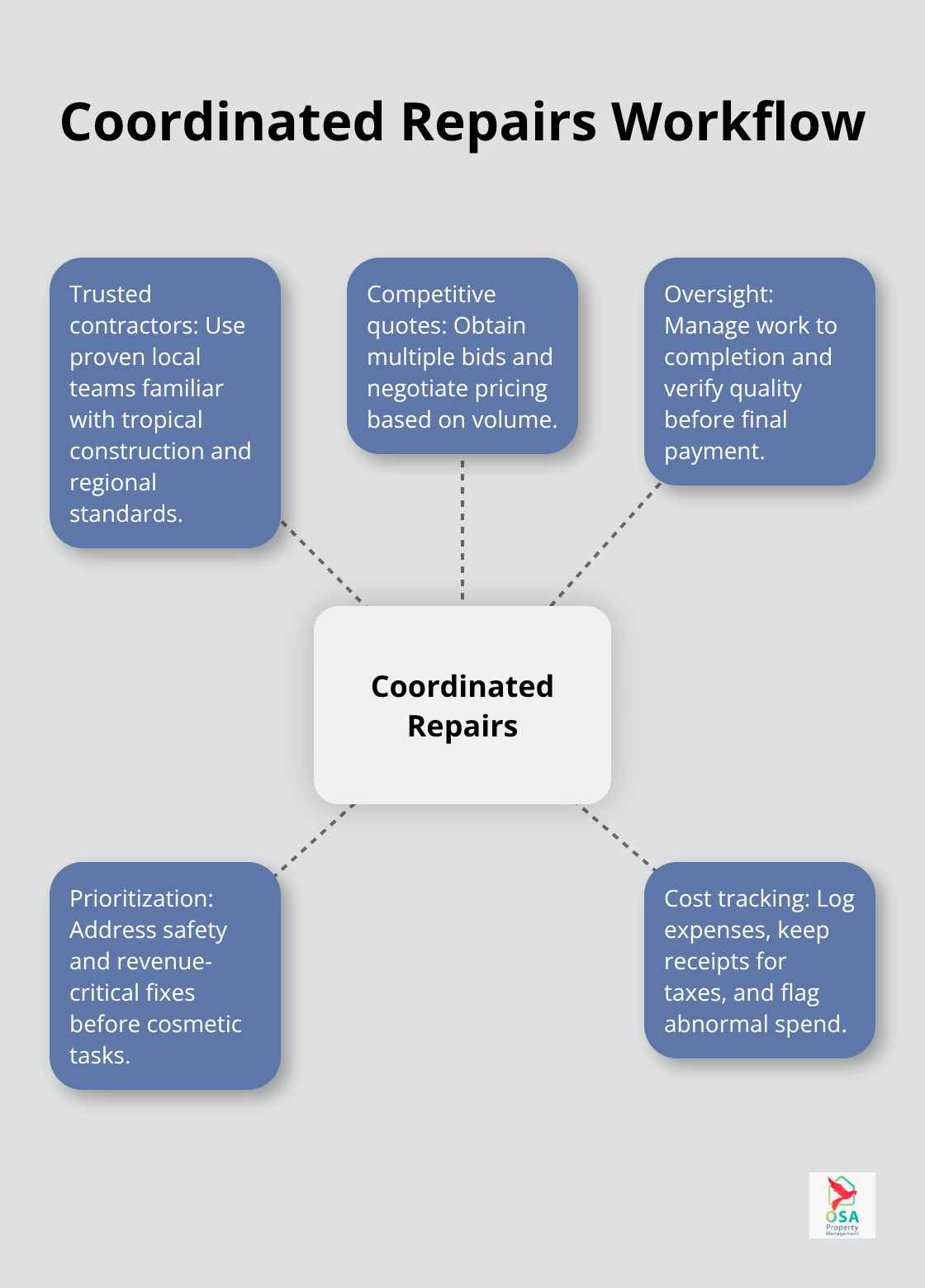
We prioritize repairs based on safety and revenue protection, so a roof leak gets scheduled before cosmetic painting, and a broken air conditioning unit gets fixed before the rainy season when guests abandon properties over cooling complaints. Our team tracks every repair cost, maintains receipts for tax deductions, and alerts you immediately if repair expenses exceed normal maintenance ranges, signaling that a component needs replacement rather than repeated patching.
Final Thoughts
Property inspections in Costa Rica directly protect your rental income by stopping problems before they escalate into expensive repairs that force you offline during peak season. A roof leak discovered in month one costs far less than water damage discovered in month six, and monthly documentation provides the evidence you need to defend security deposit claims against tenants. Without systematic property inspections CR, you risk that tenants will hide problems and that Costa Rica's climate will destroy your investment while you remain unaware.
Managing inspections yourself consumes time you don't have, forcing you to coordinate contractors, track repair costs, maintain compliance records, and chase follow-ups while your property sits vacant. Professional property management eliminates this burden by handling inspections on fixed schedules, maintaining detailed documentation, and coordinating repairs with trusted contractors who deliver quality work on time. This approach costs less than the emergency repairs and lost rental income that result from delayed maintenance.
We at Osa Property Management operate across Tarcoles, Jaco, Dominical, Manuel Antonio, Ojochal, Uvita, and Golfito with a team that understands Costa Rica's building standards and climate challenges. Contact Osa Property Management to transform property inspections from a burden into a strategic advantage that protects your investment and maximizes your returns.