
Rental tax in Costa Rica can feel overwhelming, especially if you're new to property ownership here. The good news is that staying compliant doesn't have to be complicated when you understand the rules and plan ahead.
At Osa Property Management, we've helped countless property owners navigate these requirements efficiently. This guide walks you through everything you need to know to keep your rental income properly reported and your deductions maximized.
How Tax Rates and Filing Deadlines Work in Costa Rica
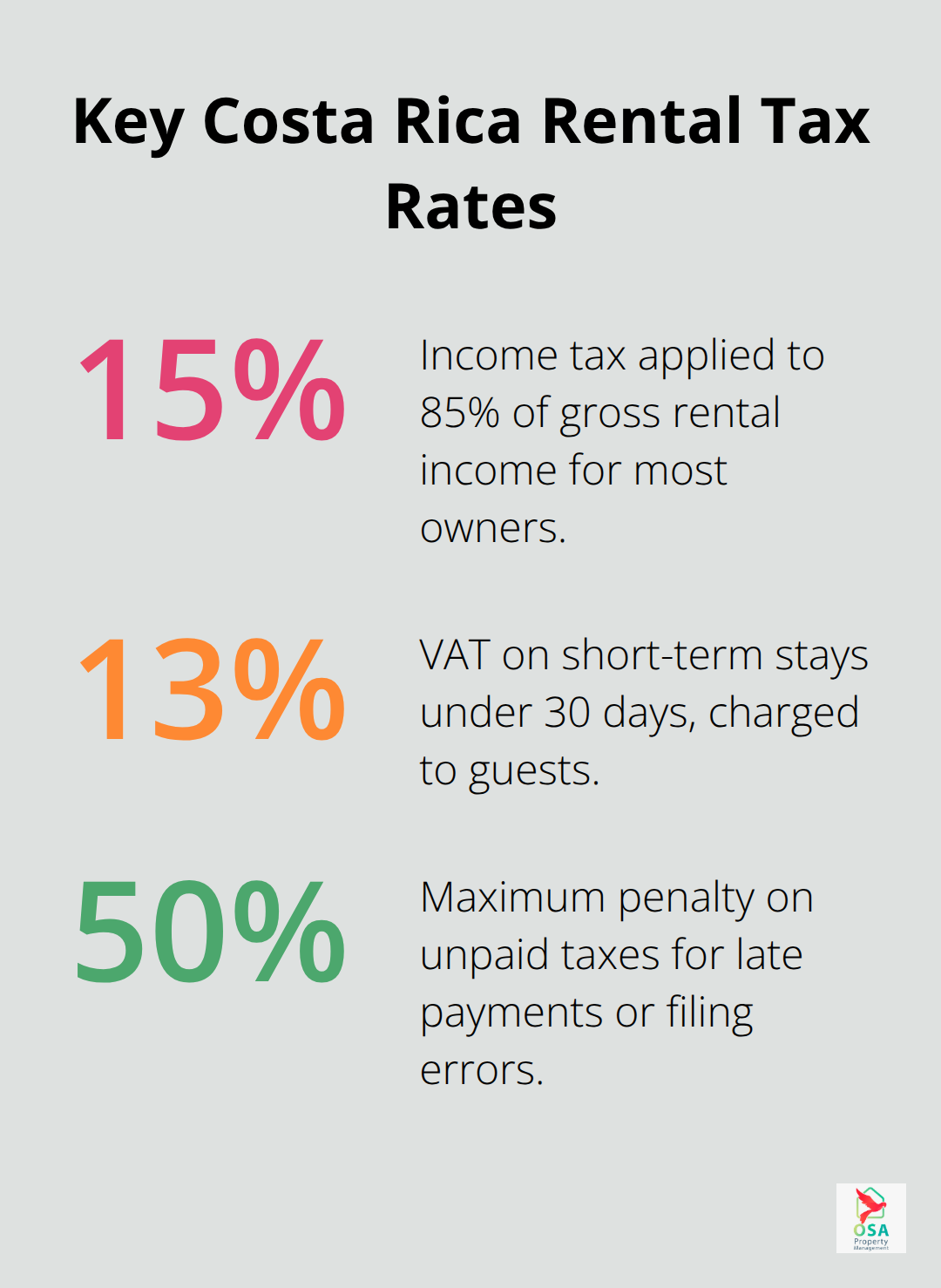
Rental income in Costa Rica is taxed at 15% on 85% of your gross rental income, which works out to an effective rate of about 12.75% of gross revenue. This flat structure applies to most property owners, though the actual tax you pay depends on how you file and whether you itemize deductions.
Filing Deadlines and Monthly Requirements
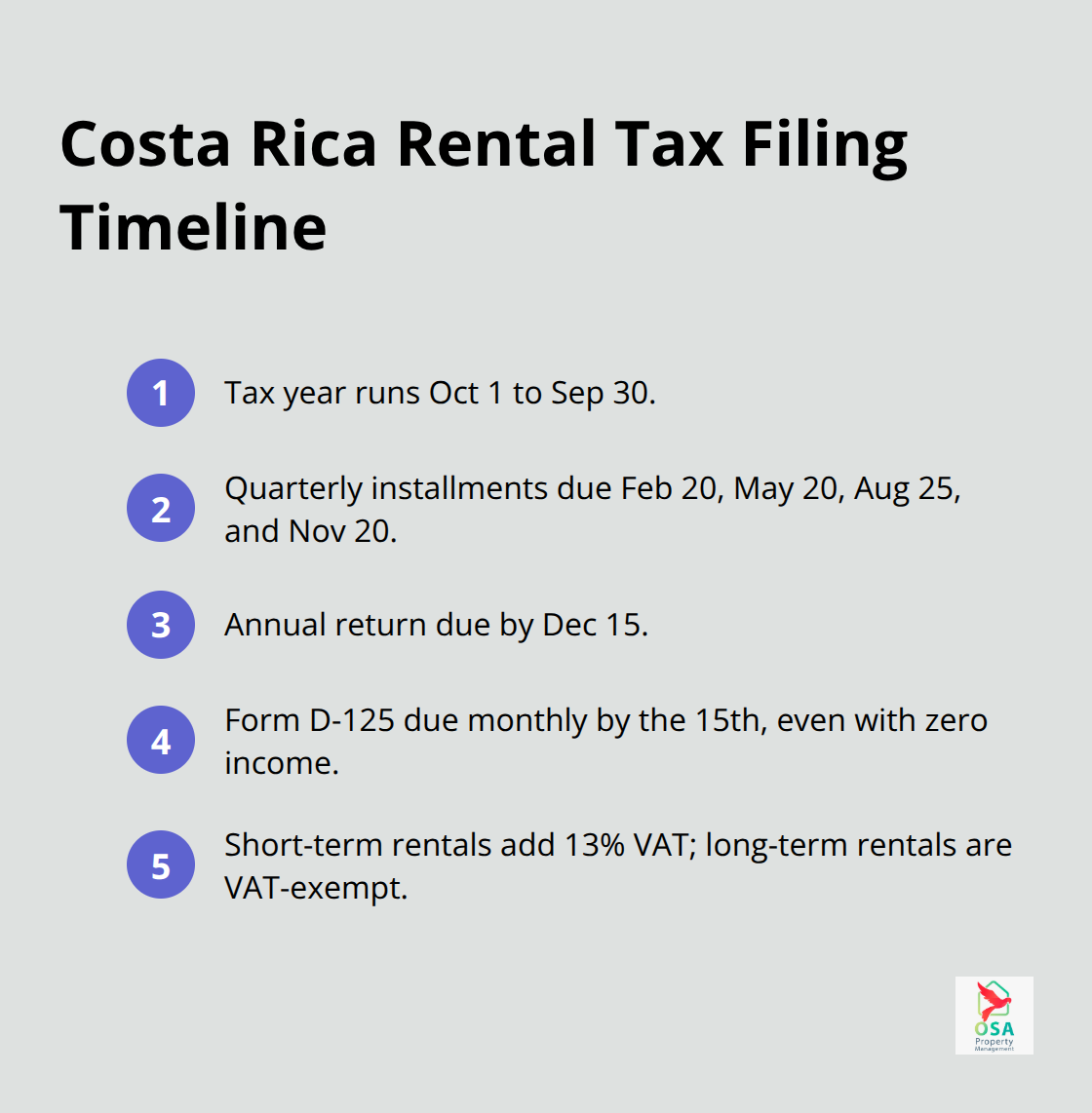
The tax year runs from October 1 to September 30, with quarterly installments due February 20, May 20, August 25, and November 20, and an annual return due by December 15. Monthly filings using Form D-125 are also required by the 15th of each month, even if you earned zero income that month-a requirement many owners miss.
What Gets Taxed and What Doesn't
The first 3.8 million colones of annual rental income (roughly $7,600) is tax-exempt, so owners with modest rental income may owe nothing. Income above that threshold is taxed progressively from 10% to 25% if you're a resident itemizing deductions. Platforms like Airbnb report income to Costa Rican tax authorities, so underreporting is essentially impossible-your bank statements and platform records will match what Hacienda expects. This means you need accurate, documented expenses to justify deductions.
Deductible Expenses and Record-Keeping
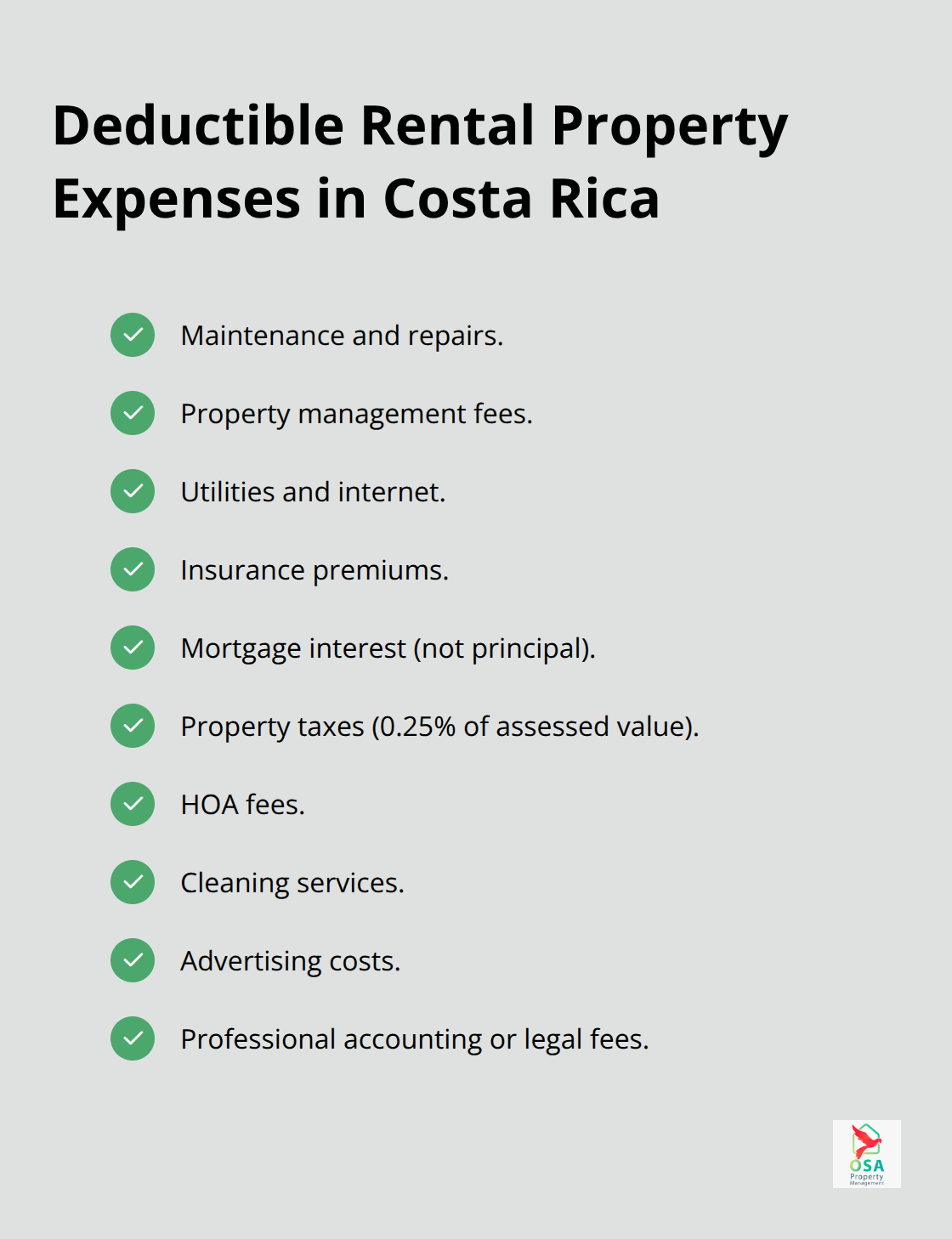
Deductible expenses include maintenance and repairs, property management fees, utilities, internet, insurance, mortgage interest, property taxes, HOA fees, cleaning, advertising, and professional fees for accounting or legal work. Depreciation on residential buildings can be claimed over 50 years and commercial properties over 40 years, which means a $200,000 residential property generates about $4,000 annually in depreciation deductions.
Understanding these tax mechanics sets the foundation for maximizing deductions. The next section shows you exactly which expenses you can claim and how to structure your records to capture every eligible deduction.
What Expenses Can You Actually Deduct
Repairs and Maintenance in Tropical Climates
Maintenance and repair costs eat into your profits faster than almost anything else, especially in tropical climates like Jacó, Manuel Antonio, and Uvita where humidity, salt air, and heavy rainfall accelerate wear. You should expect to spend 8–12% of gross rent annually. The critical distinction is this: repairs and maintenance qualify for full deduction in the year you pay them, but major renovations or structural improvements require capitalization and depreciation over decades. A $500 roof patch qualifies for immediate deduction. A $15,000 roof replacement gets added to your property's cost basis and depreciates over 50 years for residential properties. This difference affects your tax bill enormously.
Property Management Fees and Administrative Costs
Property management fees, whether you hire a full-service firm or pay for accounting help, qualify for full deduction. If you self-manage, you cannot deduct your own time, but you can deduct software subscriptions, cloud-based accounting tools like QuickBooks Online or Xero, and any freelance bookkeeping costs. These administrative expenses add up quickly and represent legitimate tax relief when properly documented.
Utilities, Insurance, and Mortgage Interest
Utilities that you own and pay directly qualify for deduction, as do insurance premiums, mortgage interest (though not principal), property taxes at 0.25 percent of assessed value, HOA fees, and advertising costs on platforms like Airbnb or Booking.com. The mortgage interest deduction carries particular value: 100 percent of interest paid on Costa Rican property qualifies for deduction whether it's a primary residence or rental. If you financed a $300,000 property at 6 percent interest, your first-year interest alone could exceed $18,000 in deductions.
Itemizing Expenses vs. the Flat Deduction
Itemizing actual expenses typically reduces your tax liability by 20 to 30 percent compared to claiming the flat 15 percent baseline deduction, which is why most owners with significant maintenance costs come out ahead by tracking receipts carefully. Platforms like Airbnb now report your income directly to Hacienda, which means your deductions must align with your reported revenue or red flags appear immediately. Mismatches between platform income and your claimed expenses invite scrutiny and penalties.
Documentation That Protects You During Audits
Keep digital copies of every invoice, receipt, and bank statement for at least four years. Organize them by category and month so you can substantiate deductions during an audit. This systematic approach (organized by expense type and date) prevents costly errors and demonstrates good faith compliance to tax authorities. Your documentation becomes your defense when Hacienda questions any deduction, so treat record-keeping as non-negotiable. With these deductions mapped out and your records in place, the next step is implementing systems that capture every eligible expense without creating administrative chaos.
How to Build Systems That Keep You Compliant Without the Headache
Separate Accounts and Real-Time Tracking
The difference between property owners who stay compliant and those who face audits comes down to one thing: systems. Not fancy software or complicated spreadsheets, but actual processes that capture income and expenses the moment they happen. We've watched owners spend thousands on penalties because they waited until December to gather receipts, only to discover missing invoices or bank statements that didn't match platform records.
Open a separate bank account for all rental transactions-rent deposits, utility payments, repair invoices, everything. This single step eliminates the chaos of commingling personal and business money. Then connect that account to QuickBooks Online or Xero, which automatically categorizes transactions and generates tax-ready reports. Spend 30 minutes each month reconciling your bank statement against your accounting software. This monthly discipline catches errors before they compound and ensures your records match what Hacienda sees from platform reports like Airbnb.
Organize Records for Audit Protection
Organize digital copies of invoices, receipts, and lease agreements by expense category and month, then store them in cloud storage like Google Drive or Dropbox with date-stamped filenames. Four years of organized records becomes your audit shield. This systematic approach (organized by expense type and date) prevents costly errors and demonstrates good faith compliance to tax authorities. Your documentation becomes your defense when Hacienda questions any deduction, so treat record-keeping as non-negotiable.
Hire a Local Tax Professional
Local tax professionals and property managers who specialize in Costa Rican rentals are not luxuries-they're investments that pay for themselves. A qualified Costa Rican tax advisor can help you navigate compliance requirements and maximize your earnings. They also file your monthly Form D-125 on time, which eliminates the risk of penalties that reach 50% of unpaid taxes.
Professional Property Management Handles Compliance
Property management firms handle tax filings, electronic invoicing for maintenance and utilities, and reconciliation of platform income-essentially outsourcing the entire compliance burden. In tropical regions like Jaco, Manuel Antonio, Uvita, and Dominical where maintenance costs run 8–12% of gross rent, a property manager's documentation of repairs becomes critical tax evidence. They invoice repairs electronically, which creates the audit trail Hacienda expects.
Many owners think they save money self-managing, but when you account for missed deductions, late-filing penalties, and the value of your time, professional management typically costs less than going it alone. The key is choosing a partner with regional expertise and proven compliance track records-someone who understands local vendor relationships, knows how to properly categorize expenses, and files on time every month without exception.
Final Thoughts
Rental tax in Costa Rica demands three non-negotiable practices: understanding your filing deadlines, documenting every expense, and choosing the right support system. The October-to-September tax year with monthly Form D-125 filings protects you when Hacienda cross-references platform reports like Airbnb against your claimed deductions. Missing a single monthly filing or losing a repair receipt costs far more than the effort required to stay organized.
Proactive tax planning transforms compliance into a competitive advantage that compounds year after year. When you itemize actual expenses instead of taking the flat 15% deduction, you typically reduce your tax liability by 20 to 30 percent-a $200,000 property generating $30,000 annually in rental income could save $6,000 to $9,000 per year through proper deduction capture and strategic expense timing. Over a decade, that difference reaches $60,000 to $90,000 in tax savings that stays in your pocket.
The owners who thrive in Costa Rican rentals partner with professionals who handle monthly filings, electronic invoicing, and audit-ready documentation. We at Osa Property Management work with hundreds of owners across Jaco, Manuel Antonio, Uvita, Dominical, and Ojochal, and those who delegate compliance to specialists spend less time on paperwork, capture more deductions, and face zero audit risk. Contact Osa Property Management to discuss how professional management can handle your entire compliance burden while maximizing your rental income.