

If you own rental property in Costa Rica, understanding CR IVA basics is non-negotiable. The tax system works differently than many property owners expect, and mistakes can be costly.
At Osa Property Management, we’ve seen firsthand how confusion about IVA registration and compliance creates problems for rental owners. This guide walks you through what you need to know to stay compliant and minimize your tax burden.
What IVA Actually Means for Your Rental Income
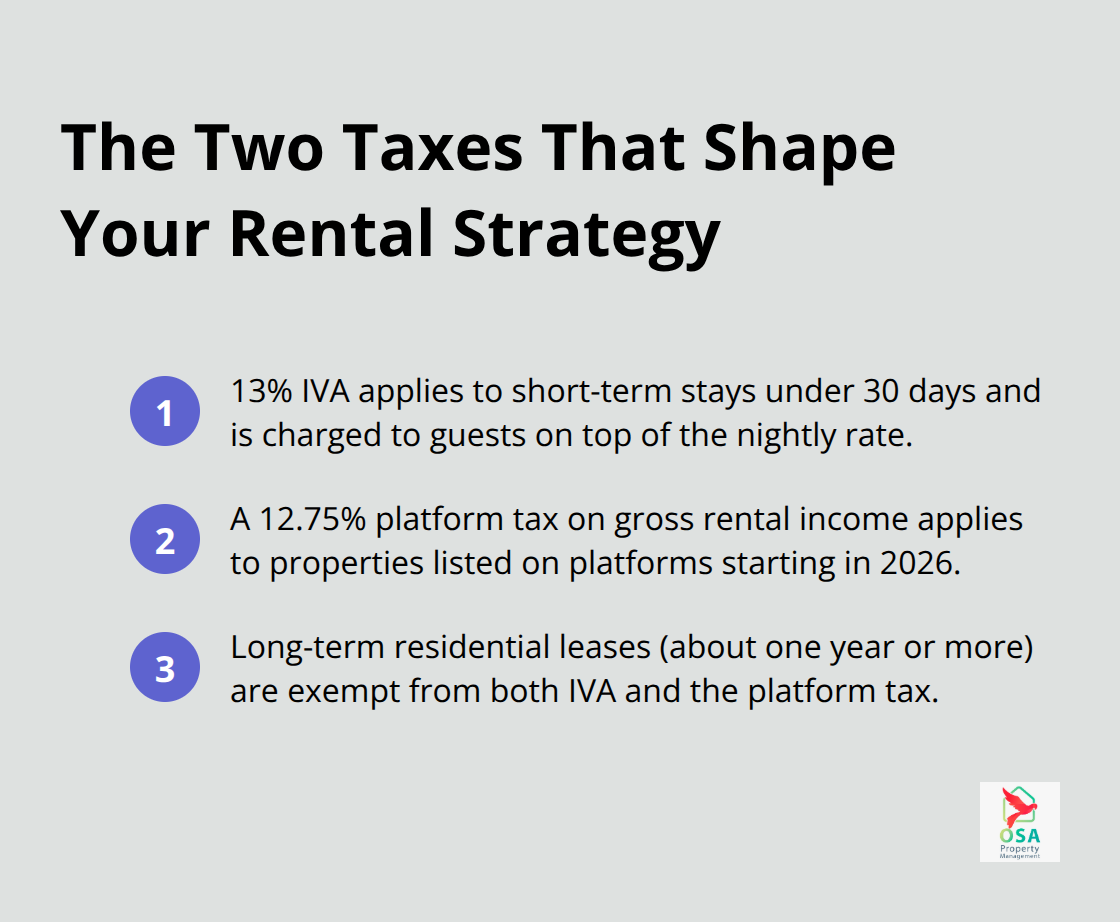
IVA stands for Impuesto al Valor Agregado, Costa Rica’s value-added tax, and it operates at a standard rate of 13% on most goods and services. For rental property owners, this tax applies specifically to short-term rentals-stays under 30 days-where guests pay the 13% on top of your nightly rate. Long-term residential leases, typically lasting one year or more, remain completely exempt from IVA, which is why some owners strategically shift toward longer-term tenants to avoid the tax burden. The distinction matters enormously because it affects your pricing strategy, guest expectations, and overall profitability. When Costa Rica implemented IVA on July 1, 2019, it fundamentally changed how short-term rental economics work, and many owners still underestimate the impact on their bottom line.
How IVA Registration Works in Practice
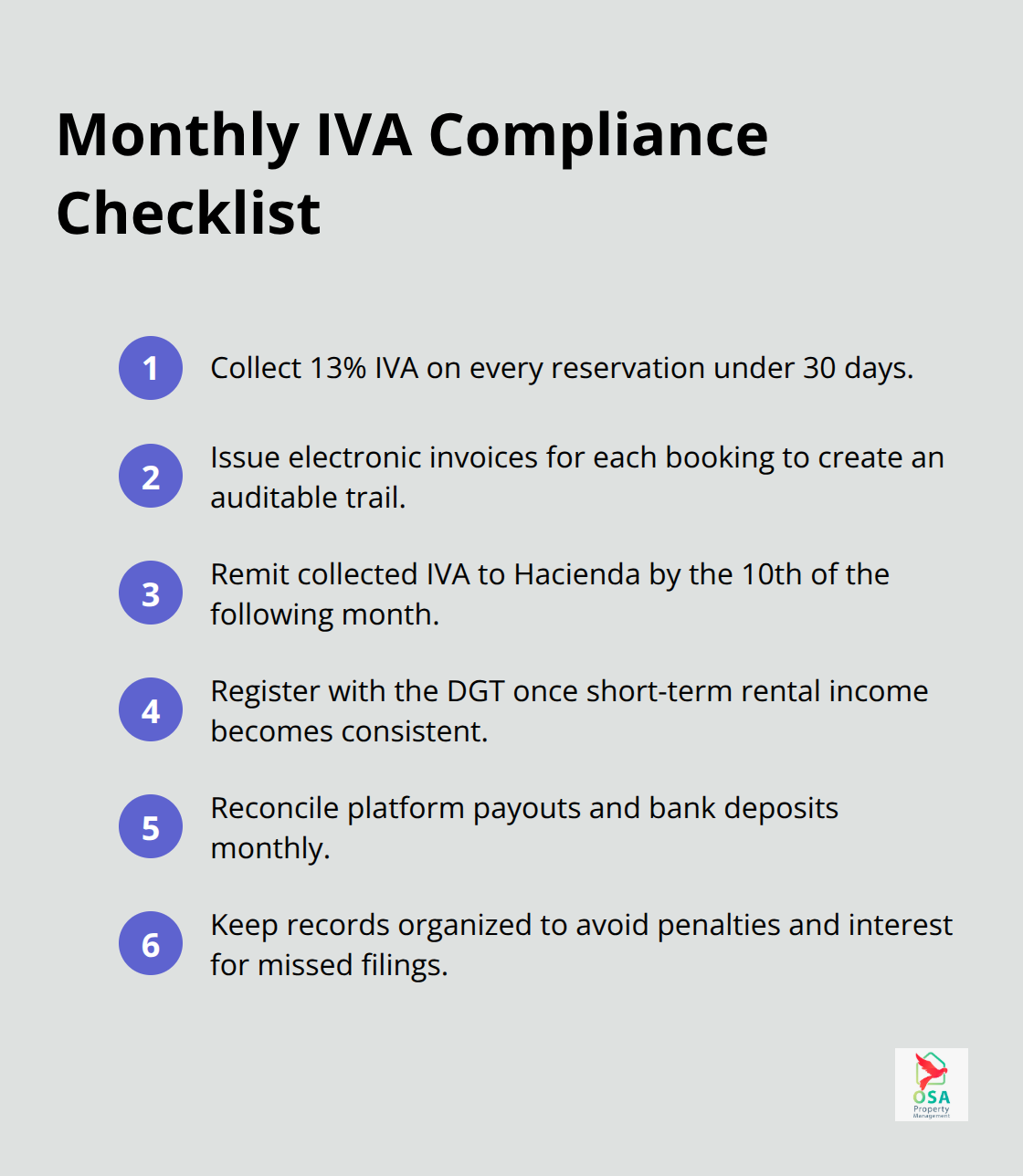
You must register with the DGT once your annual rental income crosses the threshold, typically when you generate consistent revenue from short-term stays. Once registered, you become responsible for collecting 13% from guests and remitting it monthly to Hacienda. This isn’t optional-the government now expects stronger enforcement starting in 2026, with platforms like Airbnb and Vrbo sharing data directly with tax authorities. You’ll also need to issue electronic invoices for every reservation, a requirement that sounds bureaucratic but actually protects you by creating a clear compliance trail. The reality is that treating IVA as a pass-through tax rather than a business expense keeps you out of trouble; many owners mistakenly absorb the 13% themselves, which destroys margins and invites audit risk.
Which Rental Income Actually Triggers IVA
Short-term rentals under 30 days incur the full 13% IVA, while anything longer remains tax-free. However, the 2026 tax changes introduce an additional layer: a 12.75% tax on gross rental income for properties listed on platforms, applied regardless of your net profit. This means if you earn $10,000 gross from Airbnb bookings, you owe approximately $1,275 in platform-based tax on top of the 13% VAT guests already paid. The distinction between gross and net matters critically here-you can’t reduce this platform tax by subtracting expenses, which is why many owners find their effective tax rate far higher than expected.
Municipal zoning also affects what you can legally rent; some areas ban short-term rentals entirely, so verify your property’s zoning classification with the local municipality before structuring your rental strategy.
Why Long-Term Leases Offer Tax Simplicity
Long-term leases sidestep both IVA and the platform tax entirely, making them increasingly attractive for owners seeking predictable tax treatment and simpler compliance. A residential lease lasting one year or longer generates no 13% VAT obligation and avoids the 12.75% platform tax altogether. This tax advantage has reshaped the Costa Rican rental market, pushing demand toward properties suitable for long-term tenants in expat-friendly residential areas. If you’re considering your rental strategy, understanding this tax differential helps you make decisions aligned with your financial goals and operational capacity. The next section walks you through the specific registration requirements and documentation you’ll need to stay compliant, regardless of which rental model you choose.
Getting IVA Registration Right From the Start
When Registration Becomes Mandatory
Registration with Costa Rica’s tax authority, the DGT, happens the moment your annual rental income from short-term stays becomes consistent and substantial. No official threshold exists, but once you generate regular revenue from properties listed on platforms like Airbnb or Vrbo, you must register. The DGT has explicitly signaled stronger enforcement starting in 2026, and platforms now share booking and payment data directly with tax authorities, making delays increasingly risky. When you register, the DGT issues you a taxpayer number and makes you legally responsible for collecting 13% IVA from guests on every reservation under 30 days, then remitting that amount monthly to Hacienda by the 10th of the following month. This monthly cycle is non-negotiable-missing even one payment triggers penalties and interest that compound quickly. You’ll also need to issue electronic invoices for every booking, which creates an auditable paper trail that demonstrates compliance. The electronic invoicing system connects to the DGT’s network, so your records sync with government databases automatically.
Tracking Income and Expenses Correctly
Documentation and recordkeeping determine whether you stay compliant or face audit risk. You must maintain separate accounting records for rental activity for at least four years under IVA rules, tracking gross income from each platform, the 13% VAT you collected, any platform fees withheld, and all business expenses like maintenance, utilities, and management fees. A simple spreadsheet or accounting software tracks each reservation individually-guest name, stay dates, nightly rate, total revenue, VAT collected, and platform commission. Reconcile these records monthly against your platform payout statements and your bank deposits to catch discrepancies early. Starting in 2026, Costa Rica will begin enforcing a 12.75% tax on gross rental income from short-term rentals under 30 days, calculated on total bookings regardless of net profit, so crystal-clear records of gross revenue (before any deductions) become essential. If you work with a property management company, confirm they issue compliant electronic invoices on your behalf and maintain records you can access. Municipal licensing also matters: verify with your local municipality whether your property requires a business license for rental activity, as requirements vary by canton and location.
Organizing Your Compliance Documentation
Keep copies of your ICT tourism registration, municipal business license, DGT taxpayer registration, and all monthly IVA payment confirmations in one organized file. When tax season arrives, you’ll have everything the accountant needs to file your annual return accurately and on time. This organized approach also protects you during an audit-the DGT expects to see a clear connection between your platform records, your invoices, your bank deposits, and your tax filings. Many owners who work with property management companies find that outsourcing this administrative work eliminates the burden of tracking invoices and payment deadlines themselves. The next section covers legitimate deductions and expenses that reduce your overall tax liability, showing you how to structure your rental business for maximum tax efficiency.
How to Reduce Your IVA and Platform Tax Burden
Deductions That Lower Your Taxable Income
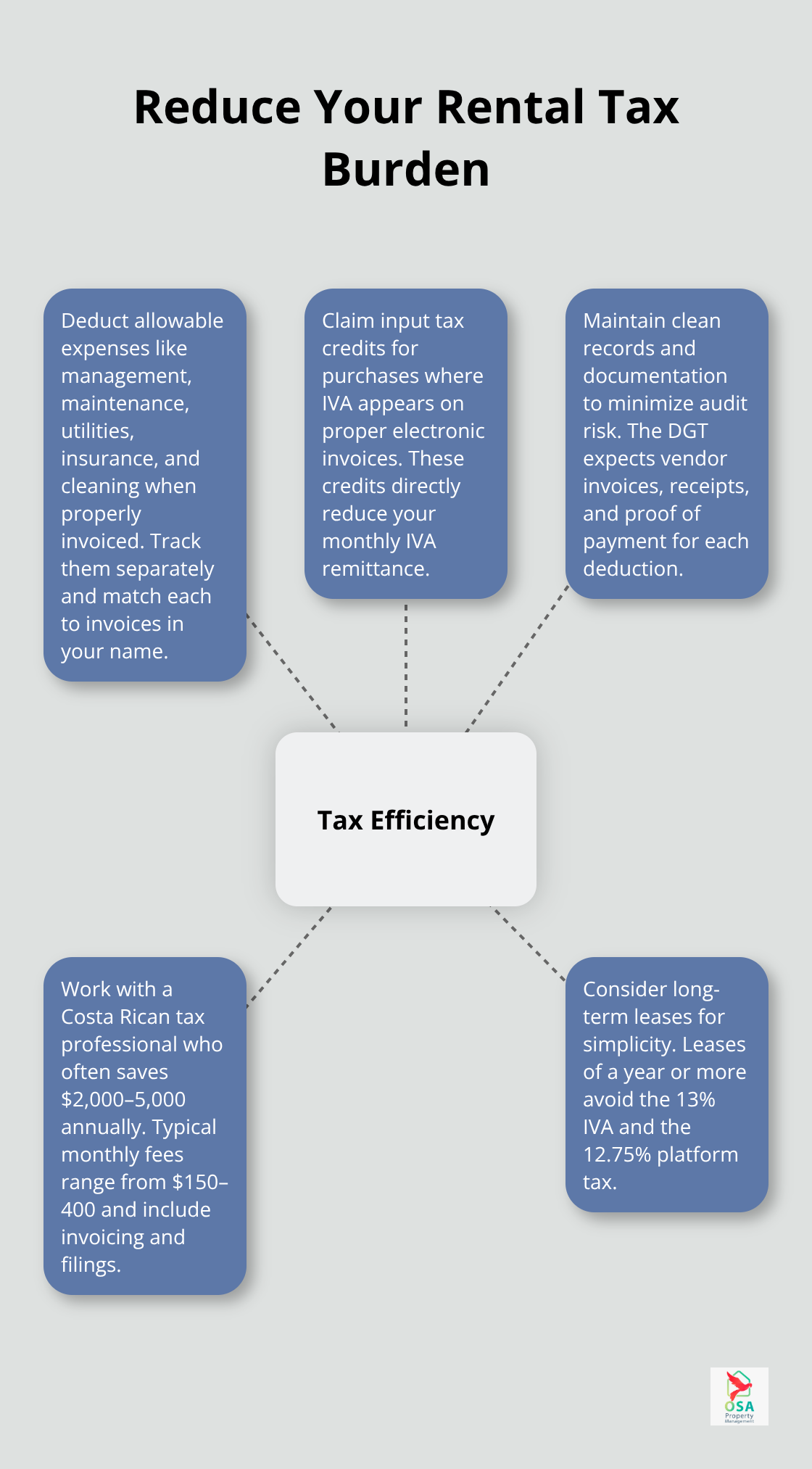
Reducing your tax liability in Costa Rica’s rental market requires understanding exactly which expenses the government allows you to deduct. Property management fees, maintenance costs, utilities, insurance, and cleaning expenses all reduce your taxable income, but you must track them separately and match them to specific invoices issued in your name. If you pay $500 monthly for property management covering guest communication and maintenance oversight, that amounts to $6,000 annually that comes straight off your taxable income before the 12.75% platform tax applies.
Similarly, if your property requires $3,000 in annual maintenance and repairs, documented with vendor invoices, you subtract that too.
The critical mistake most owners make is claiming expenses without corresponding documentation. The DGT expects to see a vendor invoice, a receipt, and proof of payment for every deduction you claim. Sloppy recordkeeping invites audit risk and penalties that far exceed the cost of proper documentation.
Input Tax Credits on Property Purchases
When you purchase property-related items with IVA already included on the receipt, you can claim input tax credits on those purchases if you’re registered as a VAT taxpayer. This means if you buy $2,000 worth of furniture and the invoice shows $260 in IVA, you can credit that $260 against the 13% IVA you collect from guests. However, this only works if the vendor issued you a proper electronic invoice in your name and you maintained clean records. Many owners skip this step because they don’t understand it, but input credits directly reduce your monthly IVA remittance to Hacienda. If you collected $5,000 in VAT from guests but claimed $1,200 in input credits from property purchases, you only remit $3,800 that month.
Working With Tax Professionals
A Costa Rican tax professional or accountant familiar with short-term rental taxation costs between $150–400 monthly but typically saves owners $2,000–5,000 annually through legitimate deductions, proper expense categorization, and strategic timing of major purchases. They handle the monthly electronic invoicing, ensure your records align with platform data, and prepare your annual DGT filing, which protects you during audits. Some owners attempt to manage this alone and end up overpaying by thousands or triggering audits through sloppy documentation.
The accountant also advises on whether forming a Costa Rican corporation to hold your property offers tax advantages in your specific situation-sometimes it does, sometimes it doesn’t, but it requires professional analysis. This professional guidance often pays for itself many times over.
Coordinating With Your Property Manager
If you use a property management company, confirm upfront whether they issue compliant electronic invoices on your behalf, maintain separate accounting for your property, and coordinate with your accountant. This coordination prevents duplicate work and keeps your records consistent across all systems. The 2026 enforcement intensification makes this infrastructure non-negotiable; owners operating without proper documentation now face real audit risk and penalties that dwarf the cost of professional help.
Final Thoughts
IVA compliance for Costa Rica rentals is no longer optional. The 2026 enforcement changes mean the DGT will access your platform data directly, making registration, monthly filings, and accurate recordkeeping non-negotiable for short-term rental operators. You collect 13% VAT from guests and remit it monthly, plus you face the 12.75% platform tax on gross income, while long-term leases sidestep both taxes entirely and reshape your entire rental strategy.
The practical steps are straightforward: register with the DGT once your rental income becomes consistent, maintain separate accounting records for at least four years, issue electronic invoices for every reservation, and track deductions like property management fees and maintenance costs. Input tax credits on property purchases reduce your monthly VAT remittance, and a Costa Rican accountant typically saves thousands annually through proper expense categorization and strategic planning. Municipal zoning verification and ICT tourism registration complete your compliance foundation.
We at Osa Property Management handle CR IVA basics and full tax compliance for owners across the southern Pacific zone, from Tarcoles to Golfito. Our team manages invoicing, monthly filings, and coordination with your accountant, eliminating the administrative burden so you focus on your investment. Contact us to set up your compliance infrastructure before 2026 enforcement intensifies.