
Owning property in Costa Rica means dealing with maintenance challenges most property owners elsewhere never face. The tropical climate, humidity, and regional differences across the Southern Pacific Zone create specific wear patterns that demand smart budgeting.
At Osa Property Management, we help owners understand realistic maintenance cost estimates so they can protect their investments without overspending. This guide breaks down what you should budget, where hidden costs hide, and how to cut expenses without cutting corners.
Understanding Costa Rica's Unique Maintenance Challenges
Costa Rica's tropical environment accelerates property deterioration in ways that mainland climates never do. The combination of high humidity, heavy rainfall, and salt air creates a perfect storm for corrosion, mold, and structural damage. Annual maintenance typically runs 1.5% to 3% of property value, which translates to roughly $10,000–$25,000 per year for a mid-sized home. This isn't excessive-it's realistic. Properties here face constant moisture exposure that rots wood, oxidizes metal, and compromises electrical systems within months if left unchecked.
How Salt Air and Coastal Exposure Accelerate Decay
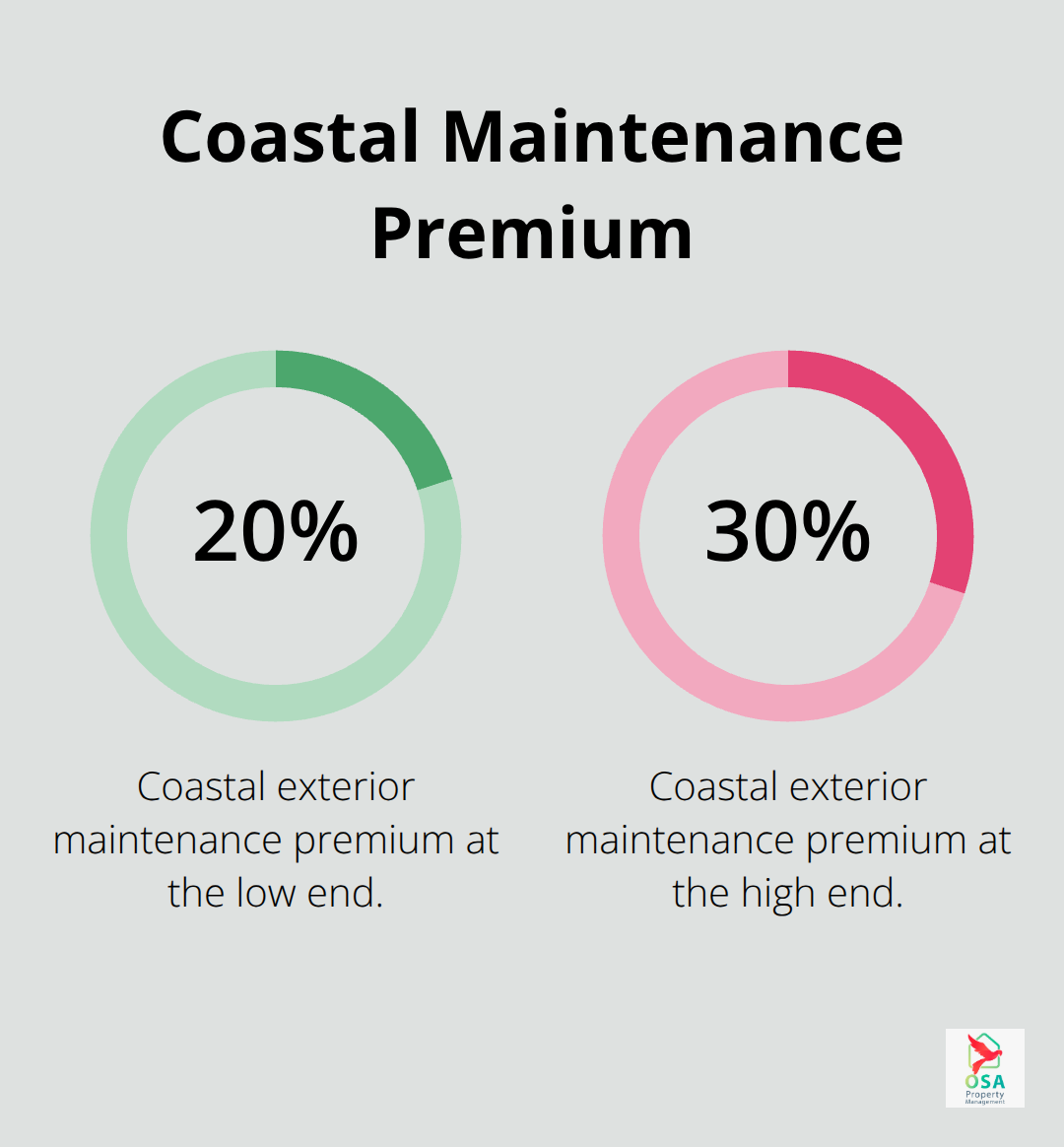
Coastal properties experience sharper deterioration because salt deposits accelerate corrosion on roofs, gutters, and exterior fixtures. A coastal home needs exterior repainting every 2–3 years at a cost of $2,000–$5,000, while inland properties stretch that to 4–5 years. Roof inspections should happen twice yearly, before and after the rainy season, at $150–$300 per inspection. Skipping these inspections leads directly to roof replacement costs of $5,000–$15,000. Coastal properties cost 20–30% more for exterior maintenance than inland properties due to salt air exposure alone.
Water Intrusion and Hidden Structural Threats
Inland properties face different but equally serious challenges. Heavy rainfall and high humidity create water intrusion risks mold remediation costs between $1,223–$3,753 for moderate cases and significantly more for severe damage. Hidden maintenance costs are often underestimated by 30–40% because owners overlook foundation damage, electrical system corrosion, and plumbing issues driven by Costa Rica's high mineral content in water.
Electricity, Water, and Tropical System Failures
Baseline monthly maintenance for a mid-sized property typically totals $1,200–$2,050, with utilities consuming $150–$300 of that budget. Electricity costs run higher than North American rates and follow progressive pricing, often reaching $400 or more monthly if air conditioning and pool pumps run regularly. Rural electrical systems experience voltage fluctuations that damage appliances, making annual electrical checks at $100–$300 worthwhile investments.
Plumbing repairs cost $50–$200 per incident, but older systems can drain $500–$1,500 annually due to mineral buildup. Smart water sensors priced at $50–$100 each alert homeowners to leaks within hours, preventing tens of thousands in structural damage. Pest control is non-negotiable in tropical climates. Quarterly inspections cost $50–$100 monthly, and sealing cracks reduces entry points by roughly 70%. Professional treatments range from $500–$2,000 depending on severity.
Building Your Emergency Reserve
Humidity management through dehumidifiers at $100–$300 per unit prevents mold before remediation becomes necessary. Emergency repairs-hurricane damage, major water intrusion, or foundation issues-can cost $5,000–$20,000 or more, making an emergency reserve of 3–6 months of maintenance costs essential. For a $300,000 property, that means keeping $2,500–$5,000 in reserve. Understanding these baseline costs and regional variations sets the foundation for realistic budgeting, but the real challenge lies in identifying which expenses you can control and where professional oversight makes the difference between overspending and protecting your investment.
How Much Should You Actually Budget Each Year
The Real Monthly Breakdown Behind the Percentage Rule
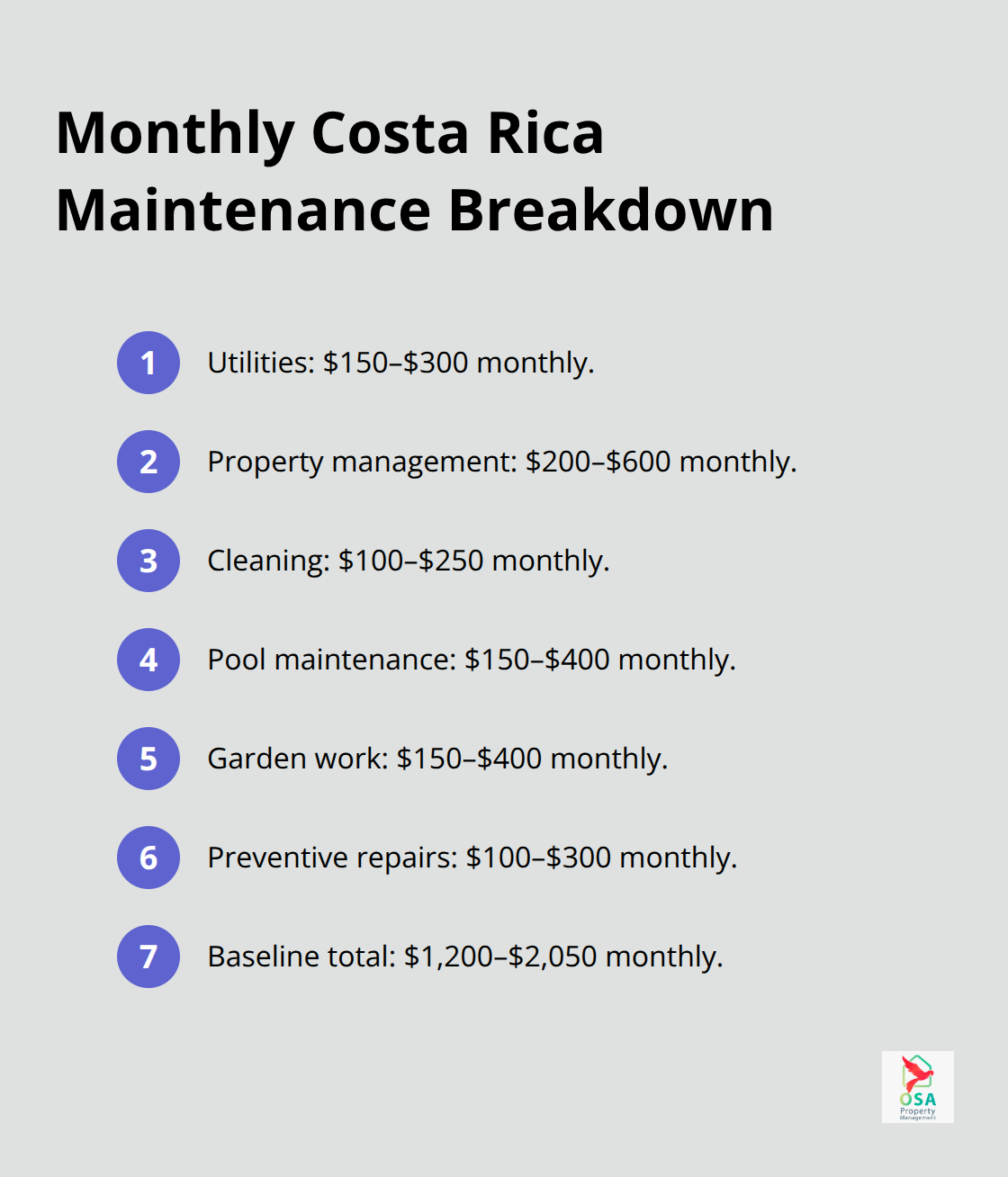
The 1% rule sounds simple, but it masks the real complexity of Costa Rican property costs. A $300,000 home demands $4,500 to $9,000 annually using that formula, yet the actual monthly breakdown reveals where your money goes and where owners consistently underestimate. Baseline monthly maintenance for a mid-sized property totals $1,200–$2,050, split across utilities ($150–$300), property management ($200–$600), cleaning ($100–$250), pool maintenance ($150–$400), garden work ($150–$400), and preventive repairs ($100–$300). This monthly reality matters more than an annual percentage because it forces you to confront actual line items rather than abstract percentages.
Coastal Versus Inland: The 20–30% Premium
Coastal properties demand 20–30% more in exterior maintenance costs than inland equivalents due to salt air exposure and coastal property maintenance costs. A $300,000 coastal home might spend $1,600–$2,400 monthly while an identical inland property costs $1,200–$1,800. Property taxes add roughly 0.25% of registered value annually, meaning that $300,000 home owes approximately $750 per year. Insurance typically runs $1,200 yearly, and HOA fees in gated communities range from $500 annually upward, though not every property belongs to an association. Road association fees commonly cost $300–$500 per year in rural areas. Water bills average $15 monthly unless your HOA includes this in dues. Electricity follows progressive rates and frequently exceeds $400 monthly for properties running air conditioning and pool pumps year-round, making it Costa Rica's most volatile utility expense.
Where Hidden Costs Hide
The hidden costs category separates prepared owners from those who face financial surprises. Thirty to forty percent of maintenance expenses go unbudgeted because owners overlook foundation concerns, electrical system corrosion from humidity and voltage fluctuations, and plumbing repairs driven by mineral-heavy water. Older plumbing systems drain $500–$1,500 annually while newer systems cost $50–$200 per incident. Mold remediation for water intrusion cases varies by property size and needed improvements, yet many owners never budget for humidity management through dehumidifiers at $100–$300 per unit. Smart water sensors costing $50–$100 each detect leaks within hours, preventing catastrophic damage that costs tens of thousands.
Pest Control and Preventive Protection
Pest control at $50–$100 monthly seems optional until you face a serious infestation requiring $500–$2,000 in professional treatment. Sealing cracks reduces entry points by roughly 70%, making this preventive measure far cheaper than reactive pest control. An emergency reserve of 3–6 months of maintenance costs protects against unexpected repairs like hurricane damage or major water intrusion, which routinely cost $5,000–$20,000 or more. For a $300,000 property, maintaining $2,500–$5,000 in reserve separates owners who absorb shocks from those who face financial stress when tropical weather or aging systems fail. These line items and reserves form the foundation of realistic budgeting, but identifying which expenses you can control and where professional oversight makes the difference requires a strategic approach to maintenance planning.
How to Cut Maintenance Costs Without Sacrificing Property Protection
Invest in Prevention to Slash Long-Term Expenses
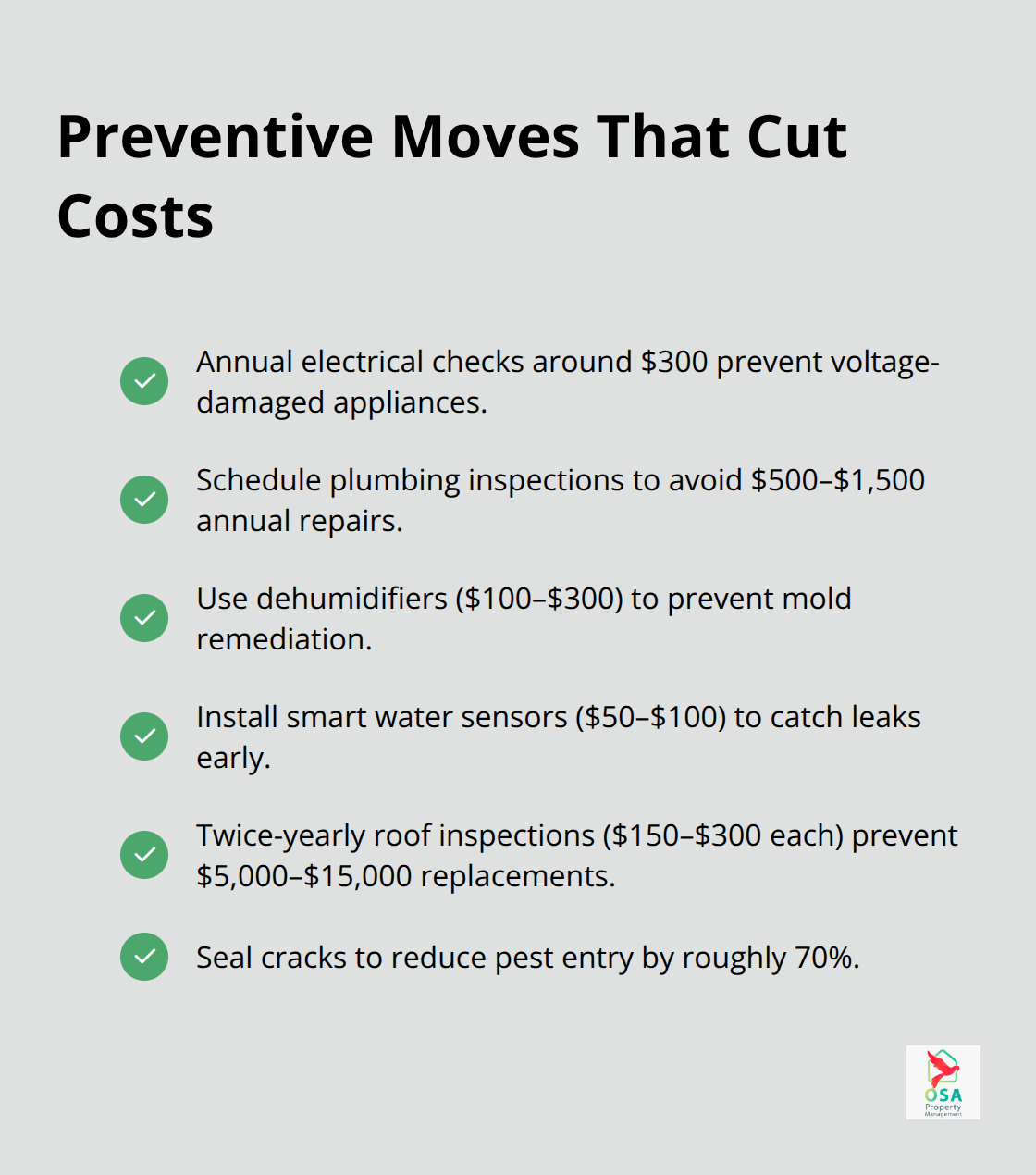
Cutting maintenance expenses in Costa Rica requires shifting from reactive repairs to strategic planning, not slashing budgets across the board. The owners who spend the least are those who invest in preventive measures that stop problems before they become expensive. A roof inspection costing $150–$300 twice yearly prevents $5,000–$15,000 replacement costs, yet many owners skip inspections to save a few hundred dollars. Smart water sensors at $50–$100 each catch leaks within hours instead of discovering water damage after thousands in mold remediation. Sealing cracks reduces pest entry points by roughly 70%, making this inexpensive upfront work far cheaper than professional pest treatments running $500–$2,000.
Owners who embrace preventive maintenance can save between 12% and 18% by using preventive maintenance over reactive approaches, with each dollar spent on preventive maintenance saving an average of $5 later on. The math is straightforward: invest $300 in annual electrical checks to avoid voltage-damaged appliances, or replace electronics at full cost when they fail. Schedule plumbing inspections before mineral buildup forces $500–$1,500 annual repairs. Humidity management through dehumidifiers at $100–$300 per unit prevents mold remediation costs at $10 to $25 per square foot.
Time Maintenance Around Seasonal Patterns
Timing maintenance around Costa Rica's seasonal patterns cuts costs significantly because labor availability and material costs fluctuate with demand. The rainy season from May through November stresses roofs, gutters, and foundations with constant moisture exposure, yet this is precisely when most repairs become necessary and contractor rates peak. Schedule roof inspections, gutter cleaning, and foundation checks during the dry season from December through April to access lower labor costs and faster contractor availability.
Local service providers charge approximately $3.50 per hour for labor, making Costa Rica's maintenance relatively economical compared to North American rates, but this advantage disappears when you hire emergency contractors during crisis periods. Negotiate annual contracts with reliable local providers to lock in rates before seasonal demand spikes prices. A property manager coordinating multiple properties can negotiate better rates than individual owners requesting one-off services, and professional property management improves rental performance by roughly 7% while lowering vacancy rates through coordinated maintenance scheduling.
Consolidate Services and Upgrade Strategically
Consolidate services with a single contractor whenever possible-a landscaper handling $50–$100 monthly trimming and fertilizing can also manage pest prevention at lower combined cost than separate vendors. This coordination prevents the expensive pattern of deferring maintenance until guests arrive, then rushing to fix problems at premium rates.
Durable material upgrades deliver long-term savings in Costa Rica's harsh climate: weather-resistant finishes, stainless steel fixtures, and quality roofing reduce ongoing expenses far more than cheaper alternatives requiring replacement every few years. Solar panel installation offsets electricity costs that frequently exceed $400 monthly, making this investment recover its cost within 7–10 years while protecting against rising energy rates.
Final Thoughts
Budgeting for Costa Rican property maintenance comes down to accepting one reality: the tropical climate demands consistent investment or you'll face far larger expenses later. The maintenance cost estimates we've covered throughout this guide reflect what owners actually spend across the Southern Pacific Zone, and a mid-sized property costs $1,200–$2,050 monthly in baseline maintenance, with coastal properties running 20–30% higher due to salt exposure. Each dollar spent on prevention saves approximately five dollars in reactive repairs, which means the owners who spend the least are those who invest upfront in inspections, smart water sensors, crack sealing, and seasonal maintenance scheduling.
Professional property management transforms maintenance from a constant headache into a coordinated system that improves rental performance by roughly 7% while lowering vacancy rates. We at Osa Property Management have spent over 20 years managing properties across Tarcoles, Jaco, Dominical, Manuel Antonio, Ojochal, Uvita, and Golfito, coordinating vendors, scheduling seasonal work, and negotiating contractor rates before seasonal demand spikes prices. This coordination alone typically saves owners thousands annually by locking in rates and preventing the expensive pattern of deferring maintenance until crises force emergency repairs.
If you own property in Costa Rica and maintenance feels overwhelming, professional property management removes the guesswork from budgeting and protects your investment through systematic planning. Calculate your actual monthly baseline costs, add your regional premium, and commit to preventive maintenance-the owners who thrive in Costa Rica's climate are those who plan ahead rather than react to crises.