
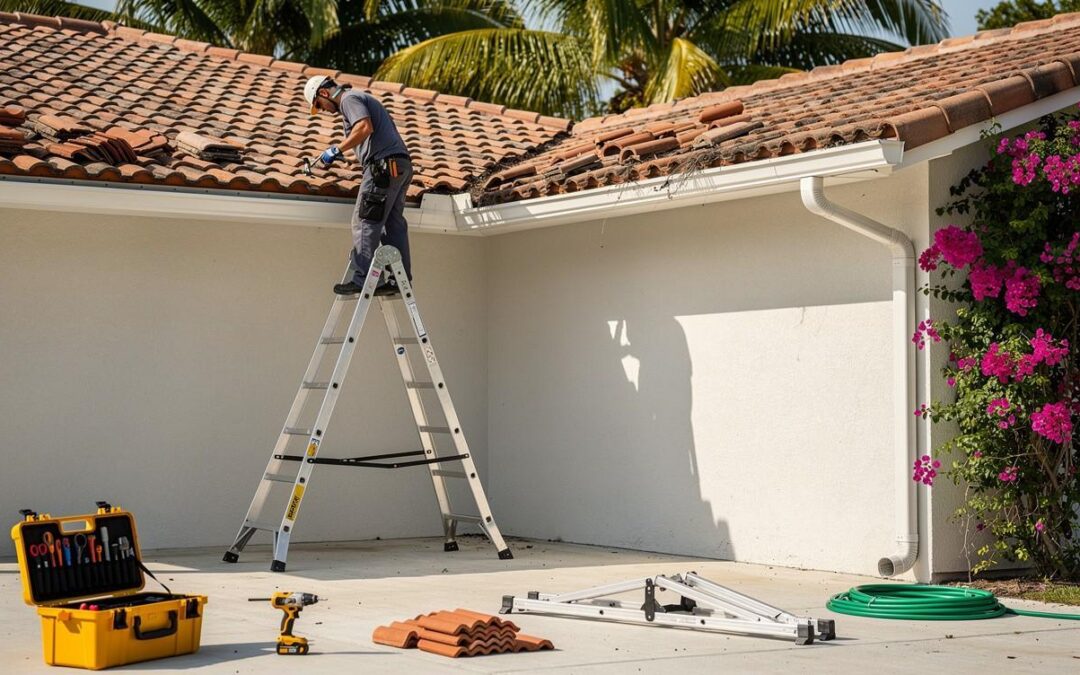
Costa Rica’s tropical climate is relentless on properties. High humidity, intense rainfall, and salt air accelerate wear on roofing, plumbing, and structural components that mainland properties rarely face.
At Osa Property Management, we’ve seen firsthand how home maintenance in Costa Rica separates owners who protect their investments from those who face costly emergencies. A proactive maintenance plan isn’t optional-it’s the difference between a thriving property and one that deteriorates rapidly.
How to Build a Maintenance Plan That Works in Costa Rica’s Climate
Understanding Costa Rica’s Relentless Climate Demands
Costa Rica’s tropical environment requires a fundamentally different approach to property care than temperate climates. The combination of 1,500 to 2,000 millimeters of annual rainfall in central Pacific regions and over 3,000 millimeters in southern zones near Manuel Antonio creates relentless pressure on roofs, gutters, and structural joints. Salt air in coastal areas corrodes metal fixtures and accelerates exterior deterioration. High humidity year-round-often exceeding 70 percent during the rainy season from May through November-fuels mold growth, wood rot, and metal corrosion inside walls and HVAC systems. This isn’t theoretical wear; a $300,000 home can lose measurable equity within 18 months if maintenance is neglected.
Creating a Seasonal Inspection Calendar
The solution isn’t reactive repairs after problems emerge. Instead, you need a seasonal inspection calendar tied to Costa Rica’s specific climate cycles. Schedule your critical roof inspection in April, before the rainy season hits, to catch loose tiles, deteriorated washers, damaged flashing, and blocked gutters. A two-hour inspection costing $100 to $200 prevents water intrusion repairs that can exceed $5,000 to $8,000. After heavy rains, conduct a follow-up inspection and document findings with photos to track condition and budget future work. Gutter management requires quarterly attention year-round, but weekly cleaning during the rainy season is non-negotiable for properties with overhanging trees. Ensure gutters slope toward downspouts at roughly one-quarter inch per ten feet and extend downspouts at least five feet from the foundation.
Prioritizing Three Critical Systems
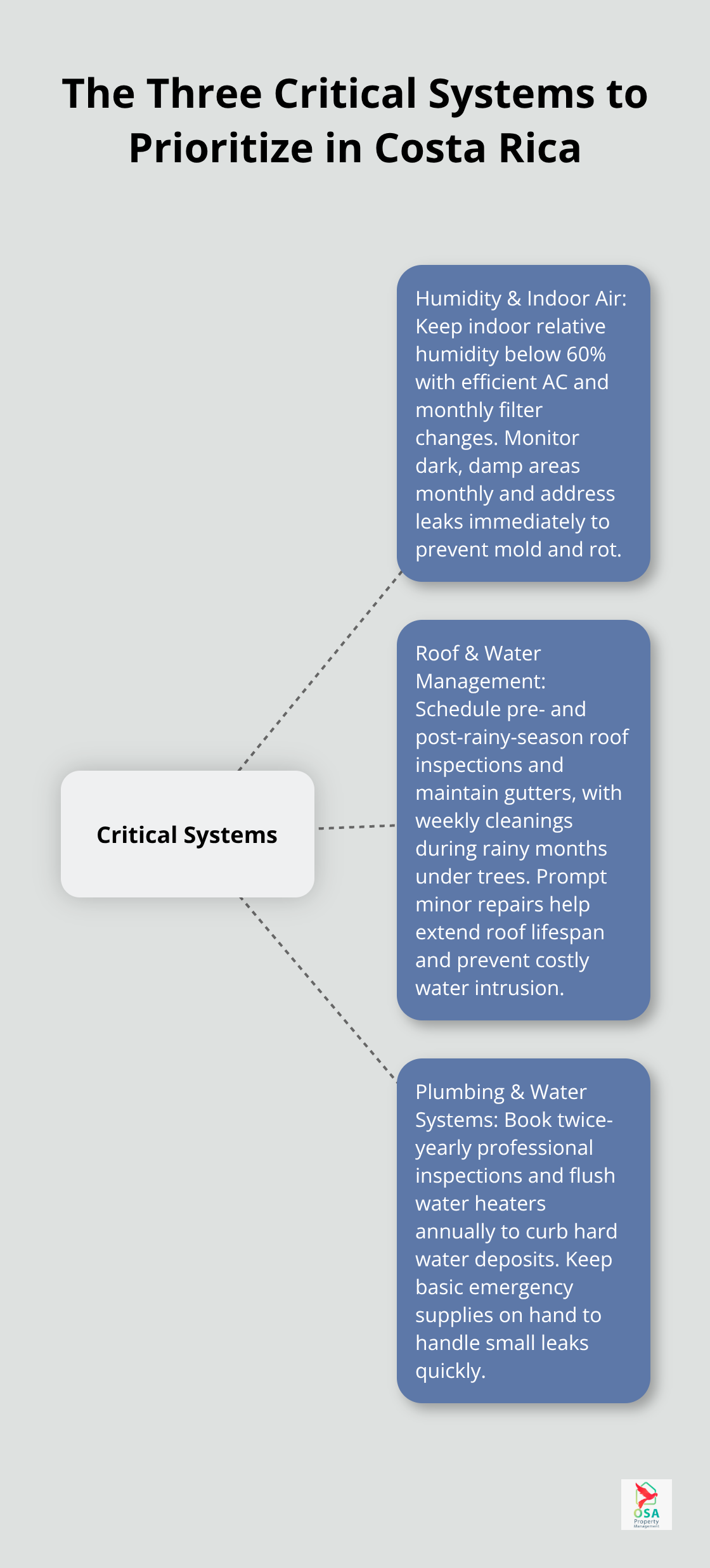
Three critical systems demand regular professional attention if you want to avoid catastrophic costs. Roof and water management come first; prompt minor repairs extend a roof’s lifespan. Plumbing requires twice-yearly professional inspections to identify corrosion early, and annual water heater flushing prevents hard water deposits from reducing efficiency and triggering replacements exceeding $2,000. Air conditioning and electrical systems need monthly filter changes and quarterly servicing to prevent compressor failures costing $800 to $1,500, plus annual licensed electrical inspections to catch grounding and corrosion issues.
Protecting Against Pests and Humidity
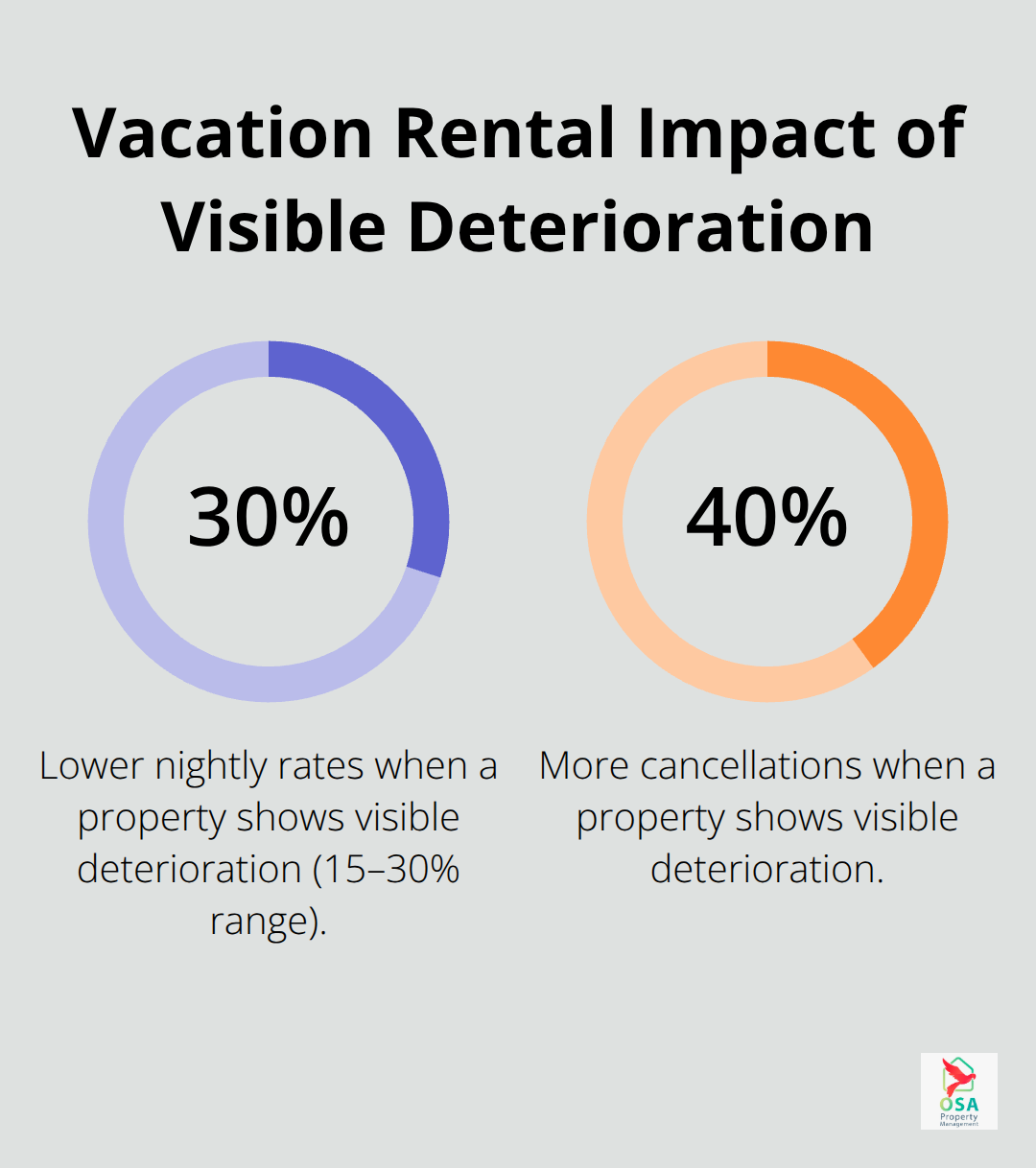
Pest control must be quarterly with a licensed provider; termite damage can be significant, while quarterly treatments cost only $50 to $100. Humidity control acts as your silent defense: keep indoor relative humidity below 60 percent through efficient AC and monthly filter changes, monitor dark damp spaces monthly for mold, and address leaks immediately. For properties with vacation rental income, this discipline directly protects revenue; properties with visible deterioration command 15 to 30 percent lower nightly rates and experience 40 percent more cancellations.
Budgeting for Long-Term Property Protection
A proactive maintenance budget of 1 to 3 percent of property value annually-roughly $3,000 to $9,000 for a $300,000 home-costs far less than emergency repairs and maintains occupancy above 70 percent. Properties with professional maintenance coordination report 20 to 30 percent higher revenue stability than properties managed reactively. With this foundation in place, the next step involves selecting the right contractors and service providers who understand Costa Rica’s specific maintenance demands.
The Three Systems That Fail First in Costa Rica
Humidity: The Silent Killer Inside Your Walls
Indoor relative humidity above 60 percent accelerates metal corrosion, wood rot, and mold growth inside walls and HVAC systems where you cannot see it happening. During the rainy season from May through November, indoor humidity routinely exceeds 70 percent in properties with inefficient air conditioning or poor ventilation. The U.S. Department of Energy reports that whole-house ventilation lowers indoor humidity by up to 50 percent, yet most owners ignore this until mold appears on visible surfaces. Monthly filter changes cost about $30 and prevent humidity spikes that reduce cooling efficiency by 15 to 20 percent. Dehumidifiers in bathrooms and bedrooms extract up to 50 pints of water daily, though continuous operation requires direct drainage to a routine drain. Check dark, damp spaces monthly for discoloration, musty odors, or visible mold. Small infestations under 10 square feet respond to detergent and water, but larger growth demands professional remediation including drywall and insulation replacement-costs that easily reach $5,000 to $15,000.
Roof and Gutter Failure: Water Always Finds a Way
Central Pacific rainfall totals 1,500 to 2,000 millimeters annually, with southern zones exceeding 3,000 millimeters, and this volume stresses roof seals, gutters, and joints relentlessly. Delaying a $200 roof inspection multiplies costs by 3 to 5 times, turning a simple repair into $5,000 to $8,000 in water intrusion damage. The National Roofing Contractors Association confirms that prompt minor repairs extend roof lifespan by up to 25 percent. Gutter neglect causes worse damage; debris-clogged gutters force water under roof edges and into fascia boards, rotting wood trim and creating entry points for termites. Weekly gutter cleaning during rainy months prevents this cascade for properties with trees overhead. Roof inspections before and after the rainy season catch deteriorated flashing, loose tiles, and blocked gutters before water penetrates structural components.
Plumbing and Water System Corrosion: The Foundation Threat
Hard water deposits reduce on-demand water heater efficiency, and replacing units exceeds $2,000. Twice-yearly professional inspections identify corrosion early before leaks weaken foundations. Test your main shutoff valve monthly and keep spare PVC fittings, shutoff valves, and hose clamps on hand for roughly $50 in emergency supplies. Water quality in Costa Rica varies by region, so annual leak and pressure checks catch problems before they spread. These three systems demand coordinated attention because water damage from roof or plumbing failures accelerates humidity and mold problems, creating a cascade of deterioration that remote ownership cannot manage alone. Understanding how these failures interconnect prepares you to address them strategically rather than fighting fires after damage occurs.
How Much Should You Actually Spend on Maintenance
The Real Cost of Neglect vs. Prevention
Most property owners in Costa Rica drastically underestimate what maintenance costs until an emergency forces their hand. The pattern is clear: owners who budget 1 to 3 percent of property value annually spend far less overall than those who react to failures. For a $300,000 home, that translates to $3,000 to $9,000 per year-roughly $250 to $750 monthly-allocated strategically across roof inspections, gutter cleaning, AC servicing, plumbing checks, and pest control. This isn’t excessive; it’s the cost of preventing water intrusion repairs exceeding $20,000, termite damage reaching $15,000, or mold remediation hitting $5,000 to $15,000. The mathematics are unforgiving: a $200 roof inspection in April before the rainy season prevents $5,000 to $8,000 in water damage. Monthly AC filter changes at $30 each stop humidity spikes that trigger mold requiring professional remediation. Quarterly pest control at $50 to $100 blocks termite infestations costing thousands.
Breaking Down Your Quarterly and Seasonal Obligations
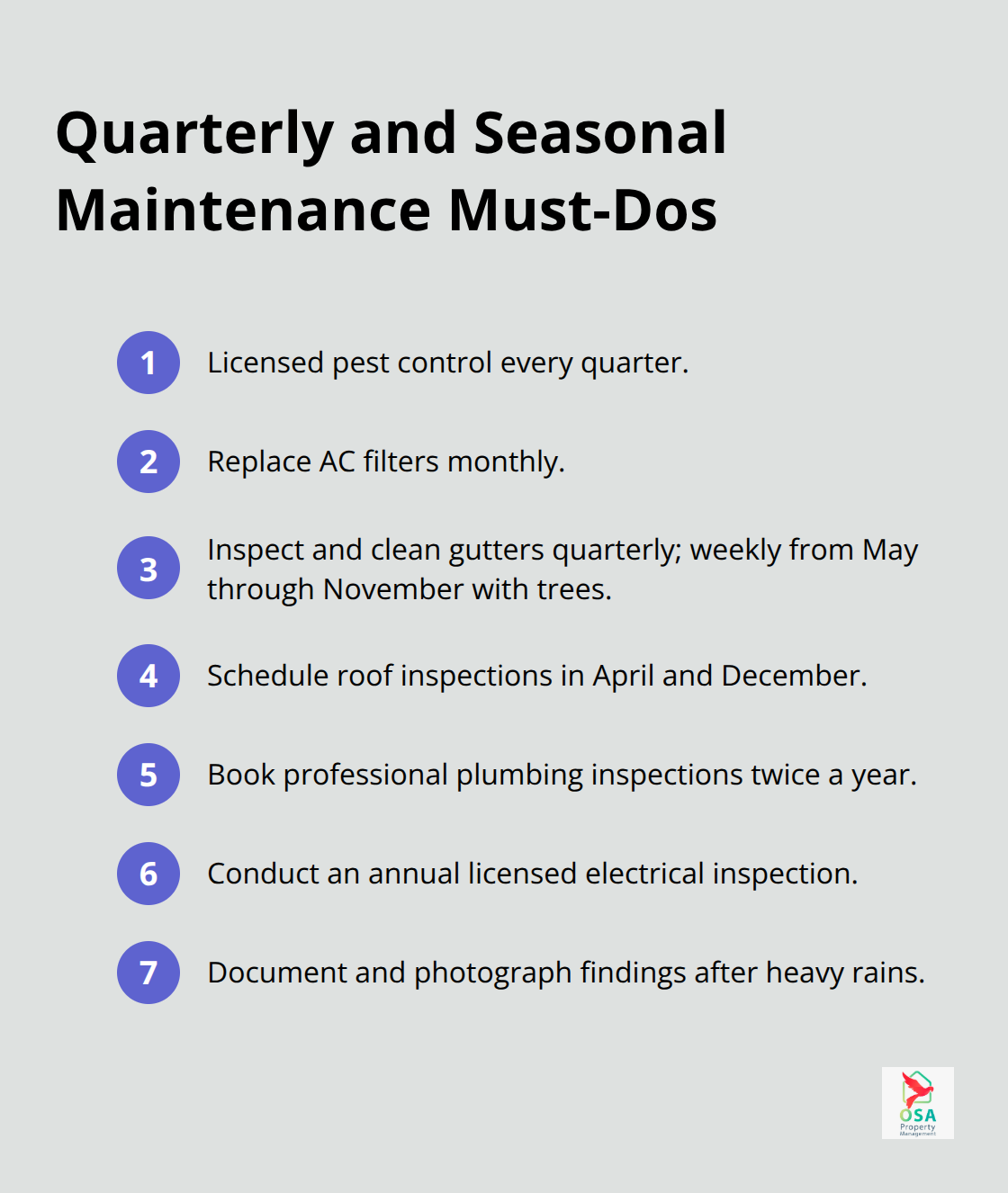
Separate your budget into non-negotiable quarterly tasks and seasonal priorities, then work backward to identify which contractors deliver reliability. Quarterly obligations include licensed pest control, AC filter changes, and gutter inspection (weekly during May through November). Seasonal priorities demand roof inspections in April before the rainy season and again in December after it ends, twice-yearly plumbing inspections, and annual electrical inspections by a licensed professional. Properties with professional maintenance coordination report 20 to 30 percent higher revenue stability than reactively managed properties, meaning your maintenance budget directly protects rental income if you operate a vacation rental.
Selecting and Vetting Local Contractors
Interview at least three candidates and verify references from nearby properties; Costa Rica lacks a direct BBB equivalent, so local reputation matters more than national credentials. Demand written contracts specifying start dates, completion dates, materials used, total cost, and payment schedules. Retain 5 to 10 percent of payment until you’ve inspected work and obtained lien releases from contractors. Document everything-contractor names, dates, materials, costs, and warranty periods-to prevent disputes and support warranty claims later. Properties deteriorating rapidly often suffer from inconsistent contractor relationships and poor documentation, not from climate alone.
Centralizing Your Maintenance Coordination
Coordinate maintenance through a single point of contact rather than juggling multiple vendors independently; this consistency prevents gaps where roof work gets completed but gutter cleaning is forgotten, or AC servicing happens but filter changes lapse between appointments. A coordinated approach transforms maintenance from a scattered expense into a strategic investment that protects both your property’s structural integrity and its revenue potential.
Final Thoughts
The mathematics of property maintenance in Costa Rica are unforgiving: spending $3,000 to $9,000 annually on prevention costs far less than emergency repairs exceeding $20,000. A $200 roof inspection prevents $5,000 to $8,000 in water damage, while monthly AC filter changes at $30 stop mold remediation bills reaching $15,000. Quarterly pest control at $50 to $100 blocks termite damage costing thousands, and properties with professional maintenance coordination report 20 to 30 percent higher revenue stability than reactively managed properties.
Home maintenance in Costa Rica requires consistency that remote ownership struggles to maintain alone. Coordinating contractors across multiple vendors creates gaps where roof work gets completed but gutter cleaning lapses, or AC servicing happens without filter changes between appointments. A single point of contact prevents these failures by ensuring quarterly pest control, seasonal roof inspections, twice-yearly plumbing checks, and monthly humidity monitoring happen on schedule rather than when emergencies force action.
We at Osa Property Management coordinate maintenance with trusted local contractors across Tarcoles, Jaco, Dominical, Manuel Antonio, Ojochal, Uvita, and Golfito with a team of over 40 full-time, insured staff. Contact us to discuss how professional coordination protects your Costa Rican property and secures your investment for years ahead.