

Costa Rica’s tropical climate is relentless on property. Heat, humidity, and salt air wear down buildings faster than most owners expect.
Preventive maintenance in Costa Rica isn’t optional-it’s the difference between a thriving investment and a money pit. We at Osa Property Management have seen properties lose thousands in value because owners waited for problems to become emergencies.
Why Preventive Maintenance Saves Money in Costa Rica
Small Investments Stop Catastrophic Repairs
A $150 gutter cleaning today prevents water damage that costs $3,000 to $8,000 later. A $200 to $300 roof inspection before the rainy season catches leaks before they spread mold through your walls. A $50 to $100 monthly pest control program stops termite colonies from destroying structural beams that would cost $20,000 to repair. These numbers aren’t theoretical-they’re what property owners in Costa Rica actually face when they skip preventive work. The math is brutal and one-directional: small maintenance investments now eliminate catastrophic repair bills later. Properties with documented preventive maintenance histories command higher resale prices and attract longer-term, higher-quality renters, which means your investment performs better financially from day one.
Moisture and Corrosion Demand Early Detection
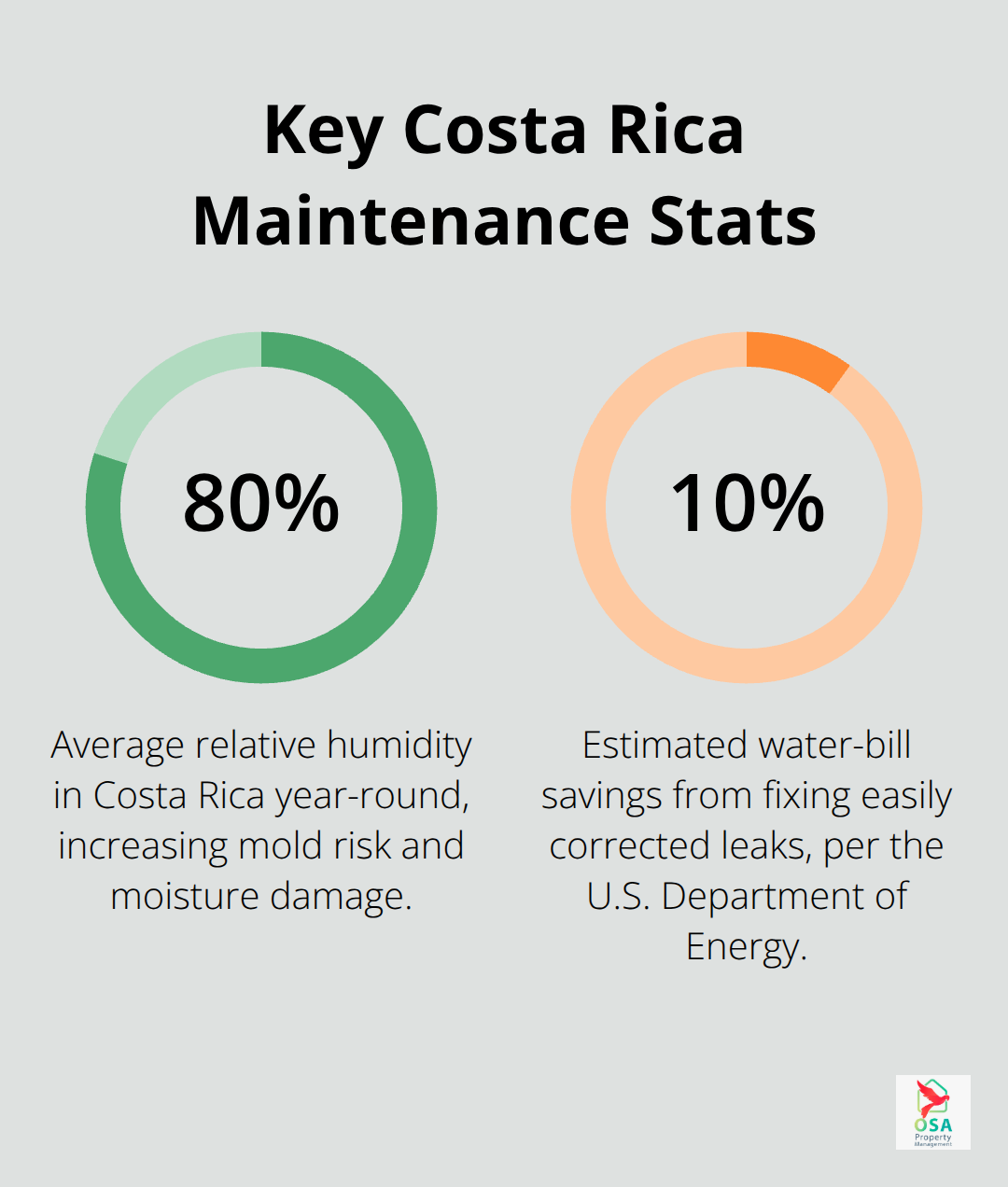
Costa Rica’s humidity sits around 80% year-round, and the rainy season stretches eight months. Moisture trapped in attics under tiles creates roof leaks that seem minor until mold develops in weeks. A professional inspection catches that trapped moisture before it spreads. Coastal salt air corrodes metal fasteners silently-you don’t see the damage until structural hardware fails. Quarterly structural checks assess roof integrity, exterior paint for UV damage, and pest-entry seals before problems compound. The Department of Energy found that fixing easily corrected leaks saves about 10% on water bills, but the real savings come from preventing the water damage that follows.
A moisture meter costs under $50 and detects hidden leaks behind walls, catching issues before they escalate into five-figure repairs.
Annual Maintenance Costs Far Less Than Emergency Repairs
A $300,000 property should budget 1% to 3% annually for maintenance-roughly $3,000 to $9,000 per year. That sounds substantial until you compare it to what reactive repairs cost. Termite damage in Costa Rica reaches millions annually across the country, and a single property can face $20,000 in structural repairs. Mold remediation costs between $1,373 and $3,325 on average. Coastal properties need exterior repainting every 2 to 3 years at $2,000 to $5,000 per cycle, but that paint protects the structure underneath from salt-air deterioration. A septic system pumped every 2 to 3 years costs $300 to $500 per service-a fraction of what replacing a failed septic system costs. When you track maintenance monthly and build it into your budget, you control costs predictably instead of facing surprise emergencies that drain cash flow and disrupt rental income.
Seasonal Timing Multiplies Your Maintenance Effectiveness
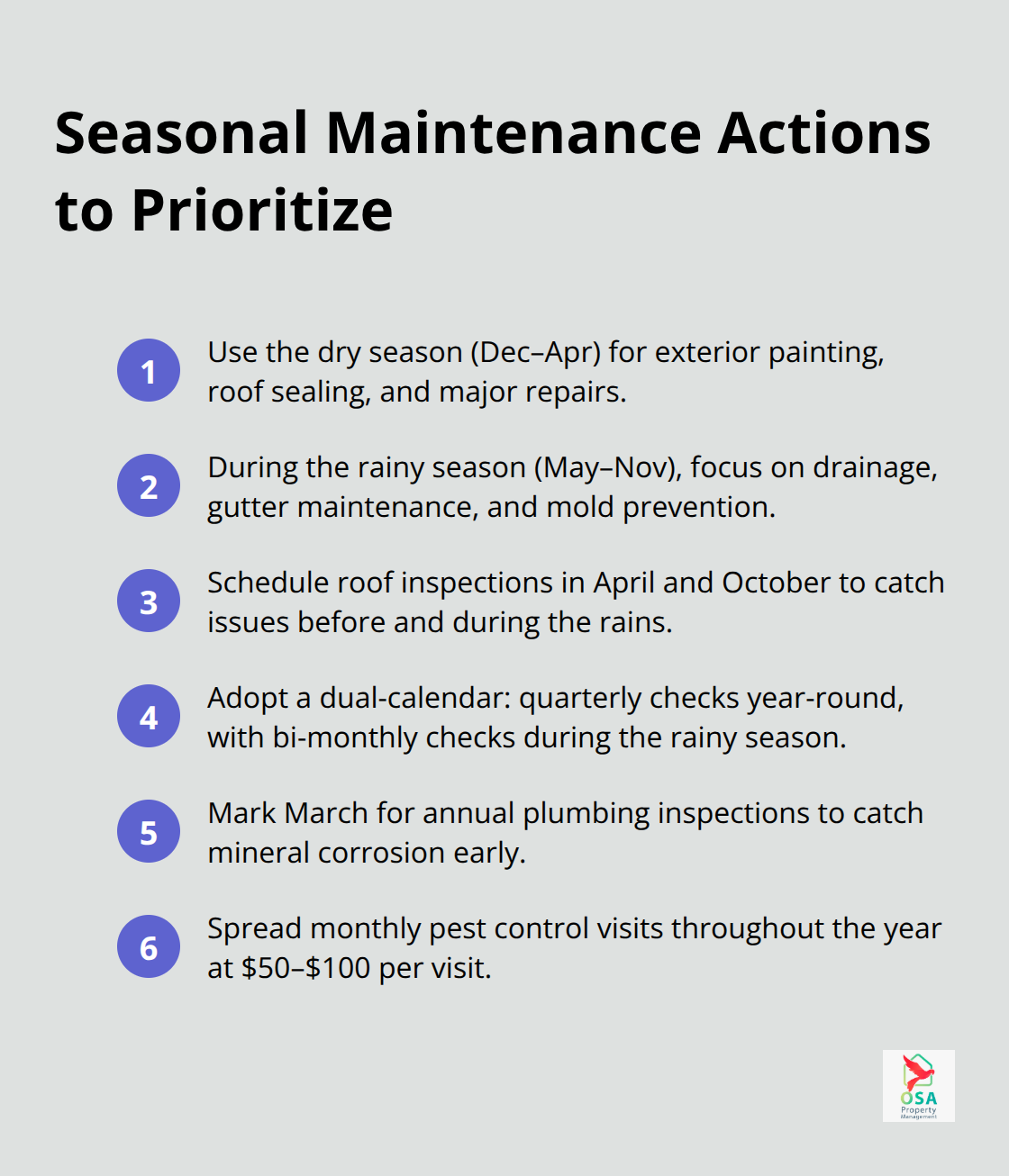
The dry season (December to April) offers the ideal window for exterior painting, roof sealing, and major repairs before the rains arrive. The rainy season (May to November) demands focus on drainage, gutter maintenance, and mold prevention. Scheduling roof inspections in April (before rains) and October (mid-season) catches problems when you can still address them without weather delays. Coastal properties benefit from exterior repainting touch-ups every 18 months rather than waiting for a full repaint, which spreads costs and keeps salt-air damage in check. This seasonal approach transforms maintenance from a reactive scramble into a predictable rhythm that protects your property and your bottom line.
The Three Threats That Damage Costa Rica Properties Most
Water Intrusion Destroys Structures Faster Than Owners Realize
Water intrusion, corrosion, and pest damage form the trinity of destruction for Costa Rica properties, and each one accelerates under the country’s tropical conditions. Water finds its way into structures through failing gutters, compromised roof seals, and foundation cracks-then sits trapped in walls and attics for weeks before owners notice it. Humidity at 80% year-round means that small leak becomes mold within days, and mold remediation costs between ₡80,000 and ₡850,000+ ($150–$1,600 USD). A moisture meter under $50 detects hidden moisture behind walls before it spreads, catching issues that visual inspections miss entirely.
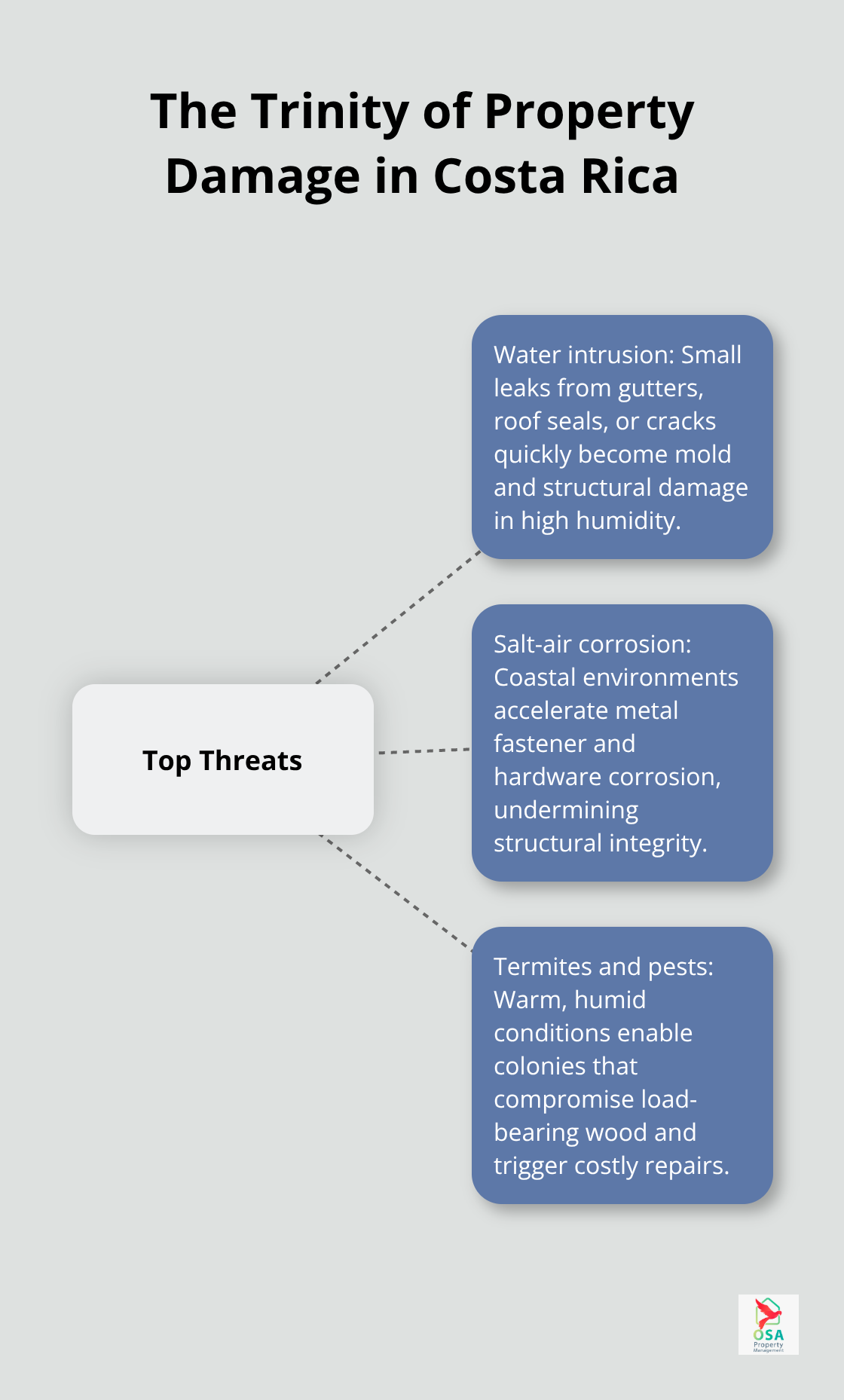
Quarterly structural checks assess roof integrity, exterior seals, and pest-entry points and catch problems before they multiply into compound disasters. A roof leak creates moisture that feeds mold and attracts termites, turning a single maintenance failure into cascading damage across multiple systems. Gutter maintenance every two months during May through November prevents water damage that results from overflow and foundation seepage.
Coastal Salt Air Corrodes Metal Faster Than Inland Environments
Coastal properties face accelerated corrosion that demands a different maintenance rhythm than inland homes. Salt air corrodes unprotected metal twice as fast as inland environments, making stainless steel fasteners and marine-grade materials non-negotiable investments for hardware, outdoor fixtures, and structural connections. Exterior repainting every 2 to 3 years at $2,000 to $5,000 per cycle protects the structure underneath from salt-air deterioration and UV damage; skipping this cycle costs far more when wood begins to rot.
Metal roofing in coastal zones requires inspection every six months rather than annually because salt exposure accelerates corrosion of fasteners and seams. Power washing annually removes salt buildup and extends the life of exterior finishes significantly. Inland properties face different pressures-water drainage becomes critical during the eight-month rainy season, and gutter maintenance prevents overflow damage that compounds structural problems.
Termites and Pests Compromise Structural Integrity Without Warning
Termites and wood-boring insects thrive in warm, humid conditions and compromise structural beams without obvious external signs, leading to repairs exceeding $20,000. Monthly pest control inspections at $50 to $100 per month identify termite activity before colonies establish themselves in load-bearing wood. Termite damage in Costa Rica reaches millions annually across the country, and a single property can face catastrophic structural failure if infestations go undetected.
Plumbing Corrosion Demands Annual Professional Attention
Mineral-rich Costa Rican water corrodes plumbing from the inside; annual professional plumbing inspections catch corrosion before pipes fail and flood properties with contaminated water. Septic systems in both coastal and inland properties need pumping every 2 to 3 years at $300 to $500 per service. A septic system failure forces expensive replacement and creates health hazards that disrupt rental income and property value simultaneously.
These three threats operate together in Costa Rica’s climate, each one accelerating the others and creating maintenance demands that require coordinated attention across multiple systems. The next section shows how to build a maintenance schedule that addresses all three threats systematically, preventing the compounding failures that turn small problems into five-figure disasters.
Build a Maintenance Calendar That Matches Costa Rica’s Climate
Align Your Schedule With Seasonal Priorities
Costa Rica’s climate demands a maintenance rhythm that shifts with the seasons, not a one-size-fits-all approach that ignores regional differences. The dry season from December through April offers your window for exterior work-painting, roof sealing, and structural repairs happen on schedule without rain delays that stretch timelines and inflate costs. The rainy season from May through November flips priorities entirely: drainage systems, gutter maintenance, and mold prevention become non-negotiable. Properties fail when owners treat maintenance as a random task instead of a calendar-driven system. Coastal properties need quarterly inspections instead of annual ones because salt air accelerates corrosion on fasteners, seams, and hardware in ways inland properties never experience.
Schedule Inspections Before and During the Rainy Season
Schedule roof inspections in April before the rains arrive and again in October to catch mid-season leaks before they spread mold through attics. Gutter cleaning prevents water damage costing $8,000-12,000-clogged gutters that cost $100 to clean lead to foundation damage requiring expensive repairs. Inland properties face different pressures: water drainage during the eight-month rainy season matters more than salt corrosion, so your inspection schedule emphasizes foundation seals, pipe corrosion, and pest entry points. A dual-calendar approach works best: baseline quarterly checks year-round, with bi-monthly checks during the rainy season. Mark April and October for roof inspections, March for annual plumbing checks, and spread pest control inspections monthly throughout the year at $50 to $100 per visit.
Maintain HVAC and Plumbing Systems Against Mineral Corrosion
HVAC and plumbing systems corrode from the inside in Costa Rica’s mineral-rich water environment, and annual professional inspections catch problems before pipes fail and flood properties with contaminated water. Replace HVAC air filters every three months rather than every six-the Department of Energy found that regular filter changes cut energy consumption by 5 to 15 percent, and Costa Rica’s humidity loads filters faster than drier climates. Septic systems require pumping every 2 to 3 years at $300 to $500 per service; skipping this creates health hazards and forces expensive replacement that disrupts rental income. Install water leak sensors at $50 to $100 each in kitchens, bathrooms, and near water heaters to detect leaks before they cause structural damage.
Monitor Roofs and Foundations in High-Risk Areas
Roof and foundation monitoring in high-risk areas means quarterly structural assessments that check roof integrity, exterior paint condition, UV damage, and pest-entry seals before problems compound. Moisture meters under $50 detect hidden leaks behind walls that visual inspections miss entirely-this catches issues before they escalate into five-figure repairs. Metal roofing in coastal zones requires inspection every six months because salt exposure accelerates corrosion of fasteners and seams faster than annual schedules allow. Power wash exteriors annually to remove salt buildup and extend the life of exterior finishes significantly.
Budget and Track Maintenance Costs Monthly
A $300,000 property should budget $3,000 to $9,000 annually for maintenance tracked monthly, which keeps costs predictable instead of forcing emergency repairs that drain cash flow. This systematic approach transforms maintenance from reactive scrambling into a coordinated rhythm that protects structural integrity across all systems simultaneously.
Final Thoughts
Preventive maintenance in Costa Rica stops small problems before they become catastrophic repairs that drain your cash flow and tank your property value. A $150 gutter cleaning prevents $8,000 in water damage, monthly pest control at $50 to $100 stops $20,000 termite repairs, and annual plumbing inspections catch corrosion before pipes fail and flood your structure. Properties with documented preventive maintenance histories command higher resale prices and attract longer-term renters who generate consistent income, which means your investment performs financially from day one.
Water intrusion, salt-air corrosion, and pest damage operate together in Costa Rica’s climate, and each one accelerates the others into five-figure disasters when you ignore them. Professional property management prevents major issues by coordinating trusted local contractors, scheduling maintenance on your calendar, and catching problems before they compound into emergencies. We at Osa Property Management bring 19 years of regional experience managing properties across Costa Rica, and our insured team oversees maintenance by vetted companies while you focus on what matters to you.
Start by building a maintenance calendar that breaks tasks into monthly, seasonal, and annual cycles aligned with Costa Rica’s climate, then budget 1 to 3 percent of your property value annually for maintenance and track costs monthly. If managing this yourself feels overwhelming, professional property management handles the coordination and contractor vetting so your property stays protected and your investment performs from day one.