
Costa Rica’s tropical climate is relentless on properties. Humidity, heavy rains, and salt air work together to damage roofs, foundations, and wooden structures faster than most homeowners expect.
At Osa Property Management, we’ve seen firsthand how home upkeep in Costa Rica separates thriving investments from costly disasters. The difference comes down to having a solid maintenance plan before problems start.
Why Humidity and Rain Destroy Costa Rica Homes Faster Than You Think
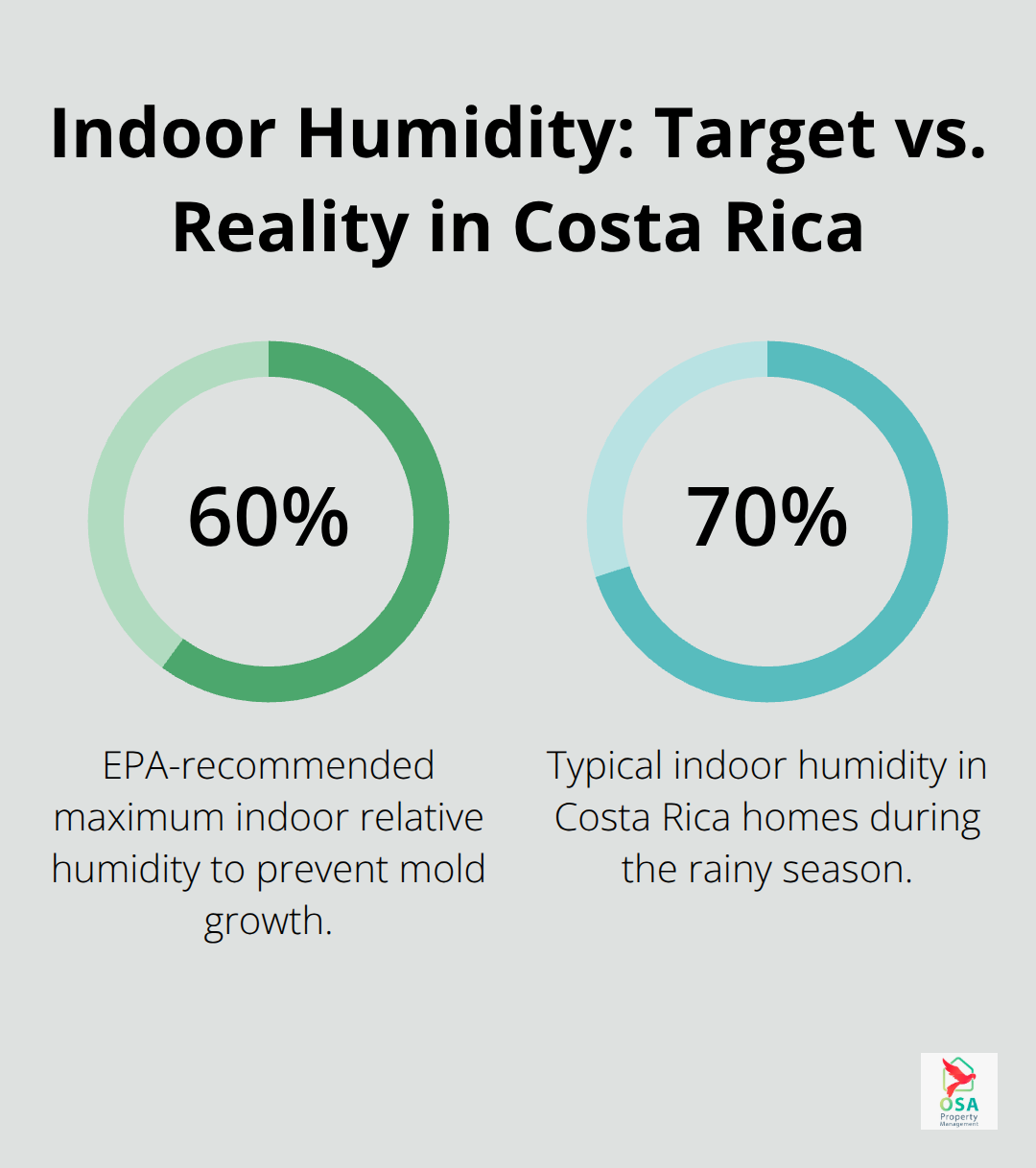
Costa Rica’s climate is not just humid-it’s aggressively humid. Central Pacific zones receive 1,500–2,000 mm of rain annually, while southern regions exceed 3,000 mm. This relentless moisture creates conditions where mold begins growing within 24 to 48 hours when indoor humidity stays above 70 percent. The EPA recommends keeping indoor relative humidity below 60 percent to prevent mold growth, yet most properties in Costa Rica hover around 70 percent during the rainy season.
This isn’t a minor inconvenience; it’s the difference between a home that stays sound and one that deteriorates rapidly from the inside out.
Roof Damage and Water Intrusion
Rubber washers on roofs deteriorate under tropical UV exposure, yet homeowners rarely inspect them until water stains appear inside. Galvanized roof components corrode even faster in coastal areas where salt spray accelerates corrosion. A $500 roof inspection before the heavy rainy season-typically scheduled in April-can prevent $5,000 to $8,000 in water intrusion and related damage. The top costly failures we see repeatedly are roof leaks, mold, and plumbing disasters. Delays in addressing these problems amplify costs dramatically as issues worsen over time.
Septic Systems and Electrical Hazards
Septic tanks that are undersized for actual occupancy cause backups costing $2,000 to $5,000 to remediate. A capacity assessment before purchase or renovation runs only $300 to $500 but prevents catastrophic failures later. Coastal environments accelerate electrical corrosion in ways inland properties don’t experience. Monthly breaker testing and replacement of stuck breakers prevent fires and power loss during emergencies.
Air Conditioning and Moisture Control
Air conditioning filters need replacement to maintain efficiency and control humidity; dirty filters raise humidity levels and drive mold risk upward. Full AC inspections twice yearly-before the rainy season and before peak heat-check refrigerant levels and clean condenser coils. Exterior sealants around windows and doors need resealing every two years to prevent water infiltration from tropical UV and rain exposure. Wood trim and railings require coating work every two years, and dry-season scheduling is essential because contractors book up quickly and coating projects take multiple days.
Building Your Maintenance Strategy
The practical reality is this: preventive maintenance saves money, but delayed maintenance costs exponentially more. Osa Property Management coordinates these tasks systematically across Tarcoles, Jaco, Dominical, Manuel Antonio, Ojochal, Uvita, and Golfito with a team of over 40 full-time insured employees, ensuring nothing falls through the cracks. Understanding what fails first in Costa Rica’s climate positions you to act before problems spiral into expensive repairs-which is exactly what a smart maintenance schedule accomplishes.
Building Your Maintenance Schedule Around Costa Rica’s Reality
A maintenance schedule only works if it matches how Costa Rica actually behaves, not how you think it should. Homeowners who stick to a maintenance calendar tied to the rainy and dry seasons catch problems before they become financial disasters. The critical insight is this: most damage happens during transitions between seasons, not in the middle of them.
Timing Your Inspections Before Seasonal Shifts
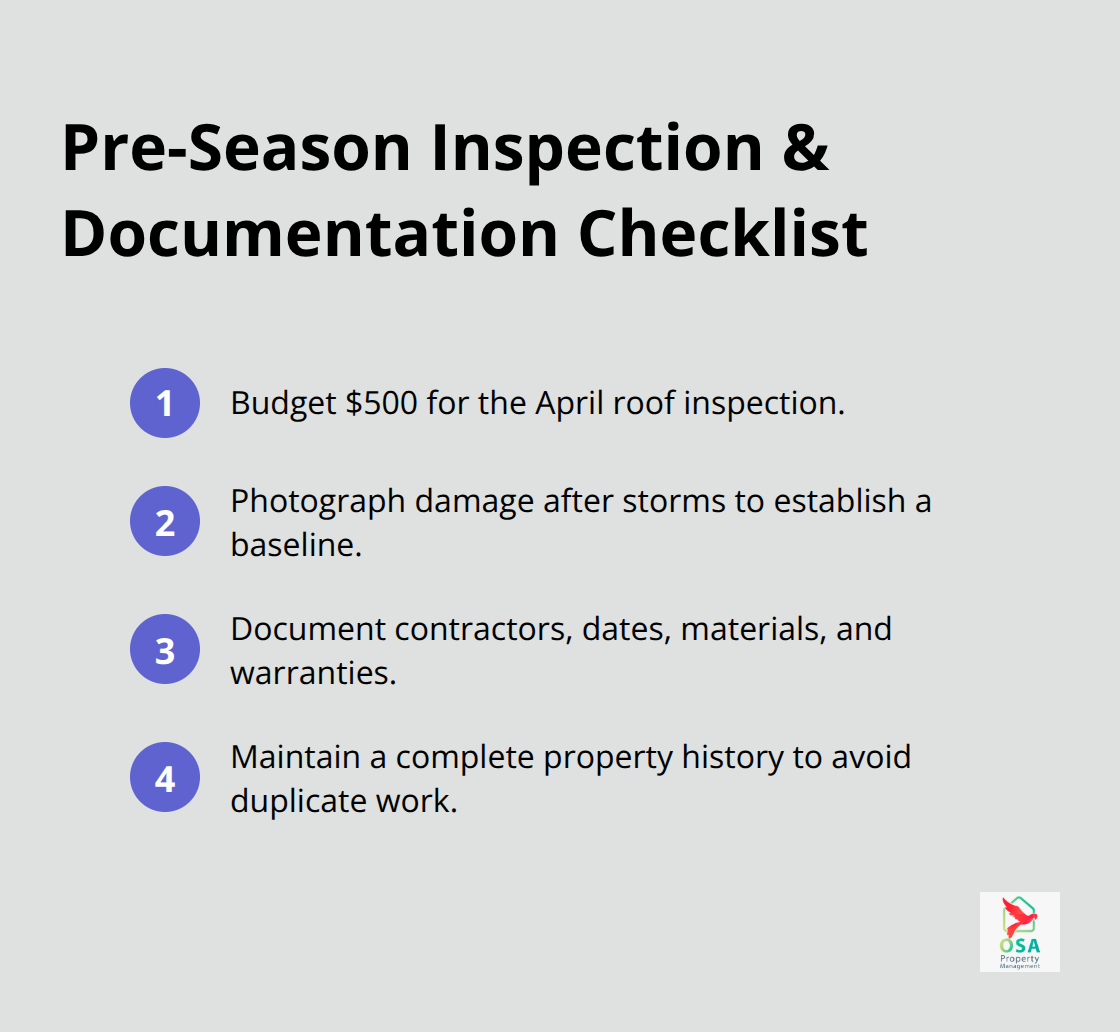
Start in April with a roof inspection before heavy rains arrive. This single task costs $500 and prevents the $5,000 to $8,000 water damage that develops when gutters clog and washers fail under months of downpour. After storms pass, photograph everything and document findings to establish a baseline for future repairs. Keep records of contractor names, dates, materials, and warranty information so you build a complete property history rather than repeating work or paying twice for the same fix.
Managing Humidity and Air Conditioning Year-Round
Monthly AC filter replacement is non-negotiable in Costa Rica’s humidity, yet most owners skip it until mold appears. Replace filters before the rainy season begins in May and again before peak heat in September. Schedule full AC inspections before each of these periods to verify refrigerant levels and clean condenser coils, which prevents the efficiency collapse that drives humidity upward.
Protecting Exterior Surfaces from Tropical Exposure
Exterior sealants around windows and doors deteriorate every two years under tropical UV and rain, so mark your calendar for resealing in the dry season when contractors have availability. Wood trim and railings need coating work on the same schedule, and this is where timing matters most: dry-season scheduling is essential because coating projects take multiple days and contractors book up weeks in advance if you wait until late in the season.
Selecting and Managing Local Contractors
Working with local contractors separates owners who maintain properties from those who watch them decline. Interview three candidates for any major work, verify their references directly, and require formal contracts with clear milestones, retainage clauses of 5 to 10 percent, and signed lien releases before final payment. This protects you from later claims and ensures accountability at each stage.
Critical Systems That Demand Attention
Electrical safety in coastal areas demands monthly breaker testing and immediate replacement of stuck breakers, which prevent fires during the rainy season when moisture accelerates corrosion. Septic systems must be properly sized for your actual occupancy; undersized tanks cause backups costing $2,000 to $5,000 to fix, so a $300 to $500 capacity assessment before purchase or renovation is the smartest investment you can make. Keep essential plumbing spares on hand, including PVC fittings, shutoff valves, and hose clamps totaling around $50, so you can stop leaks immediately while waiting for a contractor. Properties that coordinate these tasks systematically rather than addressing them randomly consistently outperform owner-maintained homes in durability and cost efficiency. This structured approach sets the foundation for the next layer of property protection: technology and remote monitoring systems that track maintenance progress and alert you to emerging problems before they escalate.
Smart Monitoring Stops Problems Before They Cost Thousands
Technology transforms how you manage Costa Rica properties when you’re managing from abroad or juggling multiple homes. Property management software tracks every repair, contractor invoice, and maintenance task in one place, eliminating the scattered notes and lost receipts that plague most owners. When you photograph roof damage after a storm and timestamp it in a centralized system, you build an undeniable record that prevents double charges and settles disputes with contractors.
Documentation That Protects Your Investment
Mobile apps designed for property management let you log AC filter replacements, document sealant work on windows, and schedule the April roof inspection before the rainy season arrives, ensuring nothing gets forgotten when life gets busy. The real power emerges when you pair documentation with remote sensors that monitor humidity levels, detect water leaks before they spread, and alert you to temperature fluctuations in AC systems.
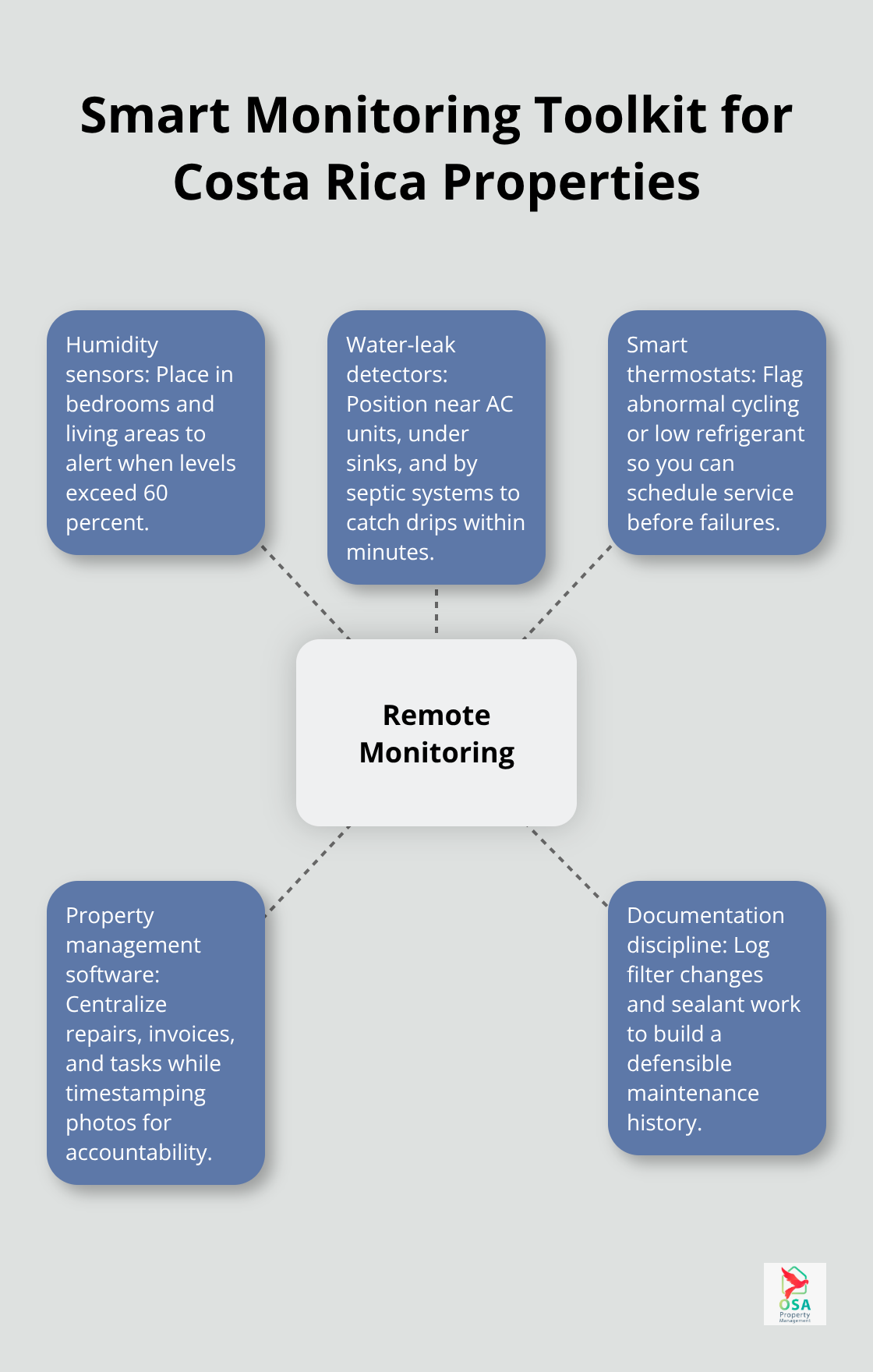
Humidity sensors placed in bedrooms and living areas show you exactly when indoor levels climb above 60 percent, where mold risk accelerates. If a sensor detects humidity spiking to 75 percent during the rainy season, you know immediately that AC filters need replacement or that a window seal has failed, letting you contact a contractor before water damage develops inside walls.
Early Detection Prevents Cascade Failures
Water-leak detection devices placed near AC units, under sinks, and around the septic system catch drips within minutes rather than days, preventing the $2,000 to $5,000 septic backups or the $5,000 to $8,000 water intrusion damage that happens when leaks go unnoticed. Smart thermostats monitor AC performance and alert you when refrigerant levels drop or when the system cycles abnormally, signaling the need for a professional inspection before the unit fails completely. Property management software integrates these sensor readings with your maintenance calendar, so when a humidity spike occurs in June, the system reminds you that full AC inspection and condenser coil cleaning are due.
Real-Time Monitoring Cuts Costs Dramatically
This integration transforms reactive repairs into proactive prevention, and the financial difference is substantial. Homeowners who use remote monitoring and centralized documentation report 30 to 40 percent lower annual maintenance costs because problems get addressed in their earliest stages rather than after they’ve cascaded into compound failures. The combination of documentation discipline and real-time monitoring creates accountability that keeps contractors honest, lets you verify work was actually completed, and builds the complete property history that protects your investment over decades. Osa Property Management coordinates these systems for clients across Tarcoles, Jaco, Dominical, Manuel Antonio, Ojochal, Uvita, and Golfito, integrating sensor data with contractor scheduling and invoice tracking so owners receive clear monthly reports showing exactly what was maintained, what was spent, and what’s scheduled next.
Final Thoughts
Home upkeep in Costa Rica demands a shift from reactive repairs to systematic prevention, and the financial case speaks for itself. A $500 roof inspection prevents $5,000 to $8,000 in water damage, while monthly AC filter replacements cost pennies compared to the $2,000 to $5,000 septic backups or mold remediation that follows neglect. Homeowners who document repairs, photograph damage, and maintain contractor records build protection against double charges and disputes, while those who monitor humidity levels and water leaks catch failures in their earliest stages, when fixes cost a fraction of what cascade damage demands.
Start by establishing a maintenance calendar tied to April roof inspections before heavy rains, May AC filter replacements as the rainy season begins, and September inspections before peak heat. Interview local contractors, verify references, and require formal contracts with retainage clauses (5 to 10 percent protects you from later claims). Implement property management software and humidity sensors so you track every task and receive alerts when problems emerge.
If managing these systems yourself feels overwhelming, Osa Property Management handles this complexity for clients across Tarcoles, Jaco, Dominical, Manuel Antonio, Ojochal, Uvita, and Golfito. With over 40 full-time insured staff, we coordinate roof inspections, AC maintenance, electrical safety, septic assessments, and contractor relationships so nothing falls through the cracks. Your Costa Rica property is an investment worth protecting, and the difference between a thriving asset and a costly burden comes down to having a plan and executing it consistently.