

Costa Rica's tropical climate brings unique challenges to property owners. Humidity, heavy rains, and intense sun exposure demand a different approach to home maintenance than you might be used to elsewhere.
At Osa Property Management, we've seen firsthand how proactive care protects your investment and prevents costly repairs down the road. This home maintenance CR guide walks you through seasonal tasks, climate-specific issues, and long-term strategies that actually work in our environment.
Protecting Your Property Through Costa Rica's Three Seasons
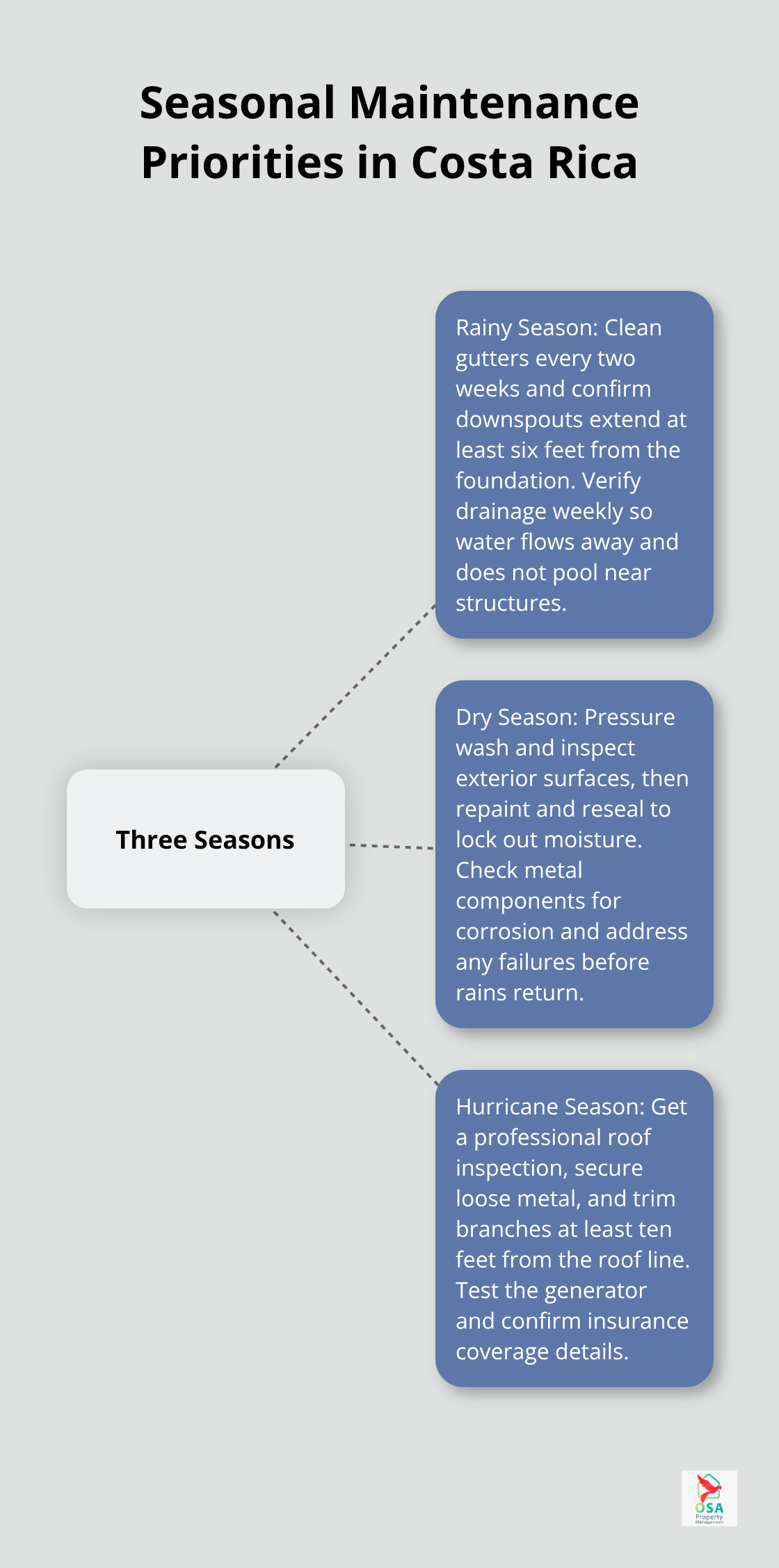
Costa Rica's weather patterns demand a maintenance rhythm completely different from temperate climates. The rainy season runs from May through November, the dry season from December through April, and hurricane season overlaps from September through November. Each period creates specific vulnerabilities that require immediate attention.
Rainy Season Means Aggressive Water Management
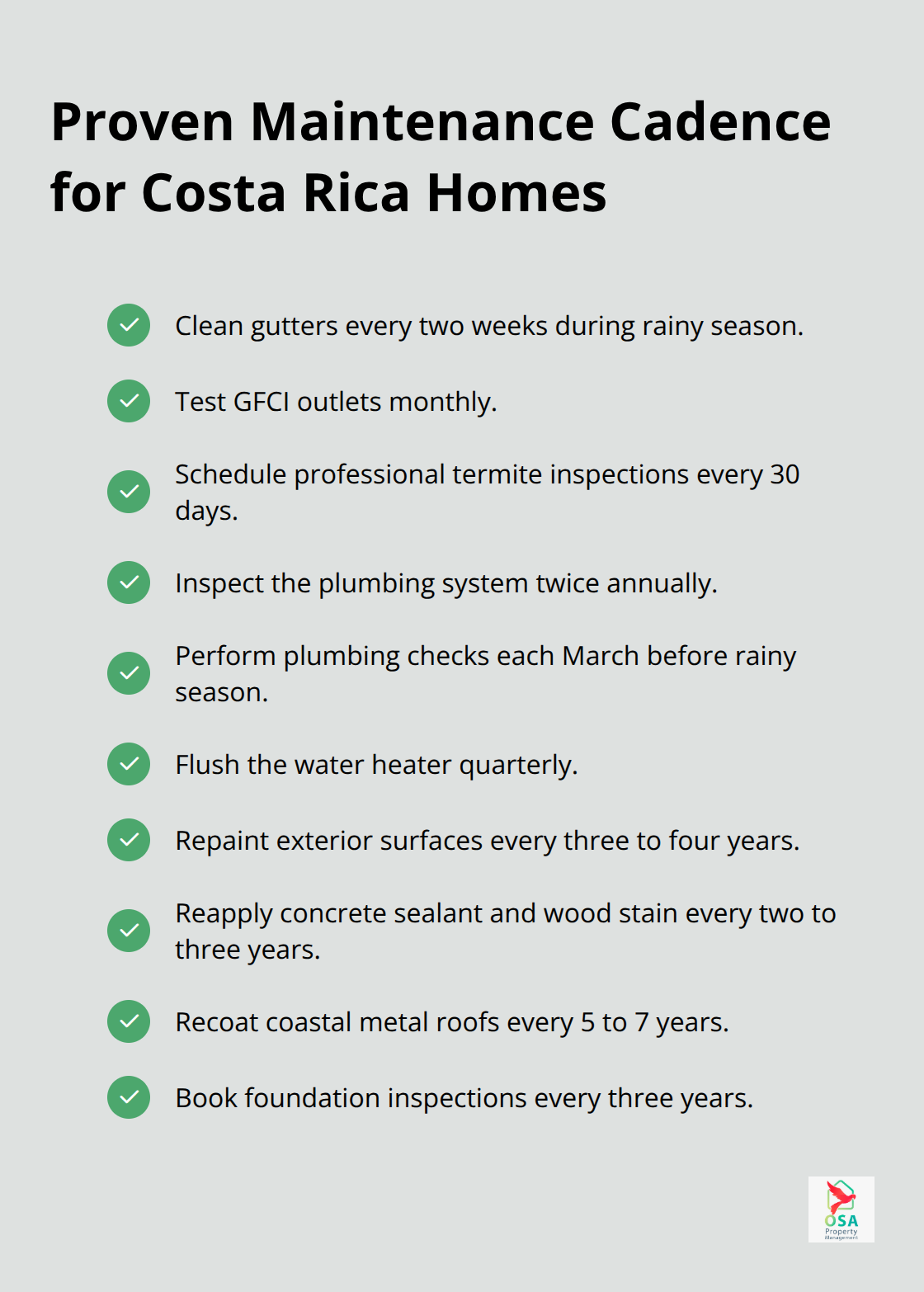
During the rainy season, Costa Rica receives rainy season rainfall of 150 to 250 inches annually in some regions, particularly on the Caribbean slope. This relentless moisture exploits every weakness in your property's defenses. Gutters and downspouts become critical infrastructure, not optional features. Debris accumulates quickly; inspect and clean gutters every two weeks during peak rainy months rather than monthly. Install gutter guards if you haven't already-they reduce cleaning frequency and prevent water from backing up into fascia boards, where rot develops rapidly in humid conditions.
Ensure downspouts extend at least six feet from your foundation and direct water away from the building. Standing water around foundations creates perfect conditions for mold, termites, and structural damage. Check your drainage systems weekly during heavy rain periods to confirm water flows away properly. If water pools near your foundation, install a French drain or catch basin immediately. This is not a project to delay.
Dry Season Inspections Catch Structural Problems
The dry season offers your only reliable window to inspect exterior surfaces thoroughly. Pressure wash your roof, siding, and foundation to remove algae and mold growth that accumulated during rainy months. Inspect roof flashing, metal gutters, and any exposed fasteners for rust and corrosion; Costa Rica's salt air and humidity accelerate metal degradation faster than most property owners anticipate.
Walk the perimeter of your property and check for cracks in concrete, gaps in caulking around windows and doors, and separation between trim and walls. These small openings become water entry points once the rainy season returns. Inspect wooden elements-decks, railings, trim boards-for soft spots indicating rot. Poke suspect areas with a screwdriver; if the blade penetrates more than a quarter inch, the wood requires replacement. Repaint exterior surfaces and apply fresh sealant to wood and concrete during this window. Don't postpone this work; paint and sealant failures during the rainy season lead to water infiltration and accelerated deterioration.
Hurricane Season Requires Roof and Tree Preparation
September through November brings heightened hurricane risk, and your roof becomes your primary defense. Have a professional conduct a roof inspection for obvious signs of trouble like missing shingles, large branches, or visible damage to vents and flashing. Secure any loose metal components that could become projectiles. Trim tree branches hanging over your roof or near structures; branches should be at least ten feet from your roof line.
Dead trees near your property require removal entirely-falling trees during storms cause catastrophic damage that insurance often disputes. Check that all outdoor equipment, furniture, and loose items are either secured or stored indoors. Test your backup generator if you have one; power outages during storms can last days or weeks. Verify that your insurance coverage is current and that your policy actually covers hurricane damage (many policies have specific exclusions or high deductibles for storm-related claims).
Climate-Specific Vulnerabilities Demand Professional Oversight
These three seasonal cycles create overlapping maintenance demands that most property owners underestimate. The combination of intense humidity, salt air, and heavy rainfall accelerates deterioration at rates that differ dramatically from other regions. Professional property managers understand these patterns and coordinate maintenance schedules to address vulnerabilities before they become expensive problems. This seasonal approach forms the foundation for long-term property protection, but it only works when you also address the climate-specific issues that threaten Costa Rican properties year-round.
Three Hidden Threats to Costa Rican Properties
Moisture and Mold Accelerate Structural Damage
Moisture penetrates Costa Rican homes through every conceivable pathway, and mold follows within days. The combination of 40 to 85 percent humidity levels in Costa Rica and constant moisture creates conditions where mold colonies establish themselves on wood, drywall, concrete, and textiles faster than most property owners anticipate. Mold compromises structural integrity and poses genuine health risks that extend beyond cosmetic concerns.
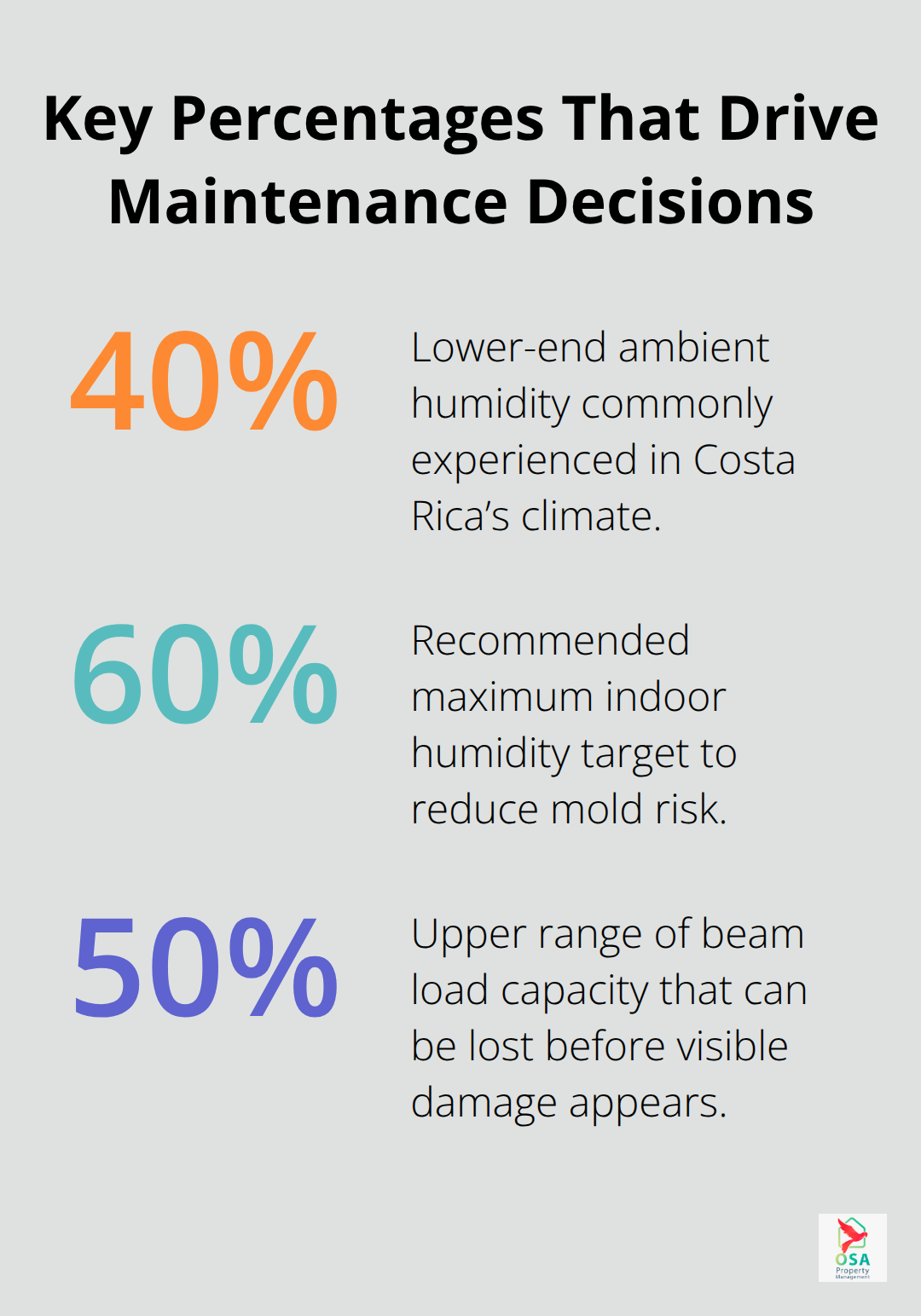
Interior surfaces require active moisture management year-round, not seasonal attention. Install and maintain dehumidifiers in bedrooms, storage areas, and enclosed spaces; target indoor humidity levels below 60 percent, though 50 percent or lower works better in Costa Rica. Inspect wall cavities, ceiling spaces, and under-sink areas monthly for soft spots, discoloration, or musty odors that indicate active mold growth.
When you find mold, remove the affected material entirely rather than painting over it or hoping it disappears. Treat the underlying surface with a mold-killing solution and address whatever moisture source created the problem in the first place. Gutters that overflow, roof leaks, plumbing leaks, and poor ventilation are the primary culprits. The cost of replacing rotted framing or dealing with structural damage far exceeds the expense of proper moisture control.
Termites Hollow Wood From the Inside
Termites represent the second major threat, and detecting them early determines whether you face a manageable treatment or catastrophic structural failure. Costa Rica's termite species are aggressive and persistent; they hollow wood from the inside while leaving the exterior surface intact. A property can lose 40 to 50 percent of a beam's load-bearing capacity before visible damage appears.
Schedule professional termite inspections every 30 days, not every two or three years. During inspections, professionals probe wooden structural elements, check wall cavities, and examine any wood-to-soil contact points where termites gain access. If inspectors find termite activity, demand that treatment occurs immediately using professionally applied termiticide barriers rather than over-the-counter solutions.
Eliminate wood-to-soil contact by ensuring concrete piers separate all wooden structures from the ground. Redirect water away from foundations and reduce soil moisture around buildings, as termites require damp conditions to thrive. These preventive measures stop termite colonies before they establish themselves in your property's frame.
Rust and Corrosion Attack Metal Components Relentlessly
Rust and corrosion attack metal components relentlessly in Costa Rica's salt-air environment and high humidity. Metal gutters, fasteners, hinges, railings, and roof flashing corrode at rates that shock property owners accustomed to temperate climates. Inspect all metal components during your dry season assessment and immediately address any orange discoloration, pitting, or flaking paint indicating active corrosion.
Paint metal surfaces with quality exterior-grade metal paint that includes rust inhibitors; standard house paint fails rapidly in coastal conditions. Replace corroded fasteners with stainless steel alternatives that resist corrosion far more effectively than galvanized options. Metal roof panels and flashing require professional recoating every 5 to 7 years in coastal areas and every 7 to 10 years inland, depending on salt spray exposure and humidity levels.
These three threats-moisture, termites, and corrosion-operate simultaneously across Costa Rican properties. Addressing them requires consistent professional oversight and aggressive preventive action. Long-term property protection depends on managing these climate-specific vulnerabilities through regular maintenance and professional inspections that catch problems before they compromise your investment.
Maintaining Systems That Fail Without Warning
Water Systems Require Twice-Yearly Professional Inspections
Plumbing systems in Costa Rican properties demand fundamentally different maintenance approaches than seasonal inspections alone. Water pressure fluctuations and mineral content in Costa Rican water create sediment buildup that reduces flow and damages appliances. A licensed plumber should inspect your entire water system twice annually, checking pressure regulators, water heater sediment levels, and all visible piping for corrosion or mineral deposits. Plumbing checks should happen annually in March before the rainy season stresses your drainage systems.
Flush your water heater quarterly to remove sediment that reduces heating efficiency and shortens equipment lifespan. Neglecting this task costs hundreds in premature water heater replacement. The sediment accumulation happens faster in Costa Rica than in most regions, making quarterly maintenance non-negotiable rather than optional.
Electrical Systems Corrode in Salt Air and High Humidity
Electrical system corrosion in coastal properties due to salt air and humidity can lead to inefficiencies and potential outages. Install surge protectors on air conditioning units, refrigerators, and any computer equipment (these devices cost under $50 and prevent thousands in damage when power spikes occur). An electrician should test all GFCI outlets monthly with the test button, as humid conditions cause these safety devices to fail without warning.
Circuit breaker corrosion causes fires, and waiting for visible problems means you're already at risk. Don't postpone electrical inspections or repairs based on the assumption that problems will announce themselves visibly.
Paint and Sealants Fail on Predictable Schedules
Exterior paint and sealants fail predictably in Costa Rica's climate, and delaying repainting accelerates wood rot and structural damage. Paint applied during the dry season lasts longer because moisture levels are lower, and applying fresh paint every three to four years costs far less than replacing rotted wood requiring structural repair. Use only exterior-grade paints formulated for tropical climates; standard house paint fails within two years on exposed surfaces.
Concrete sealant and wood stain require reapplication every two to three years, depending on sun exposure and salt spray proximity. These maintenance investments protect your property's structural integrity and maintain resale value far more effectively than reactive repairs attempted after damage becomes visible.
Foundation Cracks Indicate Settling or Structural Movement
Foundation cracks wider than one-quarter inch demand immediate professional assessment because they indicate settling or structural movement that worsens without intervention. Hire a structural engineer to evaluate significant cracks and determine whether they're cosmetic or symptomatic of serious problems. Foundation repair costs escalate rapidly when problems progress, making early detection essential.
Schedule professional foundation inspections every three years and photograph any cracks to track whether they're growing or stable. This documentation proves invaluable if you eventually sell the property or need to file insurance claims for structural damage.
Final Thoughts
Costa Rica's tropical climate demands maintenance that goes far beyond seasonal checklists. The combination of aggressive moisture, relentless termite pressure, and accelerated corrosion creates a maintenance reality that differs fundamentally from temperate regions. Property owners who treat maintenance as optional or reactive face repair costs that dwarf the expense of consistent, professional oversight.
Prevention costs significantly less than repair. Gutters cleaned every two weeks during rainy season, professional termite inspections every 30 days, and electrical system checks that catch corrosion before it causes fires represent investments that protect your property's structural integrity and resale value. Foundation cracks assessed early, plumbing systems inspected twice annually, and exterior surfaces repainted on predictable schedules prevent the catastrophic failures that destroy property values and create financial emergencies.
Managing this home maintenance CR guide independently requires expertise most property owners lack and time most owners cannot spare. We at Osa Property Management bring over 20 years of experience managing properties throughout the southern Pacific zone, handling everything from routine maintenance oversight to emergency repairs. Our team coordinates with trusted local contractors who understand Costa Rican building standards and climate challenges, ensuring your property receives the consistent, professional attention it demands.