
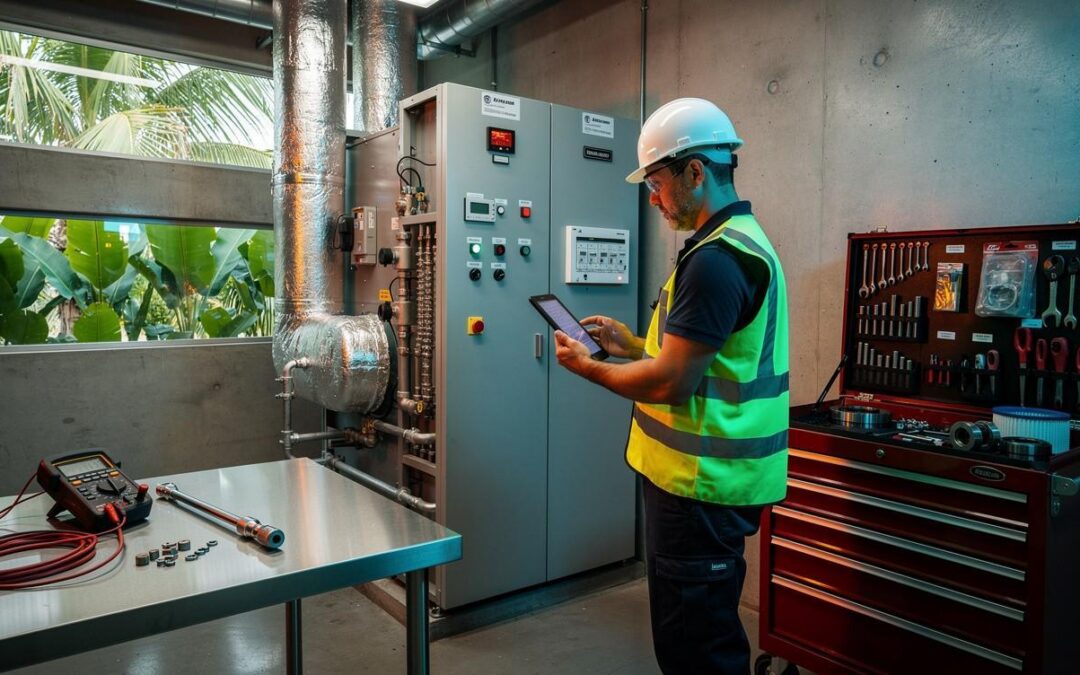
Owning rental property in Costa Rica means dealing with heat, humidity, and heavy rains that wear down buildings fast. Emergency repairs in remote areas cost three to five times more than planned maintenance, and unexpected downtime can wipe out months of rental income.
We at Osa Property Management have seen how preventive maintenance in Costa Rica stops small problems from becoming expensive disasters. A solid maintenance plan protects your investment and keeps your cash flowing.
Why Emergency Repairs Cost Three Times More in Costa Rica
Remote Costa Rican properties face a brutal economic reality: emergency repairs cost three to five times more than planned maintenance. When a roof leaks during rainy season and you need a contractor in Ojochal or Uvita on short notice, you pay premium rates for rapid response, travel time, and rushed work. A roof inspection that costs $150–$300 now prevents water damage repairs that can reach $20,000 later.
Coastal properties accelerate deterioration even faster due to salt air corrosion and mineral-rich water attacking plumbing systems. Property owners who delay a $5,000 waterproofing investment upfront often face $30,000 in structural repairs within two years. The tropical climate of Costa Rica creates conditions where small issues spiral into major failures within weeks. Mold remediation alone runs up to $20,000 once moisture penetrates walls, yet quarterly gutter cleaning and bi-annual roof inspections cost less than $500 annually.
For rental properties, unplanned downtime hits harder. A single week of vacancy during peak season costs $2,000–$5,000 in lost rental income, and emergency repairs often require shutting down the property entirely. Property owners who skip maintenance spend money reactively on crisis management rather than strategically on prevention.
The Real Cost of Humidity and Salt Air
Coastal properties require exterior repainting every 2–3 years at $2,000–$5,000 per cycle, while inland properties extend to 4–5 years between jobs. High-quality marine-grade stainless steel fixtures cost more upfront but triple their lifespan and cut long-term replacement costs dramatically.
A $300,000 property should budget 1–3% of its value annually for maintenance-roughly $3,000–$9,000-yet most owners discover too late that skipping maintenance costs far more. Comprehensive waterproofing upfront runs $5,000–$10,000 and prevents water damage repairs that often exceed $20,000.
Building Financial Reserves for Unexpected Repairs
Smart water leak sensors at $50–$100 each provide early warnings that catch problems before they become disasters. Build a financial safety net of 3–6 months in emergency reserves (about $2,500–$5,000 for a $300k property) so you don’t scramble when something breaks unexpectedly. This buffer protects your rental income and allows you to schedule repairs strategically rather than react in panic.
Understanding these costs reveals why the next step-building a solid preventive maintenance plan-matters so much for your bottom line.
How to Build a Maintenance Schedule That Actually Works
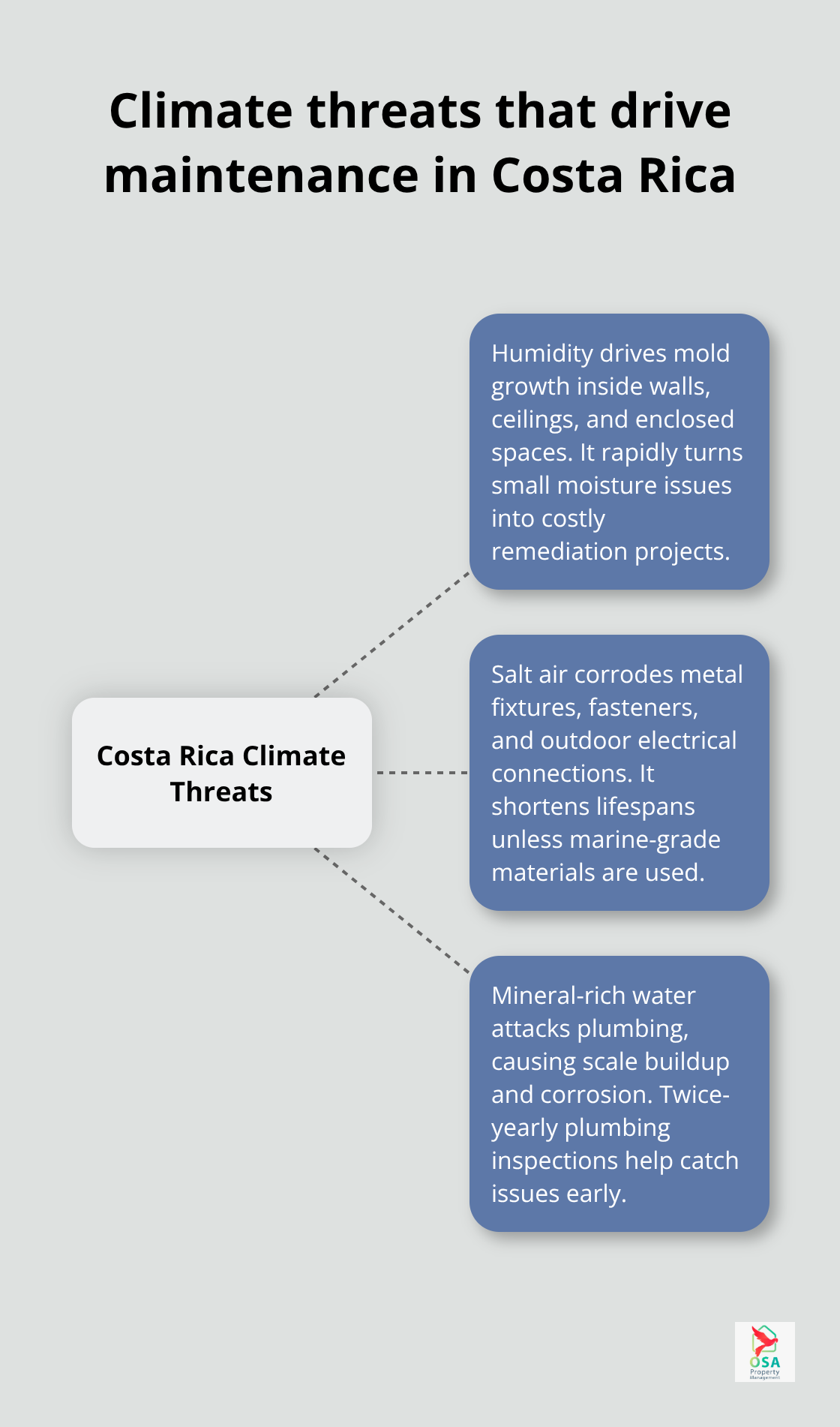
Costa Rican property owners face three distinct climate threats: humidity drives mold, salt air corrodes fixtures, and mineral-rich water attacks plumbing. Rather than treating maintenance as a one-size-fits-all checklist, you need a climate-aware schedule that targets these specific vulnerabilities before they strike.
Schedule Maintenance Around Seasonal Threats
Replacing HVAC air filters typically requires attention every 30 days for cheaper fiberglass filters to as long as 6 months for higher-end pleated filters. This simple task prevents both costly repairs and inflated utility bills. Map out failure points by season: schedule roof inspections before rainy season begins and again after it ends. Pair this with quarterly gutter cleaning to prevent mold cascades. Perform HVAC maintenance quarterly to catch refrigerant leaks or compressor strain early.
For coastal properties, quarterly pest control inspections catch termite colonies before they compromise structural integrity. Inland properties can extend pest checks to annual intervals. Plumbing systems in mineral-rich water regions need twice-yearly inspections to detect corrosion issues. Electrical systems benefit from annual maintenance to identify salt-air damage on outdoor connections.
Build Your Local Contractor Network Before You Need One
Hiring contractors unfamiliar with Costa Rica’s climate and terrain guarantees expensive mistakes. Build relationships with three to five trusted local contractors who understand salt air, mineral water, and regional terrain before you face an emergency. Obtain references, verify insurance coverage, and confirm they have experience with properties in your specific area. A contractor experienced in Dominical faces different challenges than one working in Uvita’s higher elevation.
This network reduces emergency costs dramatically because familiar contractors work faster and avoid the trial-and-error approach that plagues rushed jobs. Track every inspection and repair with dates, findings, contractor names, and costs using a spreadsheet or property management software. This documentation reveals patterns: if a gutter clogs in the same spot every rainy season, you address the root cause rather than repeatedly patching symptoms.
Budget Realistically for Annual Maintenance
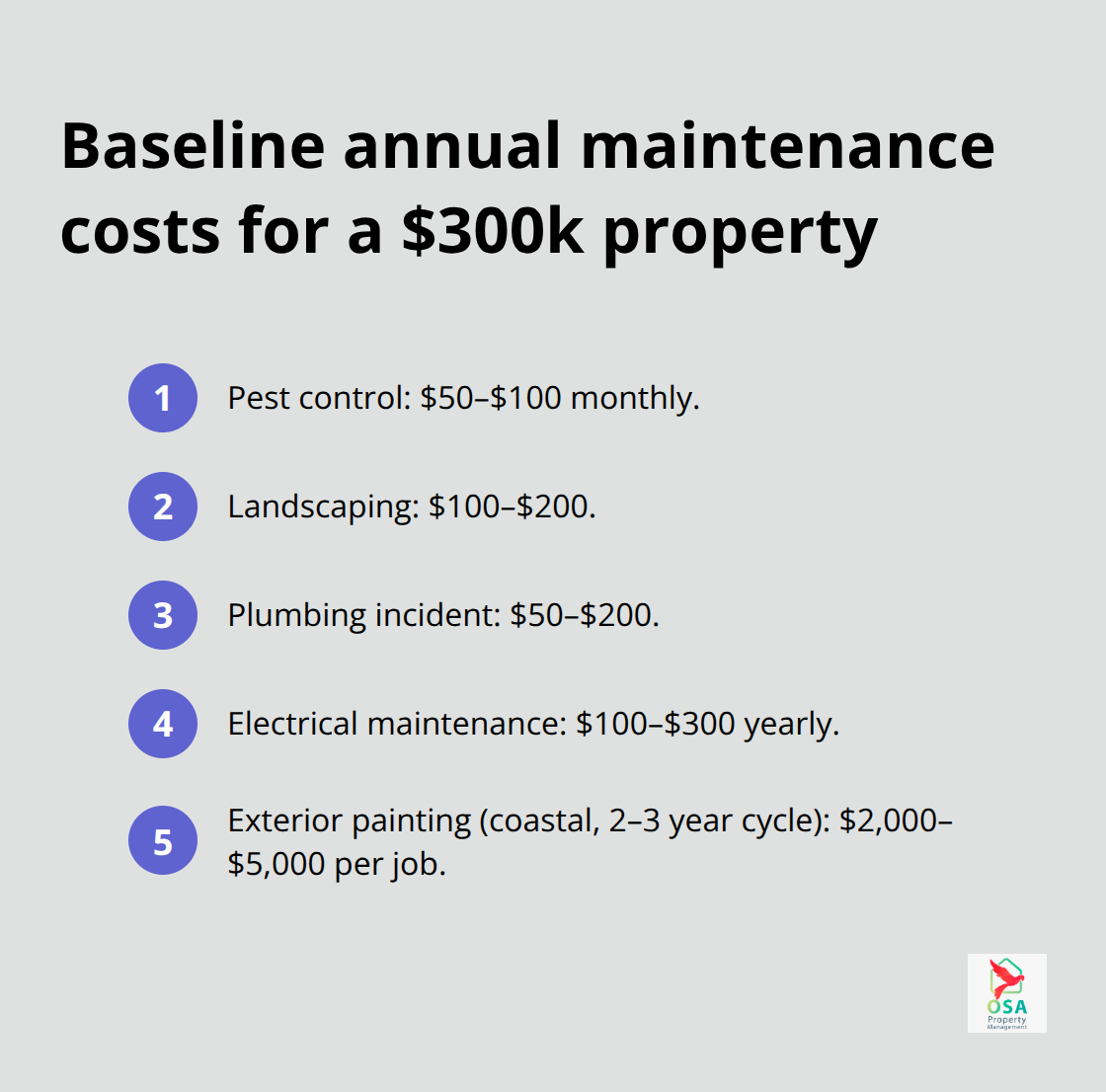
Annual allocation for a $300,000 property typically runs $50–$100 monthly for pest control, $100–$200 for landscaping, and $50–$200 per plumbing incident. Electrical maintenance costs $100–$300 yearly, while exterior painting on a coastal 2–3 year cycle totals $2,000–$5,000 per job. These figures vary by location and property condition, but they establish a realistic baseline for planning.
With a maintenance schedule in place and contractors identified, the next step involves addressing the specific problems that plague Costa Rican properties most aggressively-starting with the moisture and mold issues that can destroy a property’s structure within months.
Common Maintenance Issues in Costa Rica and How to Prevent Them
Mold and Moisture Control in Humid Regions
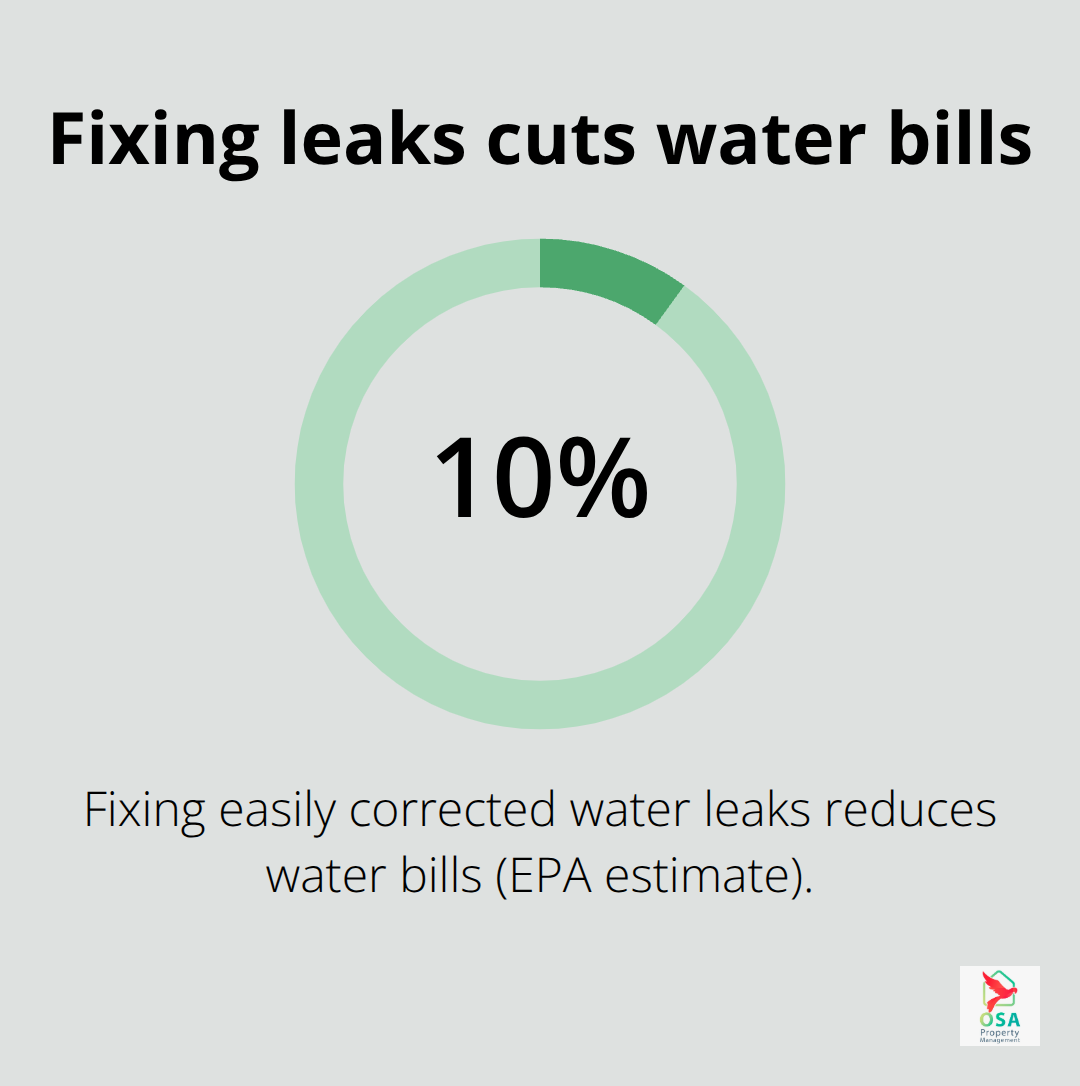
Mold spreads aggressively in Costa Rica’s humidity, and most owners discover the problem too late. The EPA found that fixing easily corrected water leaks reduces water bills by about 10 percent, but in Costa Rica’s climate, small roof leaks trigger mold growth within weeks. Most homeowners pay $1,200 to $3,750 for professional mold remediation, making it one of the most expensive maintenance failures property owners face. The solution is brutal simplicity: quarterly gutter cleaning prevents water from pooling on roofs, and bi-annual roof inspections catch leaks before moisture penetrates walls.
Smart water leak sensors at $50–$100 each alert you to problems in bathrooms, kitchens, and under sinks before they spread. Install these sensors in every rental unit because they pay for themselves after preventing a single mold incident. Dehumidifiers in enclosed spaces like bathrooms and basements cost $200–$400 and reduce humidity to levels where mold cannot establish itself. Proper drainage around foundations matters too-direct downspouts at least six feet away from structures to prevent water accumulation.
If mold already exists on your property, professional remediation is non-negotiable. DIY attempts often spread spores throughout your property and create liability issues with renters.
Roof and Gutter Maintenance for Heavy Rain Season
Heavy rains during Costa Rica’s wet season expose roofing failures that dry season inspections miss. Roof damage accelerates deterioration because water finds every crack and weakens structural supports within months rather than years. Schedule inspections before May when rains intensify and again after October when the heaviest downpours end.
Have contractors check flashing around chimneys and vents, verify that gutters slope correctly toward downspouts, and inspect underlayment for tears or separation. Coastal properties face an additional threat: salt air corrosion attacks metal roofing and fasteners, causing rust that eventually compromises the entire roof structure. Marine-grade stainless steel fasteners cost more than standard hardware but resist corrosion and extend roof lifespan significantly.
Pest Management in Tropical Environment
Pest control in tropical regions demands quarterly inspections in coastal areas because termites can seriously damage structural components like beams and joists within 3 years. Inland properties can extend pest checks to annual intervals, but coastal properties near salt air face higher risk of wood-boring insects and should not skip quarterly visits.
Termite damage often hides inside walls, making early detection through professional inspection the only reliable method. Track which contractors discover issues repeatedly in the same areas-this pattern tells you whether the root cause is poor drainage, inadequate ventilation, or structural design flaws that require permanent solutions rather than repeated patching.
Final Thoughts
Preventive maintenance in Costa Rica protects your investment by stopping small problems from becoming catastrophic failures that drain your rental income and property value. Spending $500 annually on gutter cleaning and roof inspections beats paying $20,000 for mold remediation or $30,000 for structural repairs. Property owners who commit to scheduled maintenance, build relationships with trusted local contractors, and track every repair spend strategically rather than react in panic when emergencies strike.
We at Osa Property Management handle these details for property owners across Dominical, Uvita, Ojochal, and the broader southern Pacific zone, overseeing maintenance through trusted companies while you focus on your business. Our team manages the scheduling, documentation, and contractor relationships that transform maintenance from a headache into a predictable expense. Contact us to build a customized maintenance strategy that fits your property and budget, protecting your investment while maximizing rental returns.
Peace of mind comes from knowing your property is protected year-round. When you have a solid maintenance plan in place, quarterly gutter cleaning scheduled, bi-annual roof inspections booked, and a network of experienced contractors ready to respond, you own the property rather than the property owning you.